Dear readers,
I have moved to Substack and I will be writing here from now on:
👉 andrewchen.substack.com
In the meantime, I will leave andrewchen.com up for posterity. Enjoy!
Above: One of my favorite moments in 2018, with the a16z team and POTUS44.
Dear readers,
Wow, so 2018 was a year with a lot of change – I started a new job, recommitted myself to writing (and tweeting), traveled a little too much, moved back down to Palo Alto (temporarily!), and much more. And in one of my favorite moments of the year, the office got swarmed by the Secret Service because Barack Obama came to visit – that was fun.
I’m also happy to redouble my efforts to writing and publish more, which I can do my new role as an investor at a16z. Previously, my pace was maybe once every other month – things were always too crazy at Uber, and it didn’t directly help my job there, so I couldn’t carve out time. These days, I consider writing as part of my work and dedicate time to it, blocked out on my calendar. As a result, I’ve been able to publish a few times a month lately – I want to continue pace into 2019!
In the spirit of trying something new, I decided to take all of my 2018 essays and turn it into an ebook PDF that you can read at your own leisure. It’s over 50 pages, includes all my essays, and alongside 200 slides in decks I published this year, you should have more than enough content to read through for a while. If you have feedback on this format, shoot me a tweet! And as always, you can get future updates by subscribing to the newsletter or follow me at @andrewchen.
(If you’re already a subscriber, just stick in your email and it’ll work automagically)
Links and notes
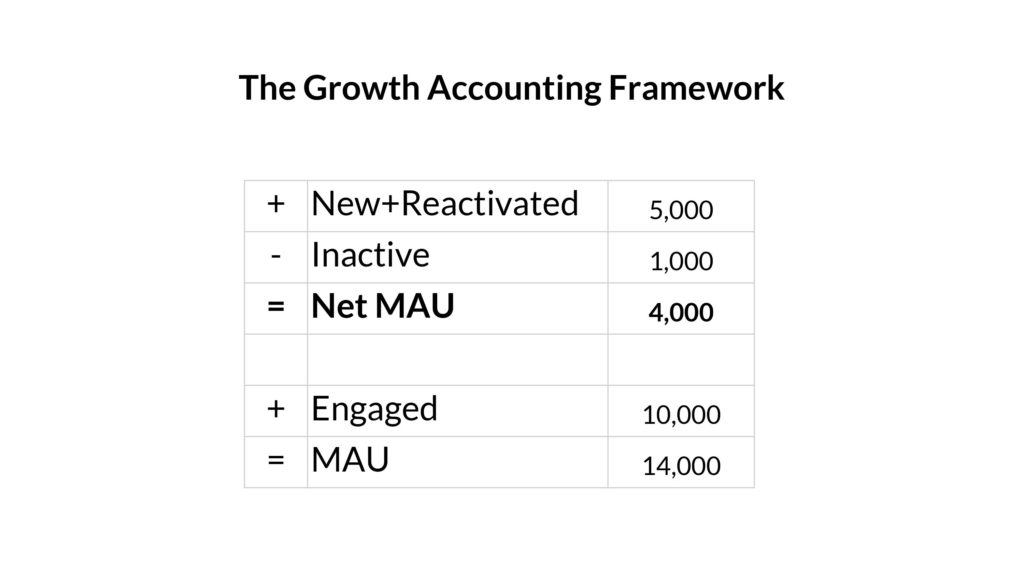
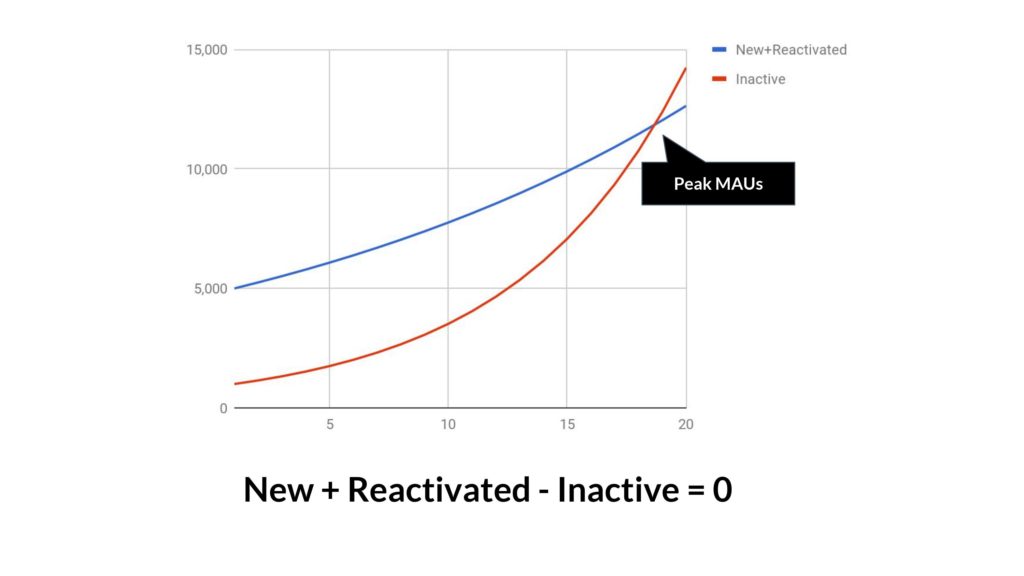
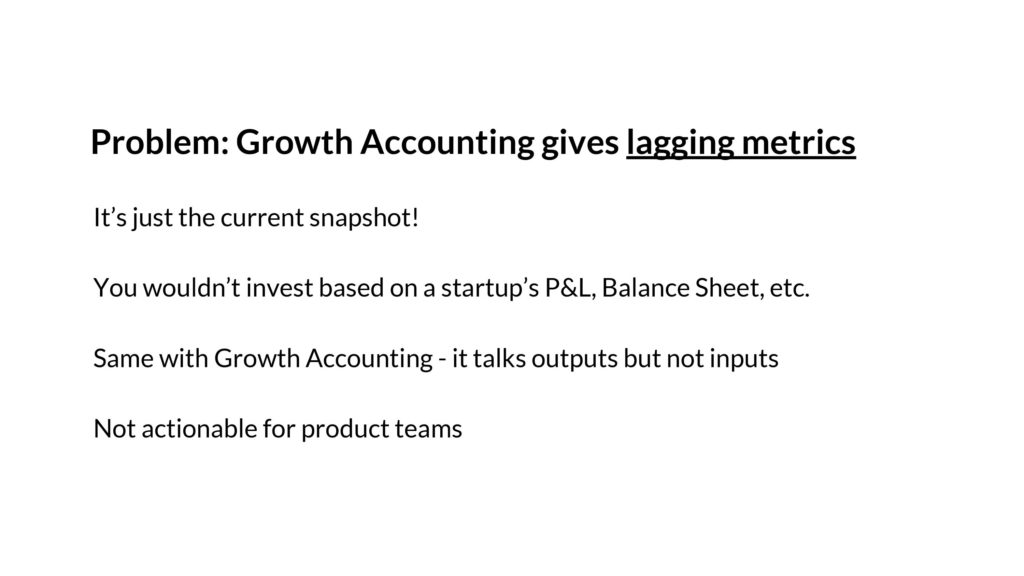
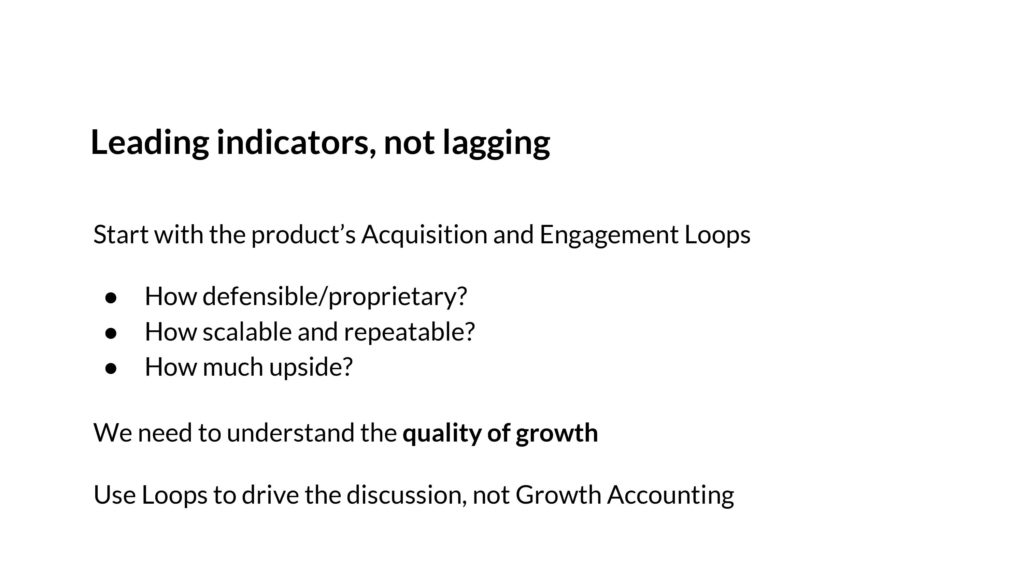
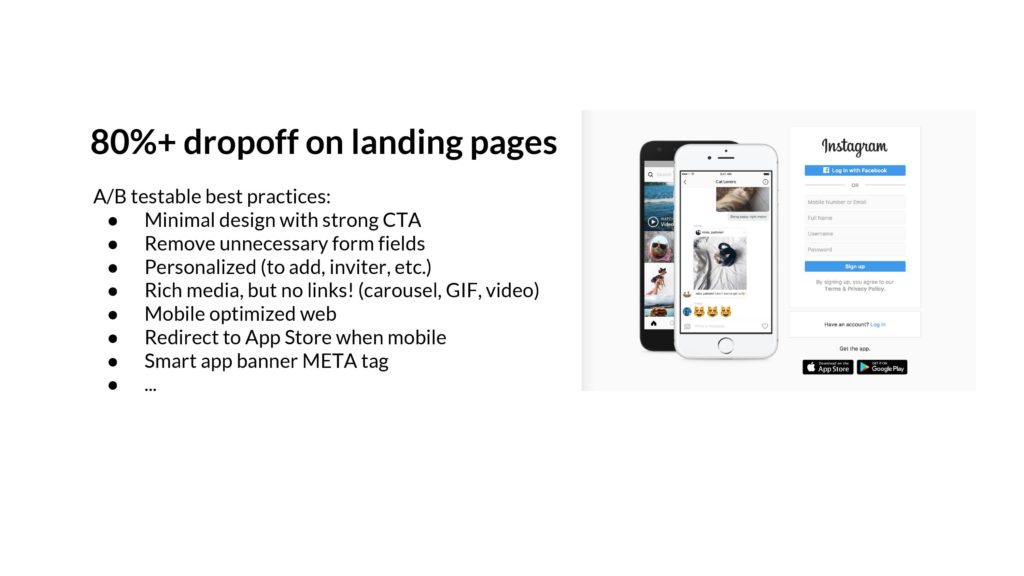
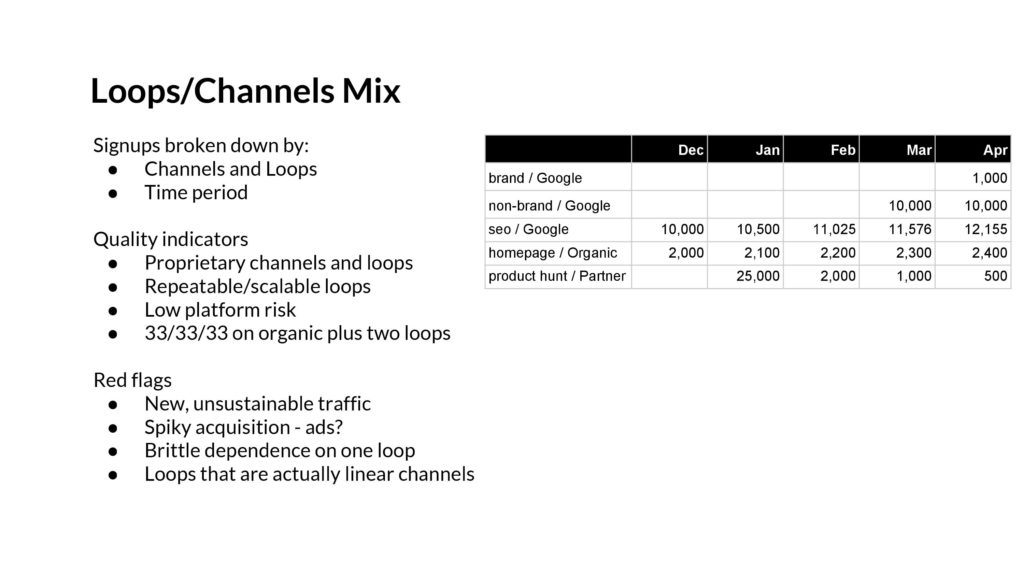
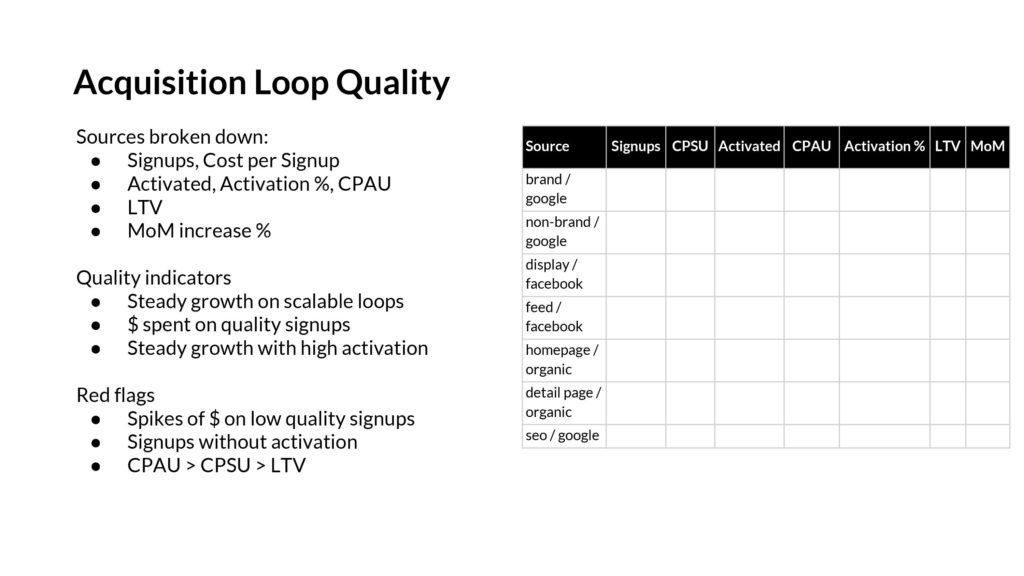
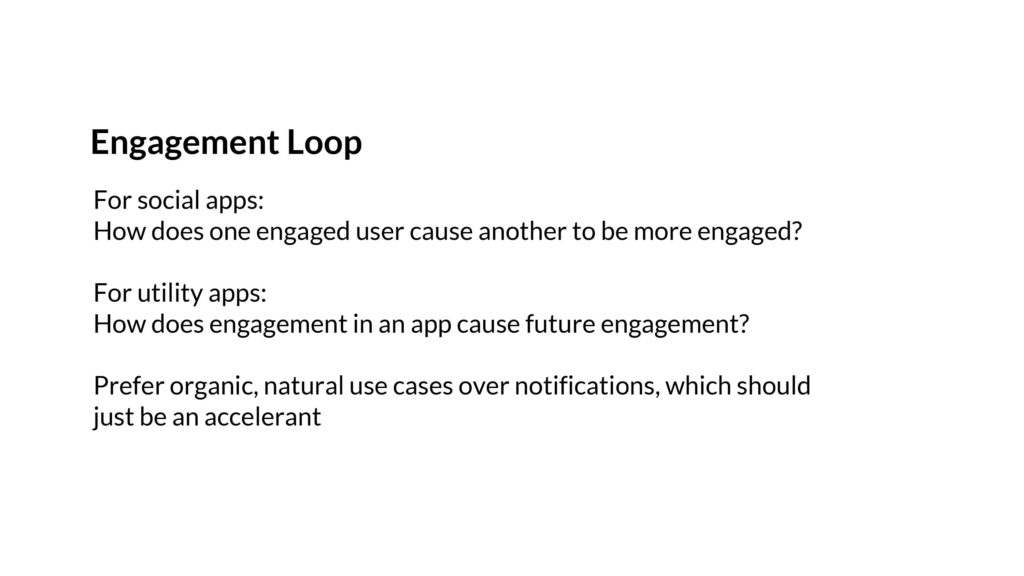
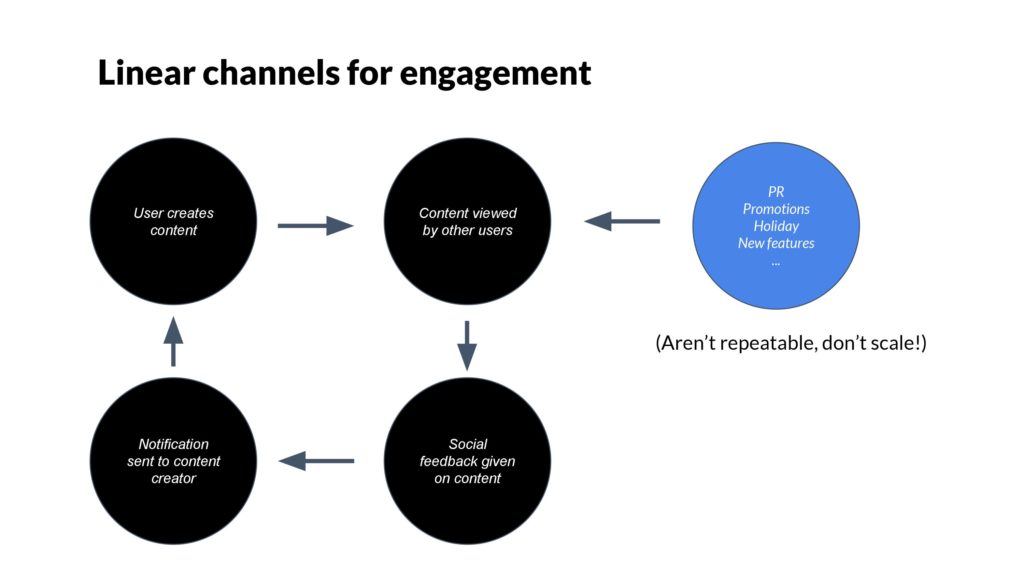
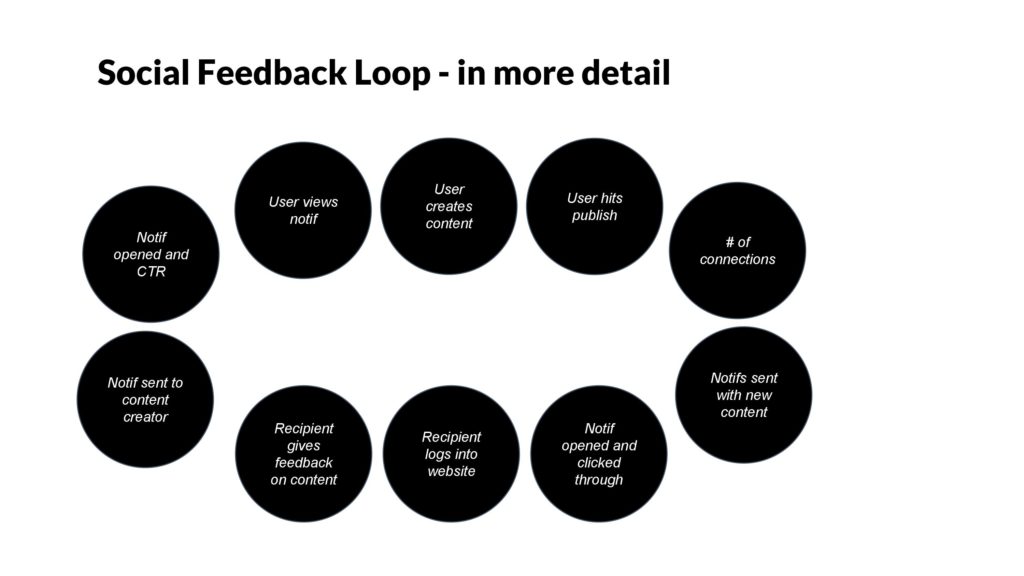
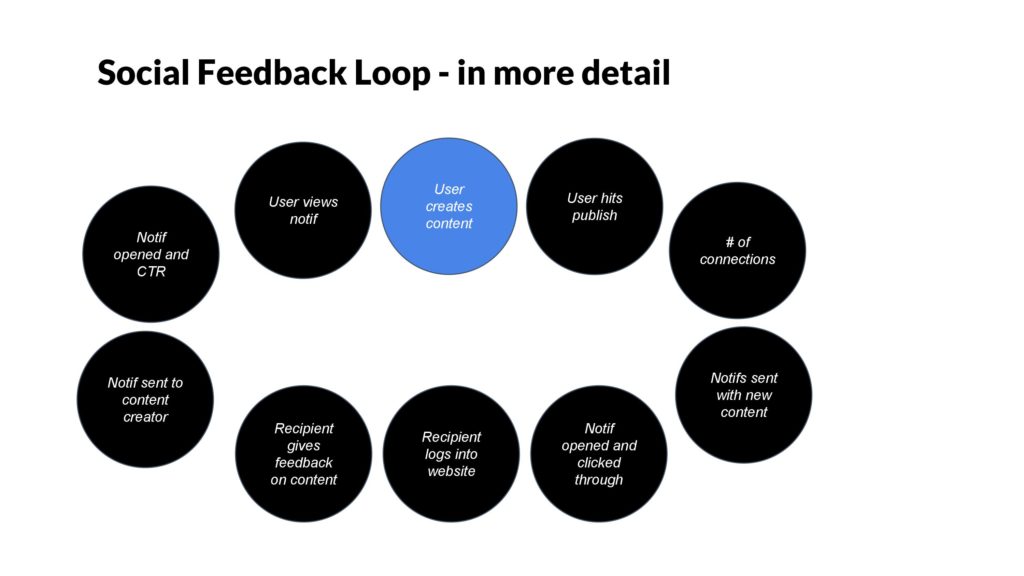
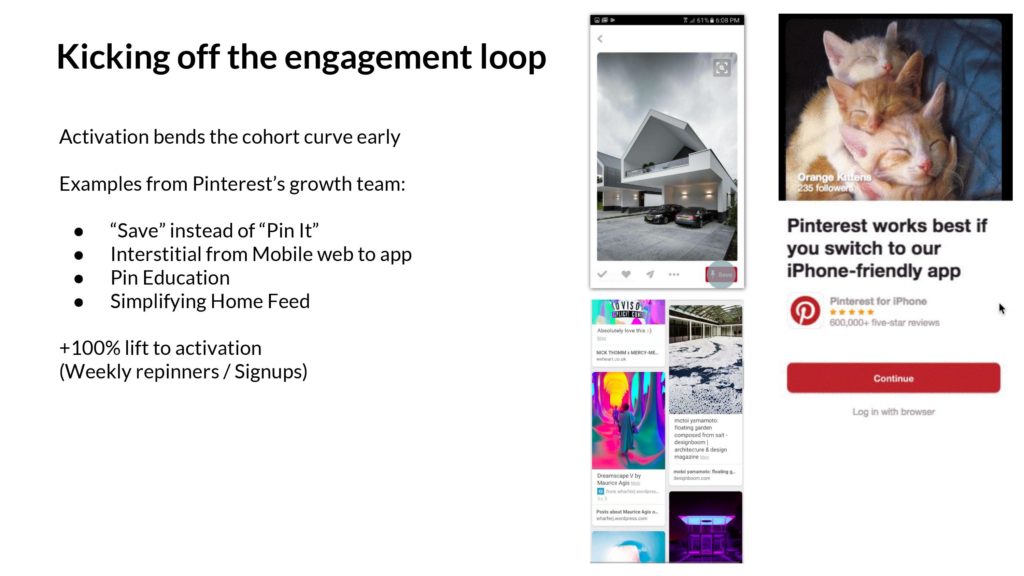
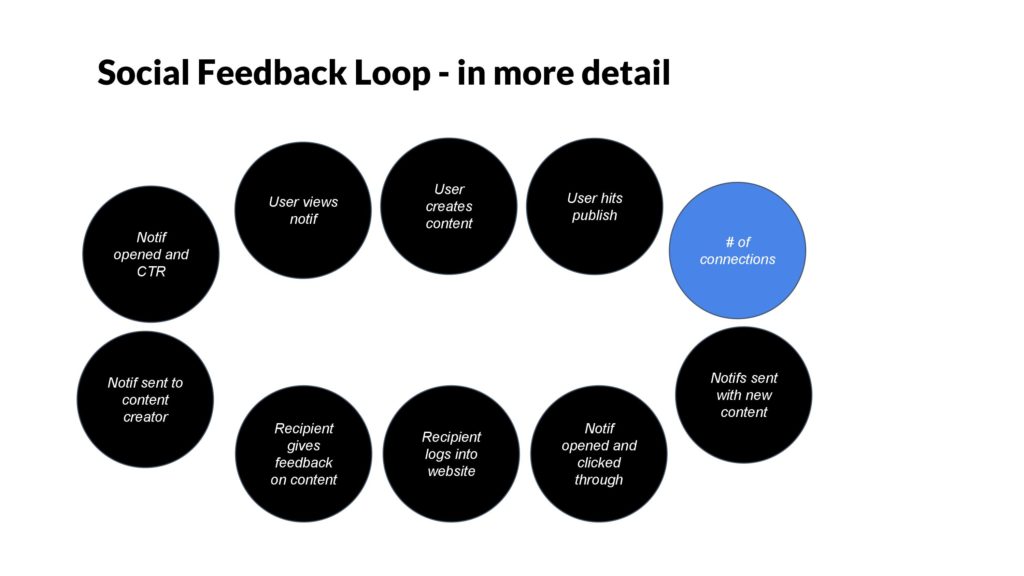
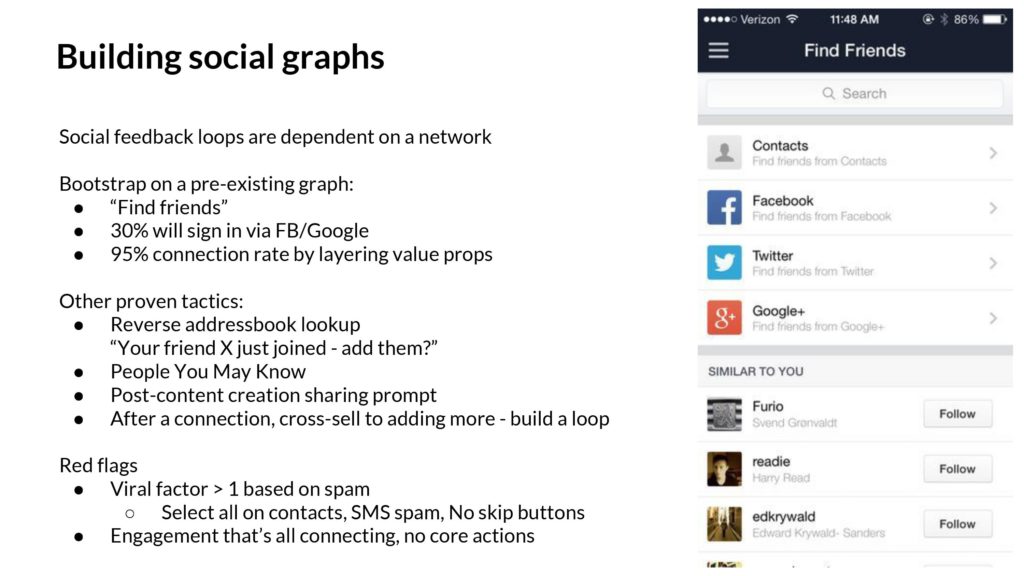
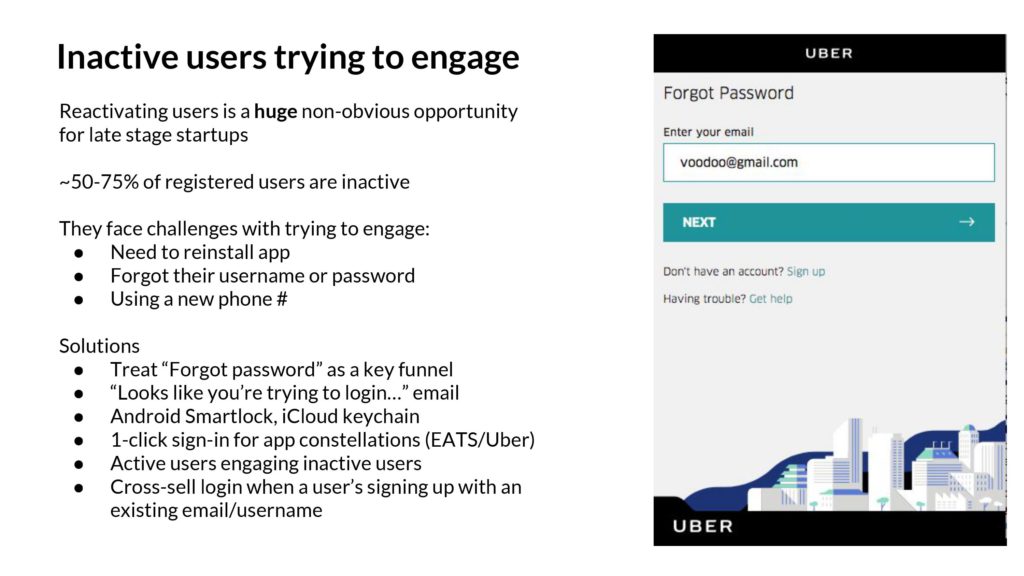
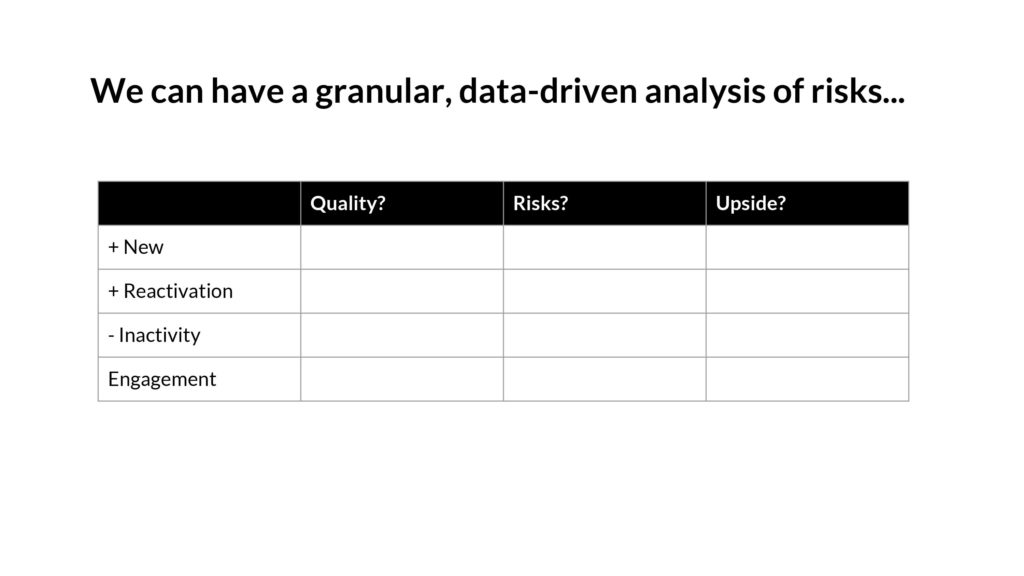
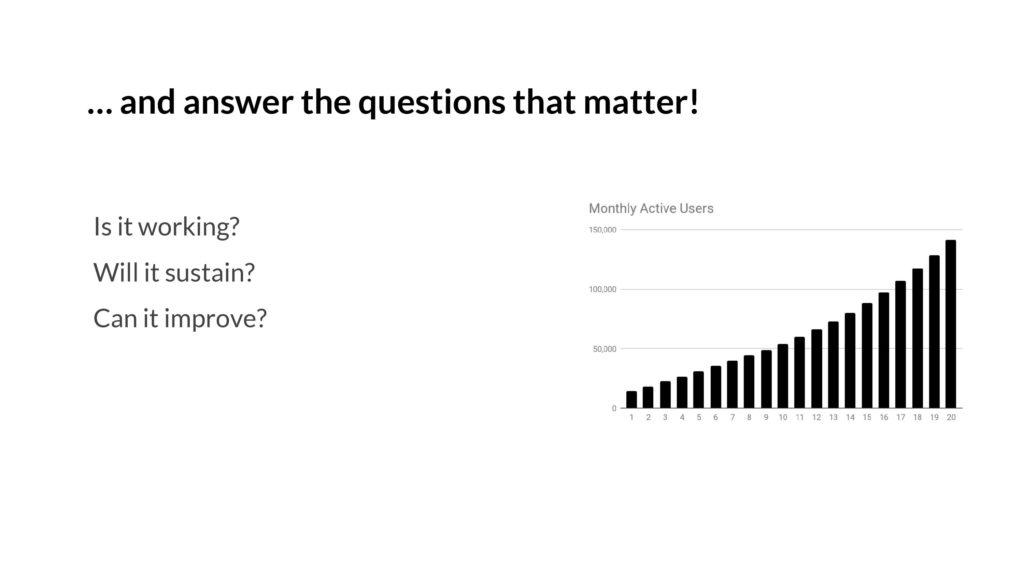
The red flags and magic numbers that investors look for in your startup’s metrics – 80 slide deck included! I put together a deck that summarizes the way that I think about evaluating the “quality” of growth for a new product. The deck unpacks a lot of different topics: How “growth accounting” metrics are great, but are lagging indicators. How to think about acquisition loops and engagement loops, and how to look for red flags like being overly dependent on a channel, or abusing notifications, to artificially boost metrics. The deck was designed for investors, but for every entrepreneur that wants to honestly evaluate where they are, it’s a good read too.
Consumer startups are awesome, and here’s what I’m looking for at a16z (70 slide deck). For the a16z annual summit, I put together a presentation introducing myself and what I’m excited about in the consumer investing world. It goes over historical precedents for give/get referrals, content marketing, and trying to bootstrap two-sided marketplaces. The deck also explains some of the big technologies and platforms coming down the pipe, and why I’m particularly excited about esports/gaming, offline experiences, and much more.
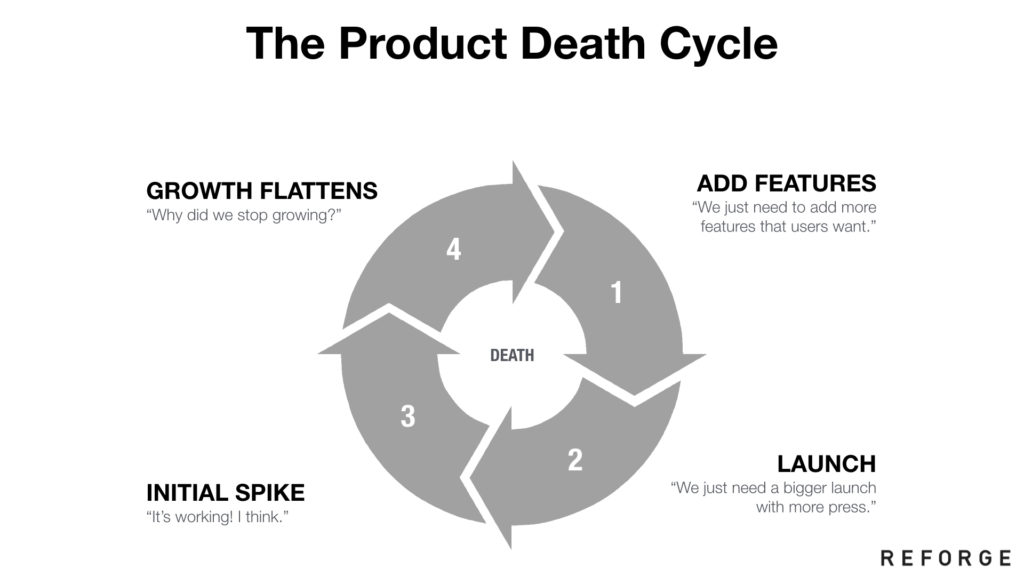
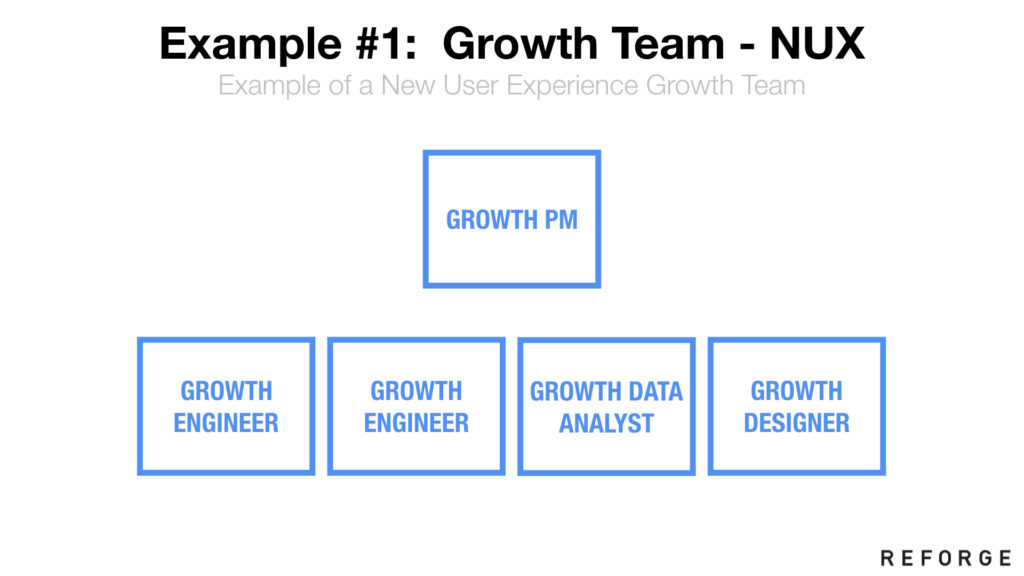
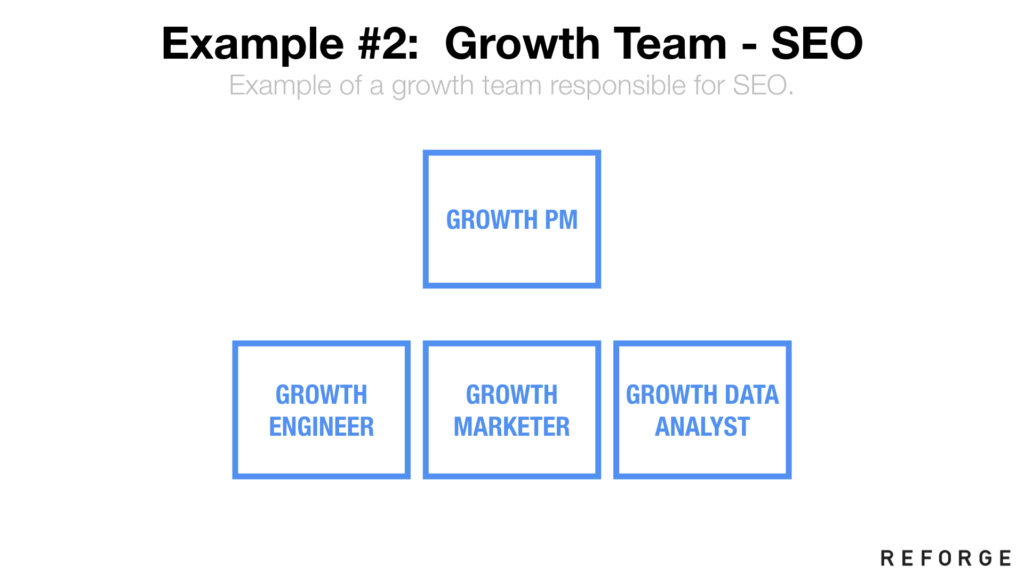
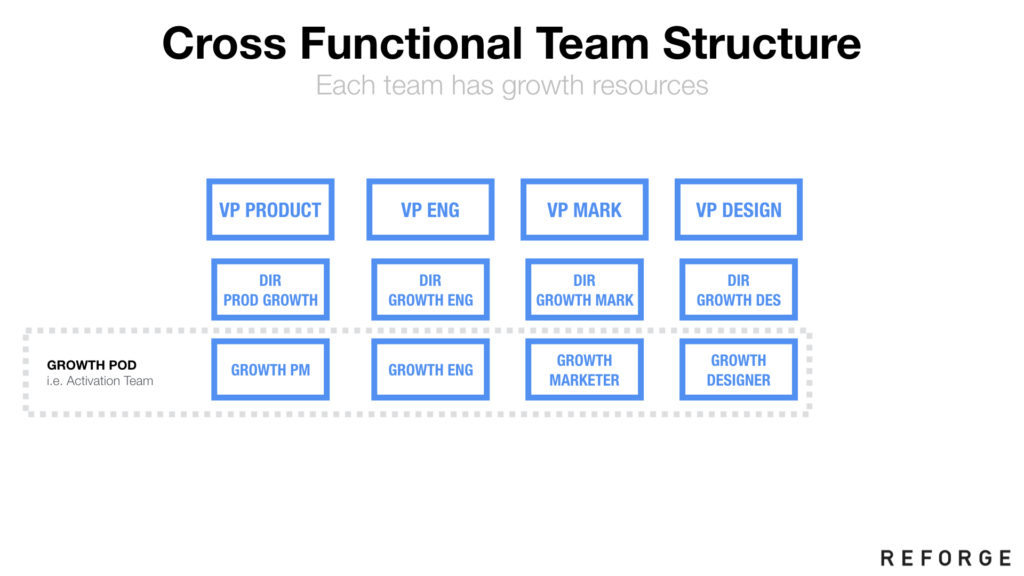
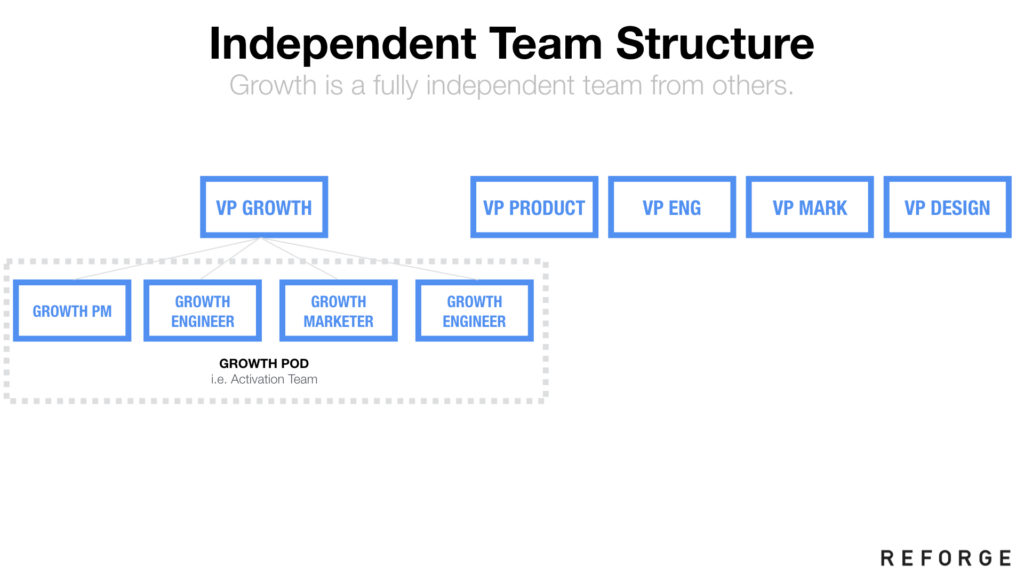
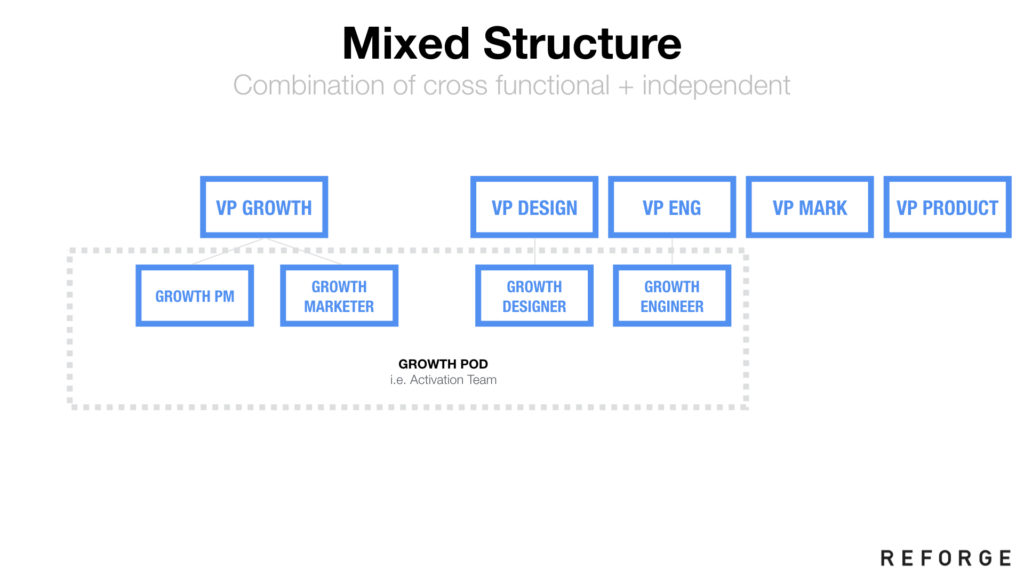
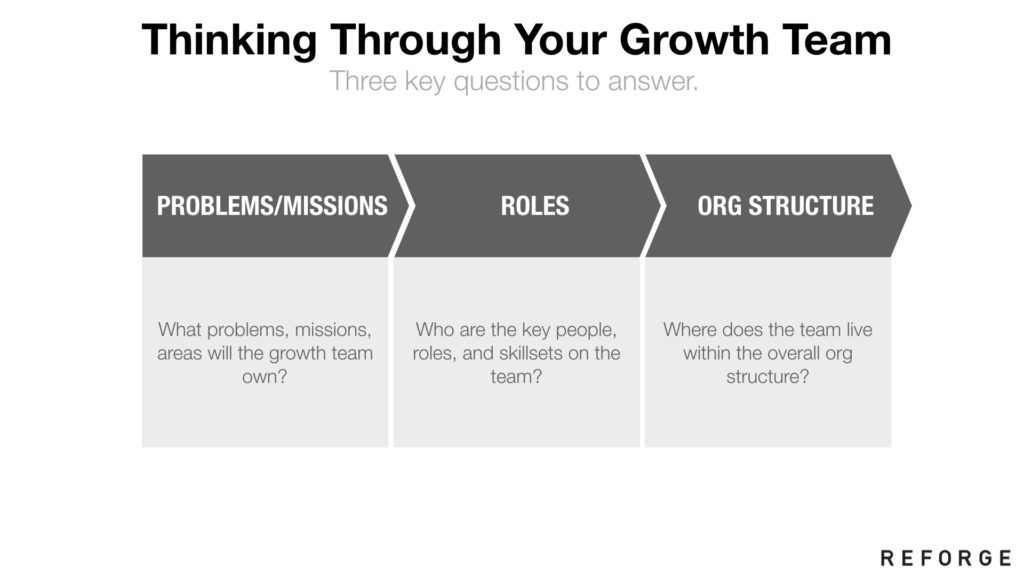
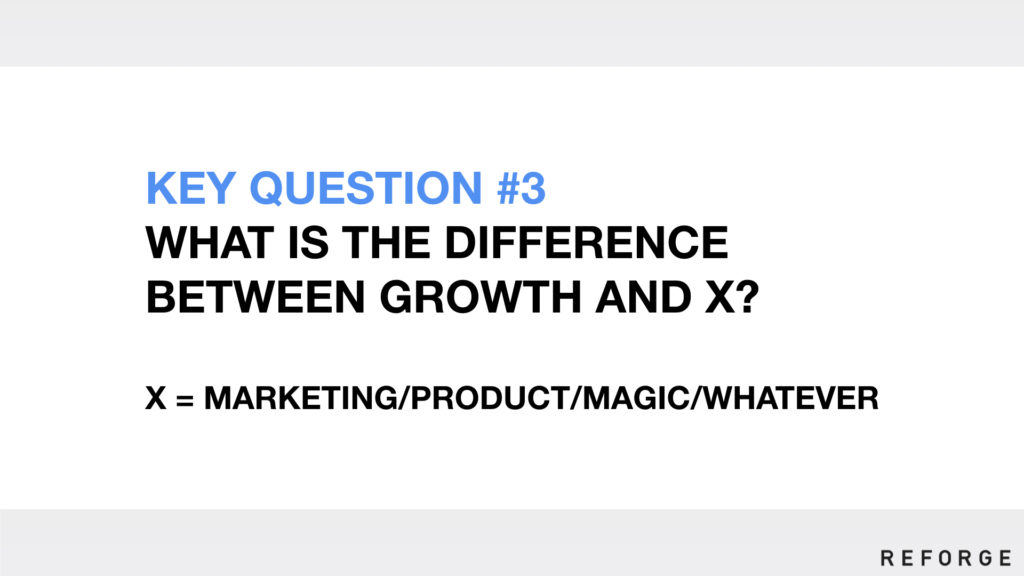
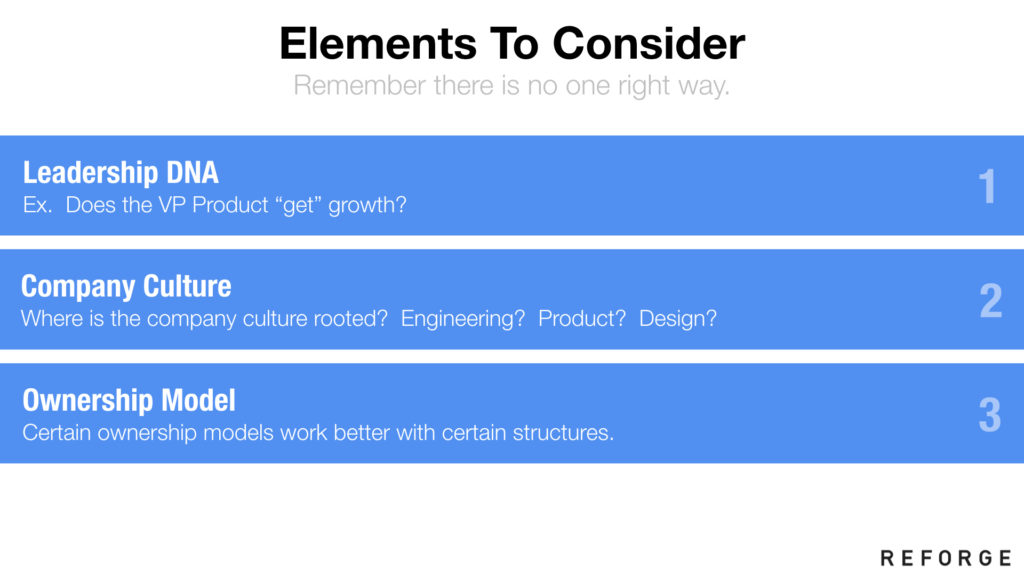
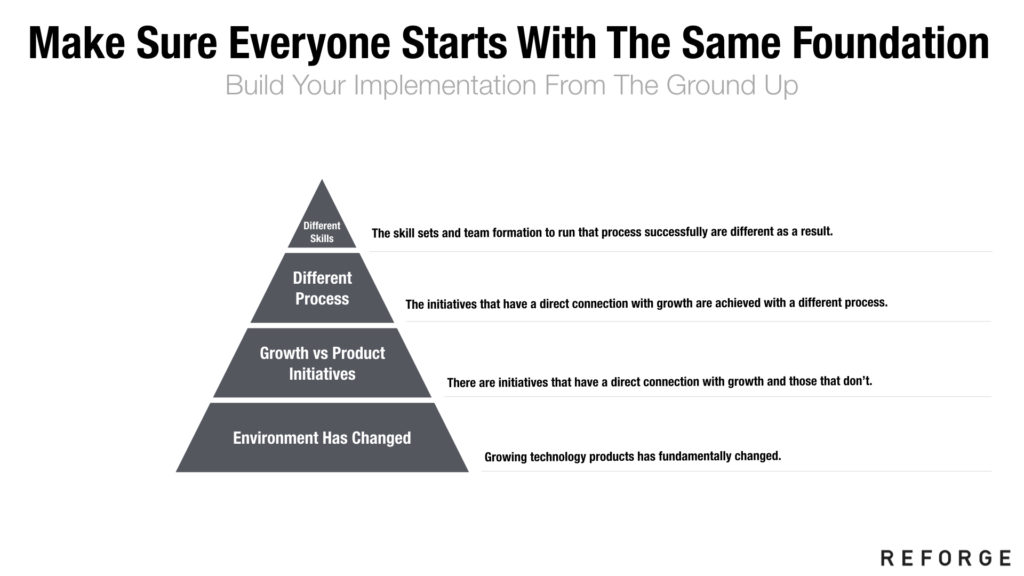
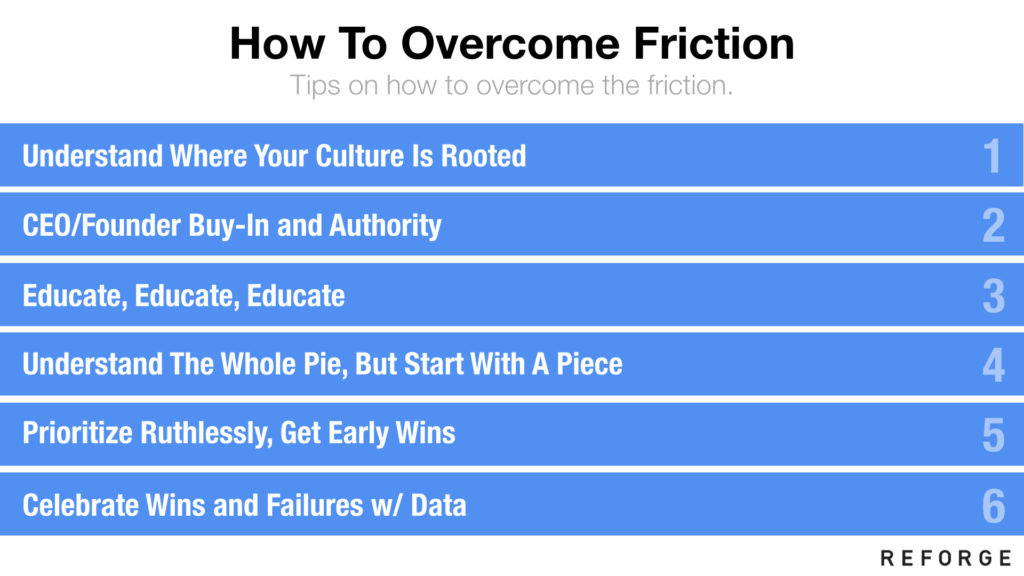
How to build a growth team – lessons from Uber, Hubspot, and others (50 slides). For a recent conference, I put together a series of lessons for companies that are looking to start growth teams. It starts simple, with the question of what growth teams are meant to solve, but also goes into organizational structure, ideal profiles/backgrounds for the team, how to ideate and prioritize projects, and more.
How startups die from their addiction to paid marketing. It’s so easy to get your product jumpstarted by buying ads to drive users, and hey, the LTVs and CAC ratios are working! But as I describe in this essay, it’s also easy to get addicted and ride the cost curves all the way up to the point where it makes no sense, and the degradation of these channels is a given.
What’s next for marketplace startups? Reinventing the $10 trillion service economy, that’s what. Co-authored with a16z partner Li Jin, we write about the next generation of marketplace startups. Whereas the previous generations have been about getting “stuff” to people, the next big opportunity will be to get services. The essay talks through why this has been so hard in the past, the benefits of having software intermediate the interactions, and the various ways that supply can get unlocked using technology platforms as the foundation.
Required reading for marketplace startups: The 20 best essays. This one’s not included in the PDF since it’s just a bunch of links, but wanted to include it here anyway. It’s a collection of links about marketplaces – from solving the cold start problem to metrics on marketplaces to specific case studies. It’s a must-read for anyone working in the space.
Why “Uber for X” startups failed: The supply side is king. One of my big lessons from Uber is that the supply side of the market is critical for any startup. I explain in this tweetstorm-turned-essay why the various “Uber for X” startups did a poor job satisfying that side of the market, even as the promise for us as consumers sounded great.
The Power User Curve: The best way to understand your most engaged users. At a16z, we often use frequency histograms – aka “Power User Curves” – to evaluate whether or not there’s a core community of users who are highly engaged. In this essay, co-authored by Li Jin from a16z, we break down what we look for, the variations on the curves you might see, and how this curve relates to the popular DAU/MAU we also ask for.
Conservation of Intent: The hidden reason why A/B tests aren’t as effective as they look. Everyone’s had the frustrating experience of running an A/B test, seeing a big lift, closing it out, and expecting the top level metrics to move a lot. But they don’t. This post explains why – “user intent” can be thought of as a fixed amount of energy as they approach the top of your funnels, and it’s hard to move it a lot.
The IRL channel: Offline to online, Online to offline. As digital customer acquisition channels become saturated and easily copyable, one of the unique opportunities is the “IRL Channel” where people engage your product in their everyday, physical lives. Whether it’s a group of people walking around playing Pokemon Go, a microwave that has Alexa embedded, or scooters, this is one of the opportunities to combine our offline and online worlds.
I’m joining Andreessen Horowitz!. Here’s the initial announcement I made about joining a16z! Includes a few notes on how I know the folks at the firm, and what prompted my decision.
Podcasts
I didn’t include any of the podcast transcripts into the downloadable PDF, but wanted to include the essays here for completeness.
a16z Podcast: When Organic Growth Goes Enterprise. In this podcast, a16z partner Martin Casado and I talk about the intersection of enterprise sales and consumerized growth tactics. He’s on the enterprise team and I generally focus on consumer, but we look at a lot of companies together.
I recently did a podcast with Ryan Hoover, co-founder of Product Hunt and my sister Ada Chen Rekhi, previously SVP Marketing at Survey Monkey – here’s what we talk about:
The network effects that makes Silicon Valley what it is. The uniqueness of the Silicon Valley tech ecosystem, how network effects conspire to create a “rich get richer” situation for cities, and why new communication tools enabling distributed teams to work together across continents could mean that there will be no “next Silicon Valley.”
Big companies versus small ones. Ada shares her insights on the contrasting skill sets needed when working at a big company versus a small startup, after having herself gone from a small startup to a huge organization like LinkedIn back to a two-person startup with her husband.
Personal life OKRs. How to port the concept of OKRs — objectives and key results, a personnel management framework originated by legendary Intel CEO Andy Grove — to your personal life from your business (and why you would want to). We talk about you can use them to help manage your exercise, social life and relationship with your SO.
Of course, we also chat about some of our favorite products, including an app that lets you pop in to a luxury hotel for a few hours to shower or have a nap, a super cool way to greet visitors to your office, and a new app for emailing yourself.
Here it is below as an embed, but if you don’t see it inline, you can listen to the podcast via this link too. If you like the podcast, you can subscribe here. Thanks to Ryan for putting this together, including the transcript!
Some quotes from the episode
“When you’re executing at a small startup, or a small team, or just by yourself, it really comes down to ideating, picking and prioritizing, and then rolling up your sleeves and just getting things done as quickly as possible. It’s a night and day difference from a big company.” — Ada
“If you graph cities, there’s a power law: the biggest cities are really big and there’s this long tail of all these little tiny cities, and the reason for that is that there’s a network effect within cities. These ecosystems emerge because the designers are here, because the engineers are here, because the capital is here, because the marketing people are here, and on and on and on.” — Andrew
“When it comes to working at a large company, it’s much more cerebral and much more about the heart. You’re thinking about how to collaborate and communicate across a cross-functional team to get the initiative done: can you communicate what it’s about; can you motivate people to get it done; can you manage all the working pieces?” — Ada
“Either these network effects will continue to hold and the Bay Area will continue to be strong, or we make big structural shifts in how we organize teams and workforces and the network effects become less strong. But that doesn’t mean some other city becomes the next Silicon Valley, there won’t actually be a “next” Silicon Valley — it either continues or will just be distributed.” — Andrew
“The irony of it is that sometimes when you are working on projects with such large scale, because the skill set is so different, it actually feels like you’re not doing anything at all — you’re merely managing the appendages of the other groups and trying to make sure everyone is staying on track and executing.” — Ada
On joining a venture capital firm: “The idea that I would do the thing I want to do for fun as my full-time job feels like I’ve won an ice cream eating competition, and the prize is more ice cream.” — Andrew
Ryan: Hey everybody, this is Ryan Hoover with Product Hunt Radio and I’m here at Andreessen Horowitz down in Menlo Park with two people I’ve known for a little while now, two brothers and sisters, Andrew Chen and Ada Chen. This is the first brother and sister duo and hopefully the first of many. Thanks for having me over here. First off, Andrew, you joined Andreessen Horowitz, is it six months ago?
Andrew: Yeah, I think I’m on month five. I’m quickly reaching my half year mark, which has gone incredibly fast.
Ryan: Are you completely swamped with meetings and pitches or how has it changed since before Andreessen Horowitz?
Andrew: Yeah, so when I was at Uber I really loved meeting with startups and hearing about new ideas and staying in touch with the tech community, but I can only do it first thing in the morning and on weekends and it quickly filled up my schedule. So I would work at Uber and then I would do that [meet with founders] basically. The idea that I would do the thing that I wanted to do for fun, like as my full time job sort of feels like I’ve won an ice cream eating competition and the prize is more ice cream. I could do as much as I want, which is super awesome.
Ryan: Yeah. And so your, your background, just maybe for those that aren’t super familiar, you were at Uber right before this and then what’s your short version of your history?
Andrew: Yeah, yeah, totally. We were just talking about. So Ada and I, who’s my little sister, by the way, I want to clarify —
Ada: [laughter, eye-rolling and protestation]
Andrew: So we grew up in Seattle, and we both made our way to the Bay Area. Actually, the funny thing is my first job ever was actually in venture capital and was something I did right after college. Then after that I ended up working at a series of startups, I moved to the Bay Area 10 years ago to start my own company. I had actually met Marc and Ben [of Andreesen Horowitz] here and they actually led the seed round for a startup I was working on during the Facebook platform days when everyone was working on crazy viral apps.
Ryan: So that’s around when we met.
Andrew: Yeah, right. Yeah, that’s exactly, that’s right around when we met and they invested out of a Horowitz Andreessen Angel Fund, which was really funny because that would have been like H16N and so different. So, I met them and I worked on that for a while and ended up basically deciding that it’d be better to go to a larger organization, ended up at Uber running various growth teams there. So I spent three years there, like a really, really fun experience —
Ryan: Probably pretty wild too, right?
Andrew: — Yeah, the first 18 months was like really, really incredible startup like hockey stick growth, then the last 18 months were very eventful and everyone’s read about it in the news. So I don’t have to summarize that.
Ryan: Yeah, and Ada, you’ve had a pretty interesting journey at Microsoft, LinkedIn, Survey Monkey, and then a two-person startup with your husband.
Ada: Yeah. Yeah. Actually multiple two person startups as well as, I spent some time in the game space as well at Mochi Media. So, after I graduated from college, I was in Seattle at Microsoft for a year and Microsoft at the time I think was around 80,000-100,000 employees? Very, very structured. Worked in the ad center space and the online advertising space when search marketing was just becoming a thing and exactly 367 days or so later, moved out to the Bay Area in 2007 and so worked at a tiny little startup that had just raised Series A called Mochi Media, which was an online games ad network, and spent multiple years there after it was ultimately acquired by Shanda Games and then actually started my first company which was a contact management app called Connected. It was all about contact management without the work. We raised some funding for that, ultimately sold it to LinkedIn and I had my experience sort of joining LinkedIn as a just as a company that was really maturing at the time. They had just had their IPO. There are about 1700 employees and experienced hyper growth for the first time, focused on things like relaunching Connected as LinkedIn Contacts, growth, learning a lot about subscriptions and consumer SaaS and was recruited out of that to work at Survey Monkey, where I was SVP of Marketing and then recently left a couple of years back to start a new company that’s actually a husband and wife team with Sachin Rekhi and we started a company called Notejoy, which is a collaborative notes app for teams and so we’re really focused on, how do we actually create a fast and focused workspace for teams that gets them out of the noise of chat and email.
Ryan: Yeah, team collaboration and productivity is so important because if you can even improve collaboration and efficiency within a team by like even just 10 percent, it can have such a huge impact on both your productivity but also just like your joy.
Ada: That was actually part of the inspiration behind the name and it’s one of those things where even when you go to a small team like small tight-fitting teams or larger organizations, you see this friction today that still exists when it comes to communication and collaboration and just think about how many decrepit out-of-date Wikis you see and Google Docs that are sort of lost in the ether and then people joining and getting forwarded random emails from way back when because that’s the only place that knowledge lives, we were really thinking about how do we create something that tackles that and productivity has always been a huge space where I’ve been passionate about.
Ryan: This is a really broad question, but what’s it like working at such a big company like LinkedIn and Microsoft and others to now just you and your husband?
Ada: Yeah, I mean it’s hugely different and I think the biggest dimension where I would say working at a large company versus a small startup is different is that effective execution looks completely different. It’s a night and day difference. So when you’re executing at a small startup or a small team or even just by yourself, it really comes down to ideating, picking and prioritizing and then rolling up your sleeves and getting things done as quickly as possible from an execution pace. When it comes to working at a large company, it’s actually much more cerebral, right? And it’s much more in the heart. You’re actually thinking about how do you communicate and collaborate across the cross functional group of teams to get the initiative done. So can you communicate what it’s about? Can you motivate people to get it done? Can you manage all of the pieces?
Ada: And the irony of it is that sometimes when you’re working on projects with large scale, because the skillset is so different, it actually feels like you’re not doing anything at all yourself. You’re actually merely managing the appendages of all the other groups and trying to make sure that everyone’s staying on track and executing. And so as organizations scale, the execution work around how much collaboration it takes gets orders of magnitude greater in terms of how hard it is to get everyone aligned and marching in the same direction versus one person. And so, I really think that that’s one of the biggest differences, like you go to a startup to learn how to do things and maybe not very well and you go to a large company to see how things are done really well, but across a broad range of disciplines and functions and really see how the whole thing comes together as an engine sort of humming smoothly and operating.
Ryan: You mentioned communication is one skill or trait of people in larger companies. And Andrew, you used to blog, I mean you still do, but you used to blog a lot. That’s largely how I think you built a pretty massive following over the past decade or so. How did you even get into writing to begin with?
Andrew: So, first I love writing. That’s kind of the very first thing, and I was always one of these, teenagers where like, I kept a journal and I would like write in it and then delete it and then start a new one and literally I was the only audience. I just like enjoyed it myself. And so before starting my current professional blog, I think I had like three other blogs that I had started over the years. Just basically, just getting going and then deleting them and not really sticking with it over time.
Ryan: Why did you delete the previous blogs?
Andrew: Because you get bored with it, and you’re just kinda like, okay, I’m done, kind of thing. And then like I think on those it was literally, it’s like who’s reading it? It’s like Ada, like my parents, like —
Ada: — Fun fact about Andrew’s early blogs: he would actually forcibly subscribe us to the emails to make sure that we wouldn’t miss anything.
Ryan: That was before some of the ICANN email laws and certainly before GDPR.
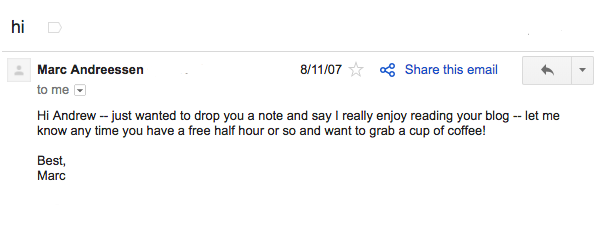
Andrew: Yeah, right. Yeah, exactly. So I think, don’t tell a 20 year old who they can subscribe to a blog or not. So I really enjoyed that. And then when I moved to the Bay Area 10 years ago, what I basically decided to do was I was like, I’m gonna write down everything that I’m learning and I’m just gonna start, like going out and so the funny thing, I was learning so much in my first year that I was just writing a lot of, like pretty random snippets, some of it would be like a paragraph or two, and I would do it like, maybe twice a week or something like that. So like pretty often and that’s actually how I met Marc Andreessen originally. It turned out that he somehow randomly had stumbled on my blog via Hacker News and then through that, had ended up seeing some of my content and then he cold emailed me and that’s how I met him in 2007. So it was like a pretty random and amazing adventure but at the time, I was an entrepreneur in residence. I was a 24 year old entrepreneur in residence actually across the street from here, which is really funny. And one of the things that my colleagues would tell me is they would say like, why are you wasting your time blogging, you’re giving away all your best ideas? Like, what are you doing? Like, these are the secrets that you’re going to use to understand the thing. And at the time I was like, well, I’m never going to be a venture capitalist so like it doesn’t matter. And so as a result, I’m just going to give away all this stuff and then, and it’s obviously so ironic now that like, so much of the job is, is obviously, sharing your ideas and giving back to the community via Twitter and Medium and writing, writing essays and all that.
Ryan: Now that’s the norm.
Andrew: Yeah, right, exactly. Yeah. And in fact it was like, it would have been considered very contrarian I think to actually share a bunch. But anyway, so I’ve kept it up and I think, I’m, I’m well into the many, many hundreds of essays, over 10 years and I think at times I’ve taken like a hiatus, I think I took a two year hiatus in the middle. But like I think my goal now is really to publish like regularly, but to do it at the kind of like a high level of quality and to go deeper into ideas and to sort of break new concepts and new kinds of data to the community versus literally the, the early days it was like, it’d be like 500 words, like what did I learn today kind of thing.
Ryan: So I’m going to take a tie into that a little bit. You mentioned a term called, correct me if I’m wrong, but something along the lines of mullet startups, is that correct? Or do you remember that there’s a tweet in a conversation with you and some others around the distributed nature of companies?
Andrew: Oh yeah, okay, mullet, yes.
Ryan: Mullet startups is a catchy term because it’s a trend that we’ve identified. Product Hunt is a mullet startup I guess, we’re headquartered in San Francisco, but we have a distributed team.
Andrew: So The Economist’s cover for this week is Peak Valley, is, is it over in Silicon Valley?
Ryan: Right.
Andrew: So then I think there’s been, there’s been a lot of like really interesting dialogue around that. I think, and obviously a lot of it has to do with like housing and the Bay Area and there’s so much to unpack there, right? But I think that one of the reactions to it has been that we see many companies, with their leadership and their executives in the Bay Area, but when it comes to hiring engineers and designers and all sorts of other folks, then they’re much more likely to distribute the team, anywhere.
Ryan: Right.
Andrew: And so, yeah, to your point, this is sort of the mullet, because it’s sort of business in the front and party in the back kind of thing. AndI think it’s fascinating because it is actually just the reverse of one of the models that we’ve seen over the years where, for example, you’ll have a really strong technical team out of Paris or out of Israel or out of Singapore and they’ll get started, they’ll get funded and then they’ll realize, okay, hey, all of our customers are in the US, let’s move the CEO and the sales and marketing function to the Bay Area. And so you end up with the, the mullet, but just like kind of, but now you do it in reverse. Right. So I think that’s like a pretty interesting, reverse mullet, which is kind of an interesting trend these days.
Ryan: Yeah. So it’s just you two right now Ada at Notejoy, but if you were to, let’s say you needed to hire 10 people tomorrow, how would you approach it? Would you hire in the Bay Area or would you go remote?
Ada: Yeah, I mean that’s actually a fascinating question because it’s something that we’ve debated and thought about because things have changed so much. Not only from the costs, but then also, what is the ability for you to access and interact with people at scale, if they’re located in other places. We actually talked to this close friend of mine who’s a founder who, built his company and scaled it to revenue, pretty substantial revenue in the Bay Area. And he basically said to us, if I were to do it again, I believe that Silicon Valley is the worst place to self-fund a company or to start a company or even to have funding and try to build a team. And the biggest challenge that he was having was actually access to talent. I think it would really depend. I think on one hand I think we have really strong networks within the Bay Area and so it would be possible to kind of peel people off and that’s really how many startups start with their founding team. They pull people that they respect, that they work with, that have shared belief in to kind of create that initial nucleus of a team and that gets you to your first couple of headcount. So maybe we can get to 10 that way, but I do think that now when it’s coming to scale, like yeah, we would definitely be looking very closely at could we build a remote team and create a really distributed workforce for Notejoy.
Andrew: I think one of the distinctions is do you hire a lot of folks who are doing the kind of individual contributor work versus the managers because I do think that it ends up being really hard once you want to find the engineering director that’s managed 200 engineers to find that elsewhere, versus it being, kind of a main thing. So, so there’s a really interesting thing about cities, right? Which is like if you graph the population of cities and sort of like, stack rank them, you’ll see that there’s a power law in it. And like the biggest cities are really, really, really big and then there’s this like there’s this long tail of all these like little tiny cities. And the reason for that is that there’s really like a network effect within cities, right? Like, whether it’s show business in LA or it’s, finance in New York, like these ecosystems that emerge happen because, you end up with the designers who are here because the engineers are here because the marketing people are here because the capital is here because and on and on and on and all in one place. And so one of my colleagues here at Andreessen Horowitz, Darcy, had mentioned, he tweeted the idea that, one of two things will happen, right? Either these network effects continue to hold, meaning that then, actually the Bay Area will just continue to be what it is, right? Or, we actually make really interesting structural shifts in how we organize teams and workforces and all that stuff. In which case the network effects become less strong. But what that means is not that then all of a sudden, some other city like becomes a quote unquote the next Silicon Valley. It actually just means that everyone just lives where they want to live and eat and that’s that. And so, so if you believe that thesis, then you’d actually say there is no quote unquote next Silicon Valley. It either just continues or it’ll just be distributed. Right. I think that’s like a pretty interesting —
Ada: — I think you see that already emerging even within online communities. So when you think about where the discourse actually taking place, right, it’s taking place on Medium, it’s taking place on Twitter, it’s taking place on Product Hunt. We went through the experience of launching on Product Hunt and we were really amazed by how international the community was in contrast to the earlier startup Connected that we’d done several years before that. It may not be as important in the future for everyone to be physically co-located in the same space.
Ryan: Yeah. I’m super fascinated by this space and I’m actually committed to investing in a company that’s rethinking how people communicate with a distributed and remote team by video because we have a lot of different tools out there like Zoom and Google Hangouts and others and they are all kind of utilities in that they’re not much different from each other. It’s just like a big screen with your face on it and they’re rethinking, in a world where everyone is distributed or a group of people are distributed and another group of people are working from their home, how do you communicate more effectively? Yeah, I find it an interesting trend. I think one observation too is that the mullet strategy can work really well if your home base is where your customers are. So like you said Andrew earlier, like if you’re building an entertainment company, it’s probably good to have connections and live in LA so that you can be around those people and that can create a lot of serendipity in business partnerships and so on, but you don’t necessarily need your entire team there. You can also have them around the world. If you can build a culture that can facilitate working effectively remote. I’m pro-remote, if it makes sense for your company. Just saying, I’m slightly biased. It’s been five years now with Product Hunt running distributed.
Andrew: I think what’s hard is that basically there’s a whole class of interactions were being in person is actually better. And so if you’re meeting people for the first time in a partnership type scenario or a sales kind of scenario or in investing kind of scenario, like you do want to go old school, you do want to see the other person. and so I think in those cases, that’s where, that’s actually, I think where the network effects actually kick it right where then it’s like, okay, yeah, let’s get everyone clustered together, in those cases.
Ryan: SF in particular, is so dense. I mean, granted I’m driving down to Menlo Park, but it’s a small, short trip. Whereas LA and New York as well, it’s actually hard to have a lot of meetings within a five hour period because everyone is distributed across different locations. I’m curious to hear from an investing side, are you actively looking at sort of the future of work or distributed teams and looking to invest in companies building for that?
Andrew: Totally. I mean I think, I think there’s a couple different angles on the future of work that are, that are worth mentioning. So I think one is, I learned a ton of really, really interesting lessons at Uber, but I think one of the most important ones is that there are 80 million hourly workers in America. Right? And so these are folks that are often working multiple part time jobs, they don’t have steady sources of income, and what they’re often doing is they are driving Uber kind of between their other things, right. And so I think when you look at that, you’re like, wow, like the future of work has to encompass that industry, which is what are all the other kinds of interesting work that can actually happen? So like just to call out a couple really interesting ones: there’s a company called VIPKID which caters to — the consumer side is basically kids in China and then the supply side of the market is basically often like Midwestern like ex-teachers, stay at home moms, that kind of thing and they’re spending time on video together and they’re getting this whole experience around teaching and tutoring. And this is something that you can do from your home. Like super interesting. Right? There’s obviously lots of really interesting things happening in real estate. Our portfolio company, Airbnb obviously provides a lot of really important, supplemental income —
Ryan: If your HOA will actually allow it. I’m speaking from experience. They will not allow me, unfortunately to rent my place out. But it’s pretty typical, right?
Andrew: I mean, I think within all these different kinds of work, there’s obviously different rules that need to be be in place and that’s true for rideshare and that’s true for many other things as well. But I think that’s kind of one notion of a future of work that I think is important for us to consider even though it’s sort of outside the tech bubble a little bit, but it’s a really huge market. I think the flip side is, I’ve been an on again off again advisor to Dropbox for many years and I’ve known that team for a while and when you look at what these horizontal products are trying to do, it’s sort of like, we’re in a world where, if we can get all of these professional white collar workers — just make their jobs better, right? And just like make all these workflows, these really complicated workflows that you know for the most part are still being managed in spreadsheets and docs and chat and sort of like streamline all that. There’s tons and tons of opportunity across many different dimensions.
Ryan: So let’s talk about some apps or products you guys love. Ada, what’s on your home screen that people need to know about or is there a product you use maybe every day, every week that is bettering your life, changing your life?
Ada: Yeah, that’s a great question. So I am a huge fan of personal productivity and so, every year I make my New Year’s resolutions and one of my resolutions for example, was get to a point where I was working out three times a week and the challenge that I always had was the accountability, right? And tracking. And so this is probably not a particularly popular app, but one of my favorite apps for that is actually this iOS app called HabitShare. And it basically lets you share accountability, like share your to do list, like check I did it today and set a goal and make sure that you’re keeping track of how accountable you are against it. I’m a huge fan of that. And then I think Andrew actually introduced me to this, but I love this app called Captio as well and it’s a very quick way to email yourself and you wouldn’t think that it’s that many taps to email yourself to remember a quick idea. But after you experienced it, it’s pretty mind-blowing.
Andrew: Can we just go on a quick tangent about Ada’s goal setting strategy?
Ryan: Yes. This is one of the reasons why we had brothers and sisters on the show.
Andrew: Yeah. So one of the things that’s impressive, but also a little bit scary is the the level of — she actually uses OKRs, objectives and key results. There’s a whole book about it. In order to handle her goals, but this is the best part. Her husband also does the same, Sachin also does the same and they actually will score each other on the OKRs. Do you want to talk about this a little?
Ada: True story. So, both my husband and I love productivity. I mean, this is why we’ve been spending all of our time working on Notejoy, but I spent probably a decade of my life at this point thinking about productivity apps and so OKRs is actually something that we’ve adopted as a process from LinkedIn, which originally came from Google, which originally came from another company before that. It’s widely adopted.
Ryan: John Doerr actually wrote a book about it recently.
Ada: Yeah, that’s right. And so with objectives and key results, we actually found that it was a really good way of establishing goals that are both measurable as well as very distinct specific. And so we actually do annual OKRs is on a personal level, whether it’s around like personal infrastructure, like fitness or how to relate to your life —
Andrew: — You have like a KR that’s like hanging out with friends three times per month.
Ada: Yeah. So I actually had a reconnection OKR at one point where I basically made a list of people, 50 people that brought me joy that I was really engaged with, always wanted to get to know better, the bar was basically just interesting and that I hadn’t spoken to in four to six months and then the goal was basically to take a one month period and meet with half of them and it was actually one of the most energizing and transforming goals that I’d had because it was a great way to kind of have a focused effort at reconnecting with people and building relationships. And yeah, we score each other on it so we actually have business OKRs in terms of managing the business that we do on a quarterly basis and then I have annual OKRs around some of my goals such as like learning a new skill or whatever else. Thanks for bringing that up.
Andrew: I do not use OKRs to score anything in my life. Do you?
Ryan: Not really. I mean, that is extremely nerdy but also I’m kind of inspired because the beauty of OKRs is when you craft the right OKRs it’s binary, like you pass it or you didn’t and a lot of people they set goals like New Year’s resolutions and they’re like, I want to work out more and that’s their goal. And they end up not actually pursuing it oftentimes in part because it’s not specific. It’s like, well does that mean you need to work out three times a week, minimum, for the rest of the year, and what are your goals and what are your outcomes and expectations out of that?
Ada: Right. Yes. I actually tapped into this HabitShare app in addition to that and specifically with the fitness goal, it was actually, Q1 was like, okay, get to once a week, twice a week, Q3, is at three times a week. And so that’s actually how I’ve been tracking and achieving it.
Ryan: Love it.
Andrew: Okay. So one of my favorite things on Twitter is I, I tried to do this at least once a year where I will just screenshot my, my homescreen and then I’ll just ask everybody else to just do the same and then like reply and it’s really cool. First of all it’s a very personal thing what your home screen is and so I always have to look at it and be like, is there anything like weird on here I don’t want, a stealth beta company —
Ryan: — Right, right, exactly. Yeah, stuff like that.
Andrew: Exactly. And then, and then similarly like looking at other people’s homescreens are really interesting. Like occasionally you’ll see people where they’ll, they’ll like sort their homescreen by like color and that’s how they organize everything and I’m just like, that’s insane. Anyway, so I was going to mention some of the apps that are like on my home screen these days. So I think one, as Ada mentioned, there’s an app called Captio which is great but this morning actually you had tweeted something that the Fin team had come out with a new app called Nota Bene, which is sort of like Captio on steroids. So I actually just installed, I put it on my home screen, I’m actually really excited to try it.
Ryan: Yeah. What, what does it allow you to do for those that aren’t familiar with Kaptio?
Andrew: Right. So, basically both of these apps they allow you to, you basically open up the app, there’s a blank text screen, you type in whatever you want and then you just hit send and then it emails you. So that’s Captio. And then what Nota Bene does is it has a couple more aliases. It has things like, this is something that like I actually really want and need which is sending to my work email versus my home email. And then I might do like work email plus like admin, is a thing. And so I think that’s Fin’s hook to try to get you into the workflow, that way. But yeah. So, I think that that one I use all the time. I was mentioning that, for my first year on the job at Andreessen Horowitz, I moved down to downtown Palo Alto but I’m spending two days a week in the city and so one of the things that I’m finding is that, I’m trying different kinds of like, solutions for like, oh, if I want a place to hang out and do email, like what should I use? And so one of the things that I’ve been trying out over over the last couple months now has been Breather, which lets you rent , basically like a conference room that’s been built out and kind of doing meetings there. Another one is Spacious, which just got launched actually I think in the last couple of weeks. It’s a really cool concept. So what they do is they basically, you have these really high end restaurants, right? And like they have a very nice interior and all that stuff, but they’re basically closed the entire day all the way until like 5:00 PM. And so the idea is between nine to five or eight to five or whatever the hours are, can they actually just literally put like one person there and just have like coffee and water and then you use the interior of this beautiful restaurant. So one of the places in SF is the Press Club, right? Which is this great —
Ryan: — Yeah, great spot.
Andrew: It’s tons of space and so, you can basically just hang out in the press club during the day and it’s basically completely empty and it’s like —
Ryan: — How much does it cost typically?
Andrew: It’s like a membership basis. I think it’s like 90 bucks a month or something like that. And they have spots in Cole Valley and Hayes Valley and the Castro and a bunch of other places. Another one that’s kind of like this, it’s pretty interesting I think when I first heard this idea I like laughed because I thought it was so funny, but, but now I actually have like used it like in a real way which is a company called Recharge and that it lets you rent hotels by the minute. And so you’re kind of like, what is the use case for that? The actual use case is, you need a place to make a phone call. Right. And so in the same way that like Breather or Spacious, it’s like, it’s sort of like, oh well you have all this built-in inventory and like maybe you hold out a room —
Ryan: — Or maybe just a shower. Some people are traveling, flying. I just need in between meetings to have a shower.
Andrew: Right, right. And then you can pay like one fourth the price of a hotel, and like that actually is like kind of useful. So anyway, those are fun. I think I’m now up to, I’m trying one of these like kind of almost on a weekly basis which has been pretty cool.
Andrew: We’re going to talk about Reddit a little bit? Yeah, because I’m like a daily active user. I don’t check it all the time, like I’d probably check it not as often as Twitter, but it’s like, it’s like my default late night read, when I want to just like chill out,
Ryan: You can just turn your brain off. It’s different than Twitter, it’s different from any other community. I actually got a book, a pre-release book by Christine. She’s been writing about this for years now, about the history of Reddit. It’s about 400-500 pages long. You would enjoy it.
Andrew: Well, I just bought a Alexis’s book that he had written a couple years ago, so yeah. I’ve been into Reddit for like several years now, but it’s funny, one of my good friends, Noah Kagan was literally like, you need to go to your favorite subreddits and sign up and follow and actually set up your Reddit and then it’s amazing.
Ryan: Kind of like Twitter.
Andrew: Exactly. Right. Right. And I think I didn’t get it because I would go to the homepage and I would kind of be like, well this is kinda fun, is this like another cat memes website or whatever? I think the one that I want to recommend that folks start out with is actually if you just go to the /bestof subreddit. So it’s like reddit.com/r/bestof. Then it basically just links to some of the best comments on Reddit over the last 24 hours and then you can actually sort it by the last month or something like that. So I think anyway, that that’s a good one. But yeah, I follow a ton of different subreddits at this point. The other one I really like is r/firstworldanarchists and that’s basically, when you have like a sign that’s like don’t step here and then someone takes a photo, like they’re stepping in the grass or whatever, that’s like my kind of like rule breaking. Anyway. So yeah, so there’s that. And then the one, one, one last thing I’ll mention is Bose Quiet Comfort — the wireless noise canceling things as I’ve been commuting from SF and Palo Alto are like amazing. And so they actually have an app that lets you like adjust, how much noise cancellation you want so I use it all the time.
Ryan: These are the ones that just go in your ear, right? Kinda like Airpods?
Andrew: Right. The battery actually hangs on your neck and then they go into your ear. So they’re not over-ear, they’re the ones that go in. But I actually, I have both and yeah, I prefer this one the most and I like bring it with me everywhere at this point.
Ryan: Do you live on, on Reddit at all Ada?
Ada: I’m probably a weekly active user. I check it in and I just like to see r/bestof and see what people are talking about. But you’re right. I mean it’s such a, it’s such a passive way to kind of see a lot of interesting content stream by.
Ryan: What’s also nice about Reddit in a world where content is delivered by algorithms and people you follow and things like that, like on Twitter and Facebook and so on. It’s kind of refreshing to go to a place like Reddit where you can get out of your bubble and you can explore the weirdest stuff if you really want to. It’s not socially curated, it’s not personally curated necessarily to like everything that Reddit knows about you, but it’s really a community of people geeking out about this stuff. One of my favorite subreddits, I don’t visit Reddit all that often, I try to actually avoid it because it’s kind of a rabbit hole, but one subreddit I love is called r/internetisbeautiful and we’ll find there’s actually a lot of really weird projects and websites and little hacks that people are building and it’s almost always delightful. You go there and find something weird, just some crazy website that someone created and the name, r/internetisbeautiful is just such a wonderful feeling. It’s really, really well crafted subreddit. Cool. Thanks for having me over here. By the way, is there anything else you’d like to to plug — anything in the portfolio maybe Andrew? Or anything at Notejoy, Ada?
Andrew: We were talking about how when when you were just signing in at Andreessen Horowitz, I was like, oh, you should install the Envoy app. Yeah. Because it makes it so much easier. You literally get a photo of your face on it and you just tap on it and then like, and you go in and it works over Bluetooth. So anyway, so I always like to plug Envoy, it’s one of our portfolio companies.
Ryan: I mentioned this earlier, but we didn’t get into it. Envoy is such an interesting company. I’m fascinated by social graphs and when you look at the uniqueness of a social graph like Twitter and Facebook and LinkedIn and, and I think some of the most interesting ones that are less talked about is one, like Slack is very interesting, like the people that are in your Slack team or the people that you actually work with, no one else has access to that sort of graph right now. And Envoy is also really fascinating. It’s like a graph of the people and business partners and people that you’re meeting at your company. No one else has that.
Andrew: Well, I mean I think it wouldn’t surprise you to know that the CEO, Larry, was actually really early employee at Twitter. Right. And so a lot of the sort of thinking around both the product experience and just like how nice it is. I think we’ve gotten to, to this whole trend now where your office and your office experience is this extension of your brand. And so now people like really care about it. So they don’t want like this kind of kludgy pen and paper thing. And that product experience is so important. But to your point on the graph is, totally agree — I think that’s also one of the reasons why it’s like, Envoy’s pretty special in sort of the pantheon of these like B2B companies in that it actually grows virally. Like the way that the company grows is that people experience it and they’re like wow, this is really nice. And then as soon as they go back to their office they’re like we should have one. And there’s really not that many products that grow that way. Dropbox grows that way, Slack grows that way. It’s like a viral B2B thing. And so I think, in, in the same way it’s like that, that graph means that not only is it spreading virally and enables that spread, but then the other part I think is wow, okay, cool, you get a list of all the people that are visiting and who they’re visiting and then that can then feed into like all your other like, offline data.
Ryan: Or CRM.
Andrew: Yeah, so you take your offline data and turn it into online stuff and it’s another touchpoint which is super important.
Ryan: You don’t have Envoy at the headquarters, Ada?
Ada: No.
Andrew: I think she has a doorbell.
Ryan: Old school doorbell. So yeah, what’s down the pipe?
Ada: What’s new on the pipe is that we’ve actually been doing a ton of mobile enhancements and so we’re actually bringing Android very soon in terms of bringing it out as an app. It’s interesting now because the bar for consumer and business apps is so much higher than it used to be, right? Like it’s actually really important to be fully multi-platform, so we’ve always had Mac and PC and then the browser and we’ve had iOS but it’s really exciting to actually bring that to Android because that’s been a big factor for a lot of teams that are trying to adopt Notejoy as an overall group and so yeah, just cranking and hard at work.
Ryan: Cool. Awesome. Well thanks for coming on. This will be the first of hopefully many brother-sister Product Hunt Radio shows.
Above: New technology has always captivated consumers!
Dear readers,
I’m often asked- so what kind of startups are you investing in at Andreessen Horowitz? And since I’m focused mostly on consumer companies – is there anything exciting happening? After all, if we’re “between” platforms, and there isn’t something as big as the iPhone coming up, is there anything interesting left?
I’m really bullish about what’s around the corner – and I want to unpack what I’m looking for, how I’ve drawn insights from history, and what’s around the corner. In the 70 slide deck below, I cover a couple key concepts:
Accelerating technology adoption. Why the telephone took 50+ years to adopt, but the mobile phone was <10 years
Three historical examples and their modern antecedents
Content marketing. The origin of the Michelin Guide and why content marketing still works
Viral growth. How chain letters were invented and rethinking its effectiveness in the framework of viral growth
Marketplaces. How to bootstrap marketplace businesses and the cold-start problem, and what the story of toothpaste can tell us about that
The most exciting new technologies coming around the corner, and how to evaluate them for producing new startups
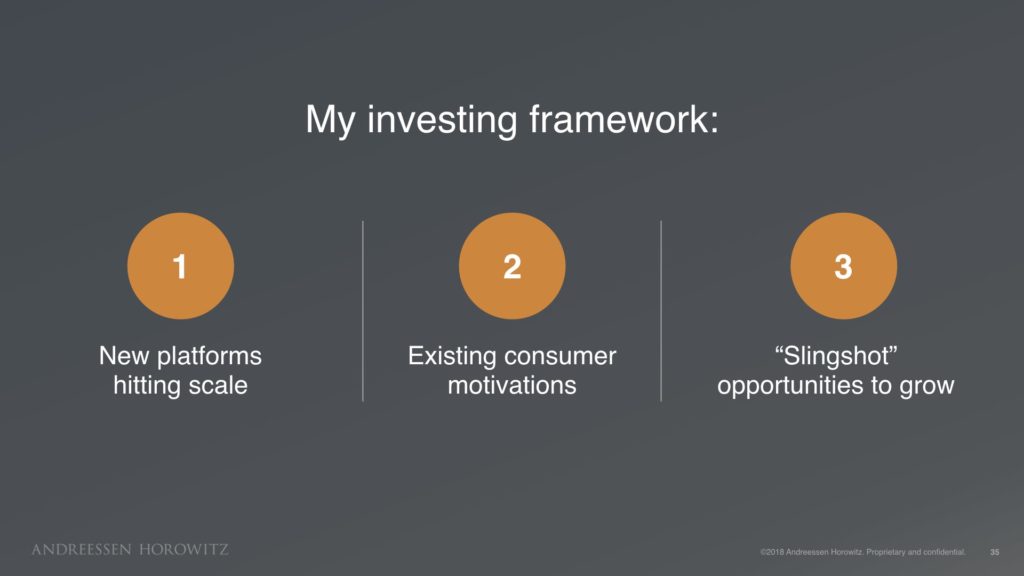
My investing thesis. The intersection of growth hacking, new tech, and pre-existing consumer motivations
Closing. Technology changes, but people stay the same
I presented all of this at the Andreessen Horowitz Summit in 2018, which gathers our portfolio companies, partners, LPs, and close friends. It’s great to be able to publish it here as well. Hope you enjoy it.
Another note is that this is closely related to, and complimentary, to this deck: The red flags and magic numbers that investors look for in your startup’s metrics. If the below deck is the macro view of how I’m looking at markets, industries, and technologies, then the metrics deck gives my POV on how to diligence each company.
Finally, before I jump in, it’s true that I talk about what sectors I’m into as well – and here are few areas I’m digging into:
Unbundling my Uber expertise
Marketplaces (particularly the $10T service economy – more on that here)
Transportation and travel
The future of work (Bottoms up SaaS, full-stack autonomy, etc)
Next generation entertainment and networks of people+content
esports, gaming, virtual worlds
Reinventing traditional media (Podcasting, eBooks, etc)
Content creator / influencer economy
… plus, anything else that looks like a network with network effects
Obviously if you are working on anything in this area, and have some traction in the US, would love to talk more. Get an intro through your investors and come find me! Happy to chat.
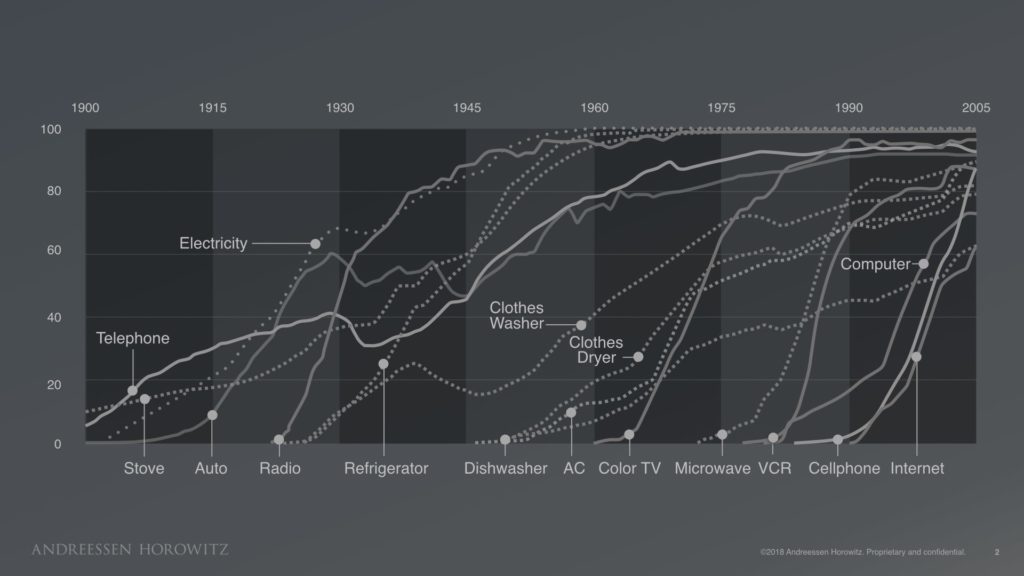
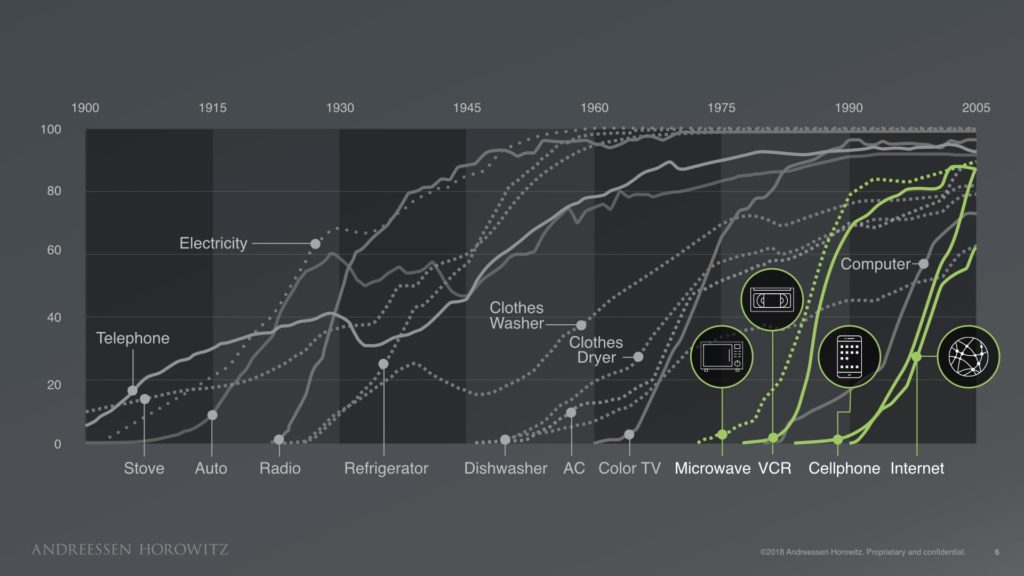
Today, we’re going to talk about what’s exciting and new in consumer startups, and what I’m investing in at Andreessen Horowitz. But to hit this topic, I want to start by zooming out. Here’s a graph of many of the new consumer technologies that have been introduced in the US over the past 100 years. The X-axis is years, and the Y-axis is the % of US households that tech reached.
Each line represents a different technology – you can see the car, the radio, air conditioning, the microwave, and so on. Lots of important consumer tech that was new at some point. But you also see something pretty interesting – some of the most important tech took decades to adopt.
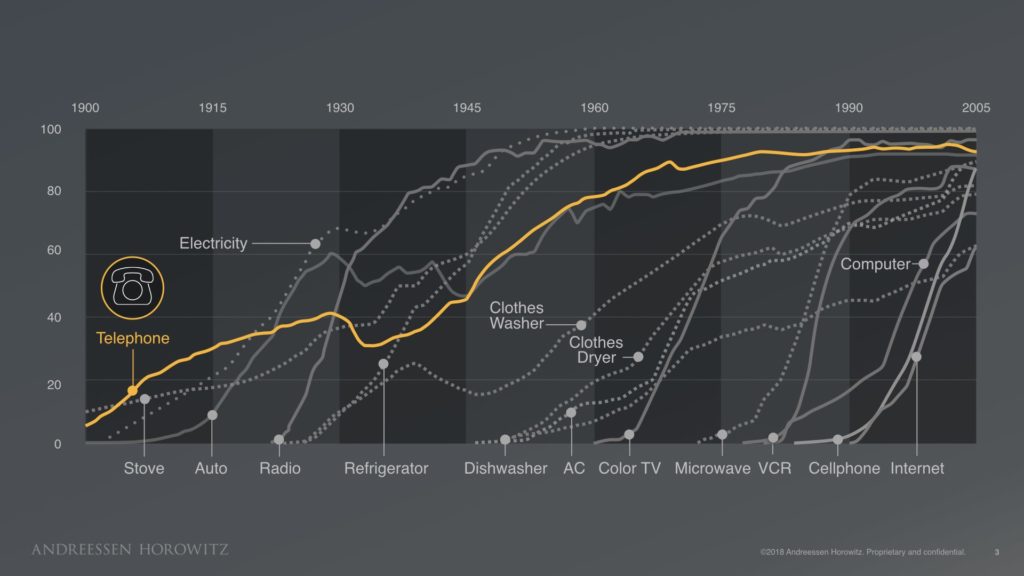
Let’s take a look at the telephone, in particular.
Above: Now, remember that the motivation of communicating with your friends and family has been around since the dawn of time. But when you look at the phone, it took 5 decades to break into the majority of US households. Wow! And of course at the time, there were other technologies competing for engagement – there was the telegraph, postal mail, etc. In fact, early on the phone was marketed as the “speaking telegraph.” Nevertheless, for something we now take for granted, several decades is a long time.
Why is that?
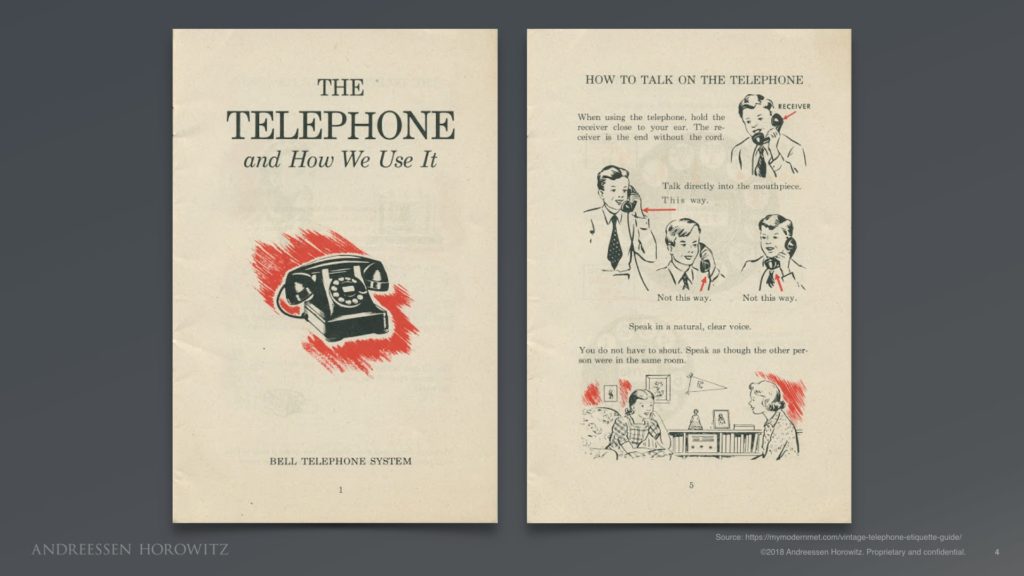
Above: Here’s why. These were the kinds of instructions that had to be packaged alongside the Bell Telephone System – how to hold the phone, which side went to your ear and which side was next to your mouth. And if someone called, you were supposed to say hello!
While the human motivation was there to speak to friends and family, we had to build the behavior from scratch.
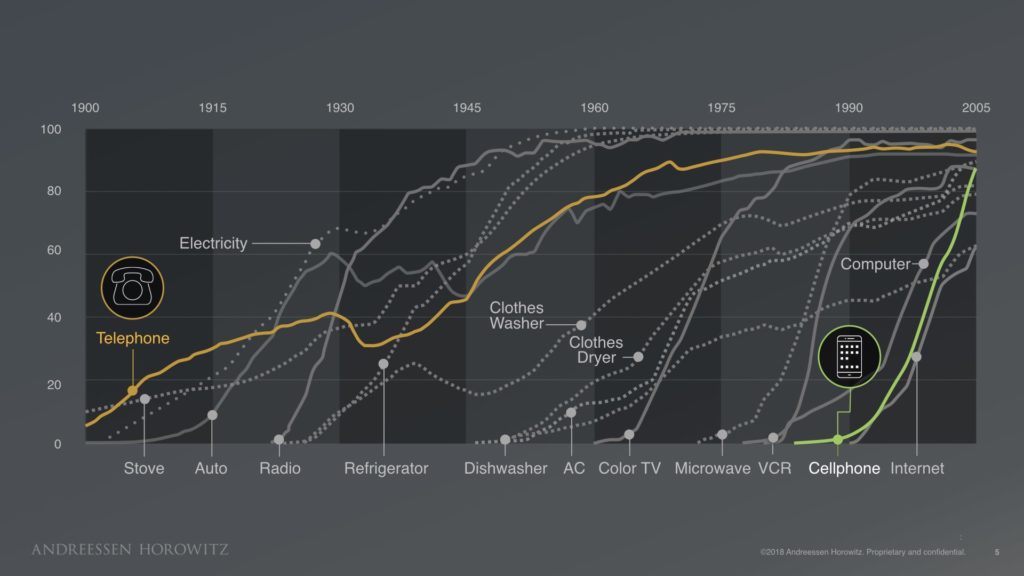
Above: Let’s contrast this to the cell phone, which took a much shorter time to conquer the market. And in fact, if you were to think about the next few years after it hit mass penetration in the US households, we also know it hit several billion active handsets worldwide. Some developing countries are truly mobile-first – they have mobile phones before they have computers, land lines, or reliable access to water.
Above: Each new technology is able to build on each other. You can use radio ads to market the TV. You can use the TV to market mobile phone services. And so we see an accelerating adoption rate of new technology introduction.
What a time to be alive! It’s only going to go faster.
Above: And yet, even with the backdrop of all of these new technologies, we are still fundamentally the same people from many eras ago. We haven’t physically changed much.
Above: We are the same humans who painted the walls of caves, because we love art, and love creativity.
Above: We are the same people who built massive theaters, because we love to be entertained.
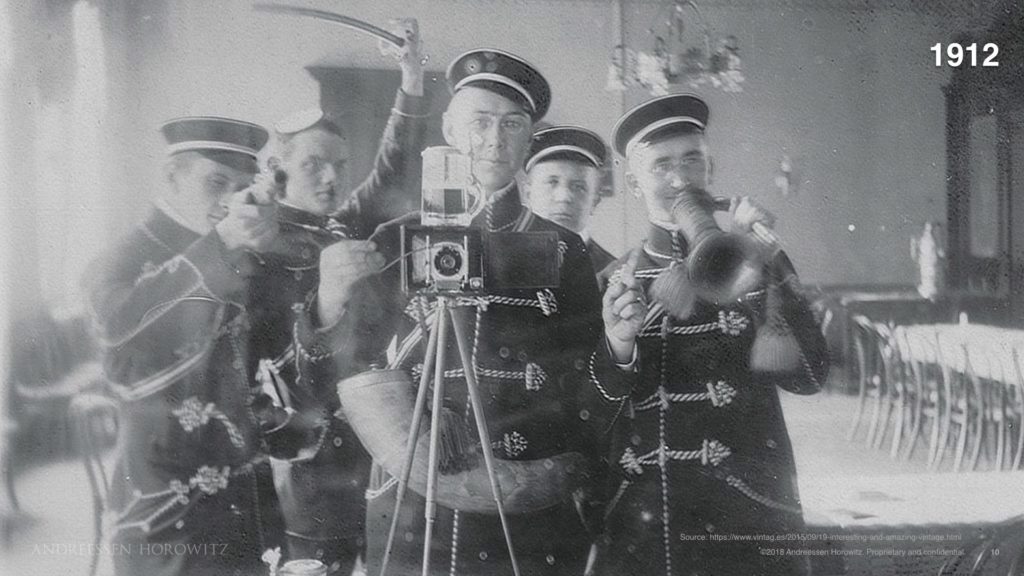
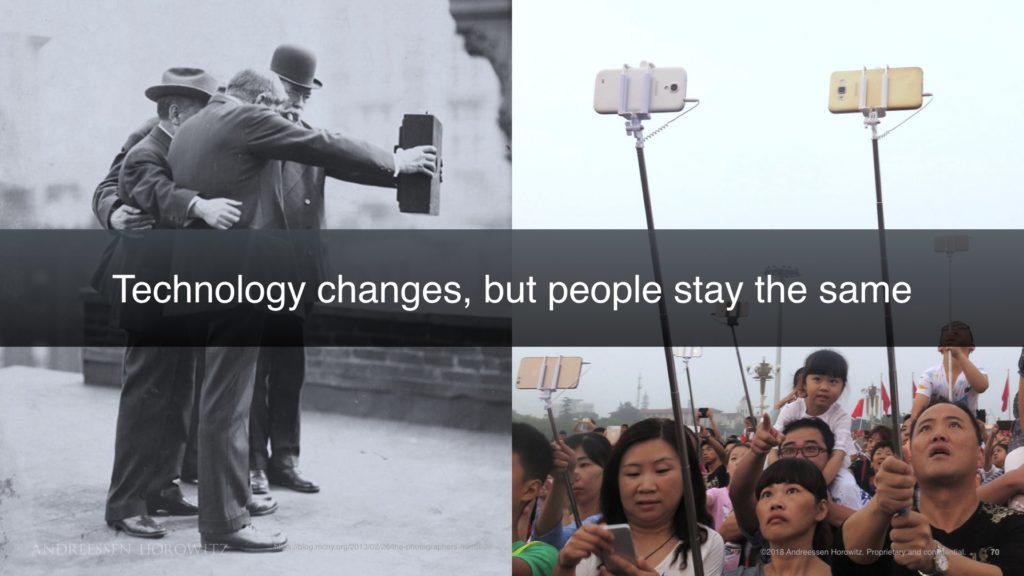
We took selfies as soon as the technology allowed.
… and it turns out, we have always loved scooters. In fact, the US Postal Service tried these gas-powered units out to deliver mail a century ago.
Above: In other words, while technology changes rapidly, people stay the same. And that’s the opportunity.
When we spot new startups who can take advantage of a moment in time, at the intersection of new technology, pre-existing human motivation, and can find a clever growth trick to get going – that’s exciting. That gets my attention.
Let’s look at a couple historical examples where these kinds of intersections have happened, and also some modern echoes of their impact.
First example, we’ll go back in time.
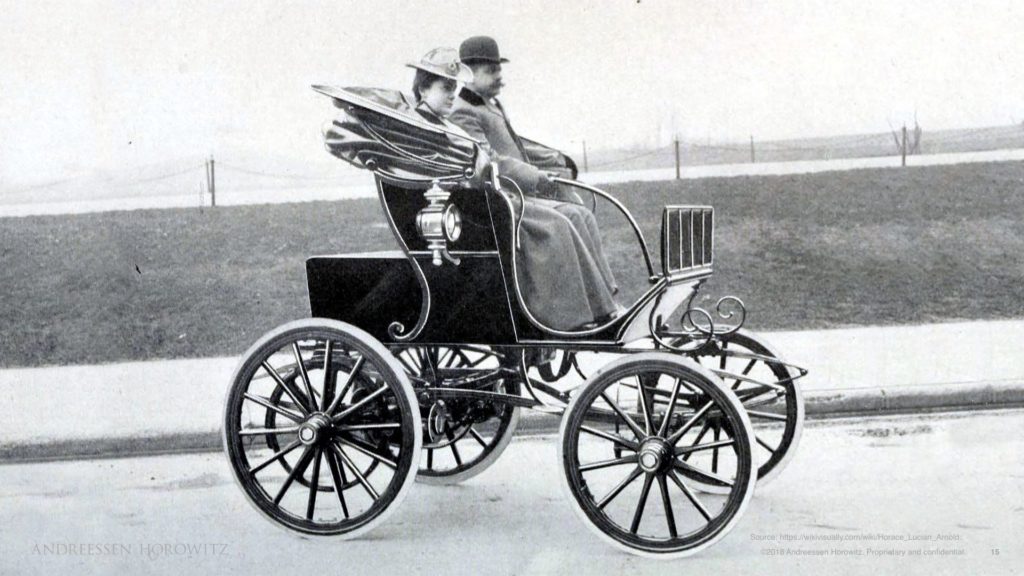
Above: It’s 1900, and there’s a new technology – cars. But there’s only 3,000 automobiles in France, because they’re hand-made, they break down all the time, and it’s not actually clear why they are superior to horses.
Above: They look like this.
In the introduction of these new technology, there forms an ecosystem of new companies that stand to benefit from more cars on the road. There’s gas stations, there’s maintenance businesses, and there’s also tires.
Above: One of these companies you’re familiar with – they’re called the Michelin Tire Company. And certainly you recognize the Michelin Man on the left over here.
Now they have a tough problem to get their business to grow. Remember, there’s only 3,000 cars. Selling tires is hard because what you actually need is to get car owners to drive more, and to create more car owners as well. That’s tricky! It’s a very indirect problem that requires a clever solution.
What was Michelin’s solution? We’re all familiar with the answer: They created the Michelin Guide.
Above: This small red book is one of the first Michelin Guides, given out with the subtitle, “Free for Drivers.”
This is a really clever effort for Michelin, because by packaging all the destination restaurants across France, and eventually Europe and the world, they gave people a reason to drive. And for existing automobile-owners, a reason to visit more towns and drive longer. And in fact, the Michelin Guide is so successful that many of us today don’t have much need for their tires, but certainly rely on their recommended restaurants.
This is a great example of a “hack” that gets their core business growing. And today, we’d call it Content Marketing, and it still works.
Let’s us a contemporary example that builds on their content marketing push.
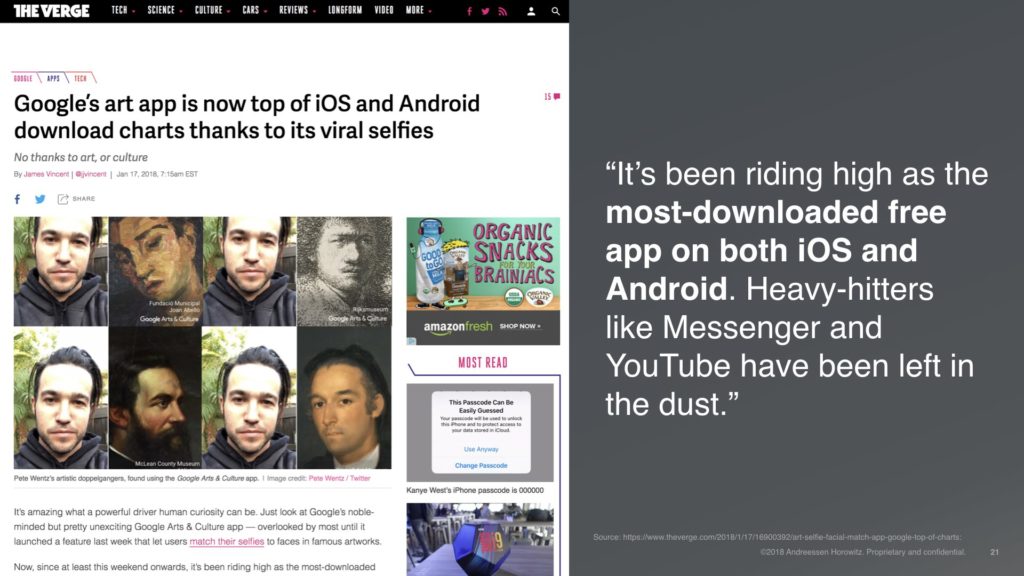
Google wants us all to be engaged in their mobile apps, search functions, and other properties – but they want to be relevant in our lives in other ways too, for example in our culture and media. One way Google does this is that they have a great app, called the “Google Arts and Culture” app, which demonstrates the world’s great works of art. They have virtual tours of museums, 360 degree photos, videos, and more.
But the best feature they built is the “take a selfie and see what kind of famous artwork you resemble” feature. As we saw earlier, we’ve always been obsessed with selfies. So this was successful. Very, very successful.
Above: We saw famous people like Kumail from HBO’s Silicon Valley take selfies and publish them – this is a pretty good one! And not only did celebrities share their photos, many everyday consumers did too. A lot of them.
This was so viral, in fact, that eventually this app was downloaded millions of times.
In early 2018, it became the most downloaded app at that time. More than YouTube. More than Facebook. Wow! That’s fantastic.
But what does this have to do with Google? This is such an indirect way for Google to tell their message, and to engage us in their products. But it’s a much fancier form of content marketing that lives in a mobile app. It worked for Michelin a hundred years ago, and it works for Google today too.
The second example I’ll talk about is more of a consumer user-generated content play. It starts in 1775.
Above: In 1775, the US Postal Service was founded!
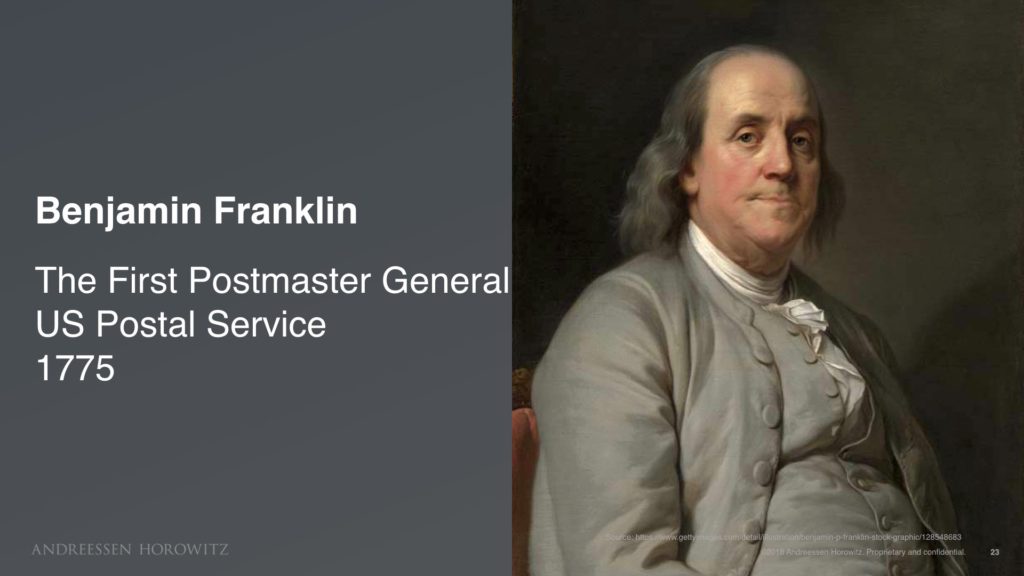
You may know that this guy – Benjamin Franklin – started it.
One way to think of the service, in contemporary jargon: The postal service was a new user-to-user communications platform that allows millions of consumers to communicate with each other for the first time. Before social media, and before email, the postal service let people do what we now take for granted.
There are, of course, a lot of reasons to use the postal service – there’s personal correspondence, bills, advertising, and many other uses. But one of the major uses of mail came unexpectedly, and introduced millions of people to new ways to use mail – the chain letter! It turns out sometimes, as a platform, you’re super lucky, and your customers find new ways to engage and grow your service for you.
In the photo above, you can see one of the world’s first chain letters. When enterprising individuals started to experiment with postal mail, they figured out they could get a ton of engagement when they worded the letters a certain way, and promised certain things.
The variant above behaved like the following: When you received one, it asked you to remove the top name, add your name to the bottom of the list, and mail a new dime to everyone on the list. And then to share the chain letter with 5 of your friends within 3 days. Specific, clear call-to-actions. If you followed the instructions in the letter, you would receive 15,625 letters with $1,500+ in dimes. In today’s dollars, this is about $33,000. What a great outcome! For folks who’d never seen this kind of letter, and who saw their friends slowly getting rich – one dime at a time – this was enticing.
These chain letters worked. In fact, they worked really well – too well. Within the first few months, this chain letter reached tens of millions of copies. It eventually became so successful that the US Postal Service had to shut it all down.
And thus, to this day, chain letters are illegal to send on the US Postal Service!
The chain letter was a clever creation, of course, but today we’d just call this viral user acquisition. Getting people to tell their friends and family to spread the word is something that’s always worked – and it works today as well! The modern version is far more sophisticated.
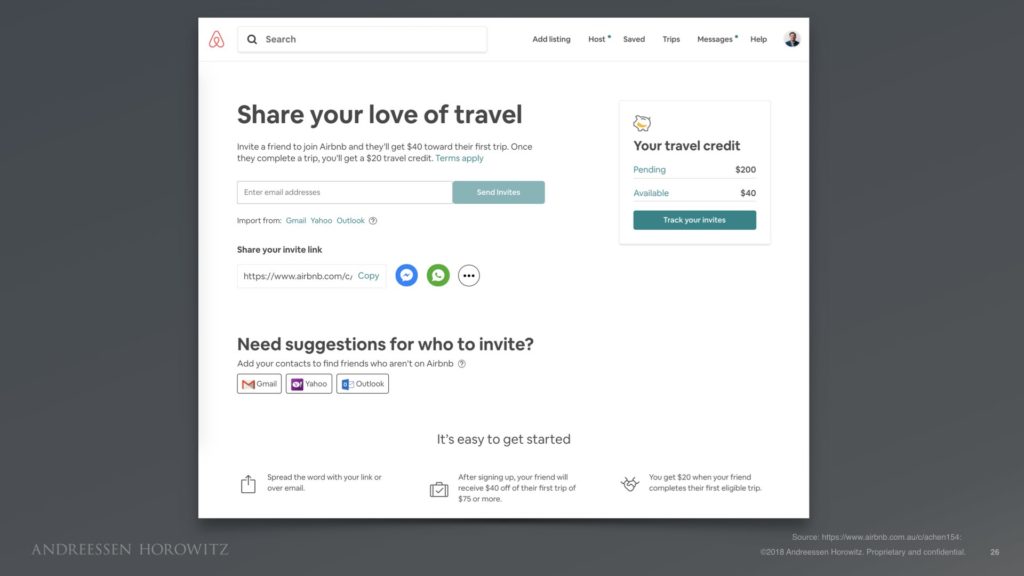
Above: Companies like Airbnb and Uber have referral programs, where you can send credits to your friends that can be redeemed on their trips. And you get credits in your account when they accept it too – it’s a reciprocal give/get program. Of course, we’ve improved the whole thing based on the latest tech. It integrates into Facebook Messenger and your email addressbook. It has tracking codes so you can see how well it circulates, and you A/B test the whole thing to make sure it’s highly optimized to be viral and spread.
Yet in the end, the mechanics are the same – you can get people to tell their friends and family, if you make it enticing for them, and also for yourself.
The last historical example I’ll use is a story about the “cold start” problem – but we’ll use grocery stories and toothpaste as our example.
In the early 1900s, it was the dawn of consumer packaged goods companies, who were still figuring out their distribution models. Amazingly, many of the household goods that we’re now familiar with hadn’t been invented yet. People still weren’t really bathing on a regular basis. It was an earlier, simpler time for CPG companies.
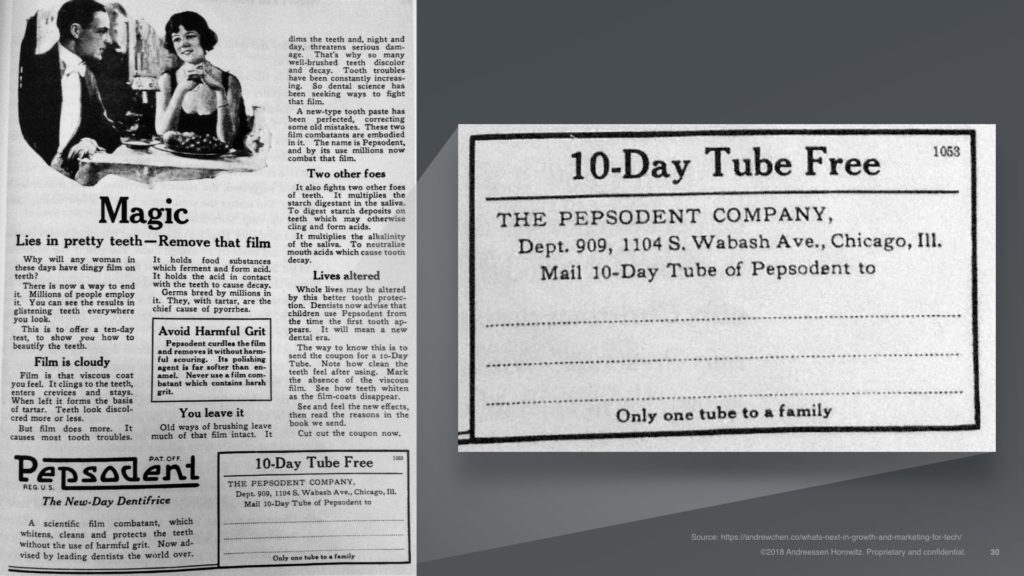
The amazing thing about the story of toothpaste – the above is a box by Pepsodent – is that toothpaste had to be invented. Even more amazing, people needed to be taught how to use toothpaste, and why.
You could advertise to spread the word with consumers, of course, but there was a second problem: How do you get the toothpaste in the hands of consumers?
Above: Across the US, there were tons of “mom and pop” grocery stores like these. They needed to carry the toothpaste so that consumers could come in and buy them. The problem is, they don’t want to stock the toothpaste (which they would need to buy) if consumers weren’t asking for it. And of course, consumers wouldn’t ask for the product – at least you couldn’t count on it – unless it was in stock.
This is a classic chicken and egg problem. So how do you solve this?
Above: The answer was simple: Advertising, and lots of it, and coupons too. First, it was important for the CPG companies to convince consumers that they had a yucky film on their teeth that could only be solved with toothpaste. And then they offered them coupons to come and try it.
Before running a big campaign like this, they could go to the grocery stores and say, “We’re about to create a ton of consumer demand! Folks are going to come in and ask for toothpaste, so now’s the time to stock it.” This solves the chicken and egg.
Solving the chicken and egg problem was hard then, and it’s hard now. And yet it’s something that every marketplace company has to do.
Above: If this example sounds familiar, it’s because it was used recently by our portfolio company Instacart too. Today, Instacart has deep relationships with the nation’s top grocers. But when they first got started, they just built a great app, got consumers buying things, and started dispatching shoppers to pick up their orders. As more demand was built, eventually Instacart could approach the grocery chains and set up a formal partnership to make the experience even better.
A hundred years ago, CPGs used advertising and coupons to drive demand to solve their chicken and egg. Today, startups use awesome mobile apps to create demand and to solve the same problem. It still works.
Above: As you might imagine, you could go for hours on these kinds of historical examples. There are a ton of them.
The important, core concept here is simple:
When there are new technologies and platforms hitting scale…
… and products tap in pre-existing consumer motivations
… and there are “growth hacks” that create slingshot opportunities to quickly and scalable grow
At the intersection of these three factors, amazing things can happen.
Of course, the first of the triumvirate is critical – and that is new technologies and platforms. And there are a ton of exciting ones right around the corner. But let’s first cover many of the new platforms that have hit major scale.
We have IoT devices, particularly voice assistants that live inside Google Homes and Amazon Echoes.
We have over a hundred million units of smart TV devices that combine media and computing. That’s exciting.
We have platforms like YouTube with over a billion active users. Wow!
And wearables with hundreds of millions of units that sometimes run apps themselves, or help augment experiences on your phone.
Not only there many platforms at scale, but it’s exciting to see a couple emerging categories as well.
There are Nintendo Switches, which have sold tens of millions of units. They focus on games, of course, but you can run cloud-connected games like Fortnite. And perhaps people will creative about what kinds of other apps work too.
All modern appliances are adding internet-connectivity. Fridges are an obvious one, but we all have seen Amazon add Alexa to microwaves too. What’s next after that??
There continue to be companies working on smart glasses. Above is from North, who are making Augmented Reality inside a pair of glasses that almost look identical to the ones you already have on your face. I think this will be a really compelling category in the next decade.
And finally, as autonomous cars come out, we’ll have to rethink the entire driving experience to mostly be a riding experience. I expect a lot more video, gaming, and interactive media in the car. This is an emerging area too over the next decade.
So there are a ton of new technologies right around the corner. We just need one or two to break out, in addition to the surefire opportunities around marketplaces, B2B, mobile, and other existing categories.
The question is: Which platforms am I most excited about? What are examples of growth tactics that are working now that are super clever? In the intersection of the three things I mentioned earlier, what would I zoom in on?
Let’s talk through a couple.
The first category of products I’d call “Video Native” products.
Above: The new technology at scale is video. We already talked about how big it is – but let’s give a really concrete example.
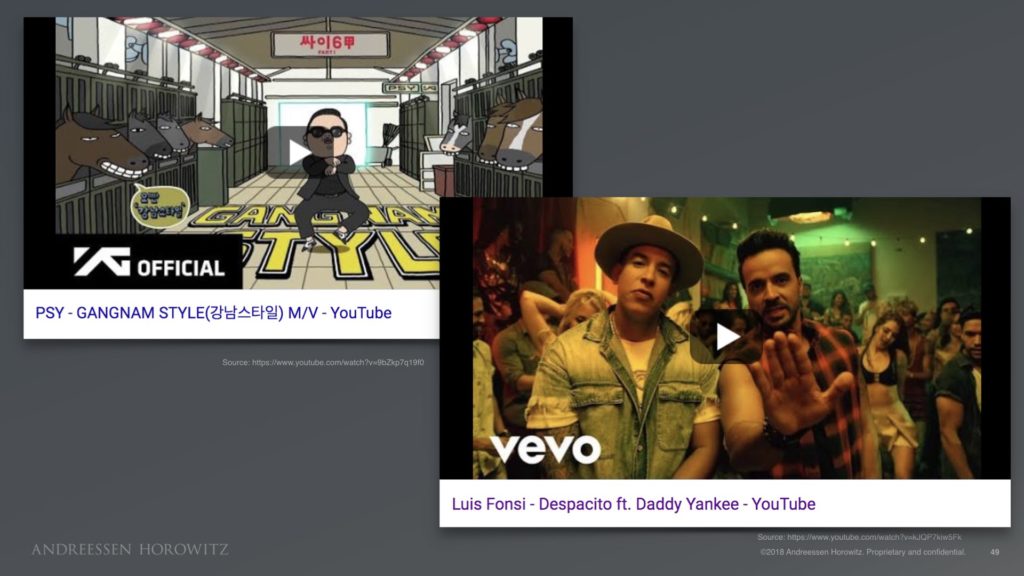
You all remember Gangnam Style, our favorite Korean pop song from 2013. And we’ve all heard Despacito (even if you don’t know you have). Here’s the link if you need a refresher.
Both videos are very popular, and have been viewed billions of times.
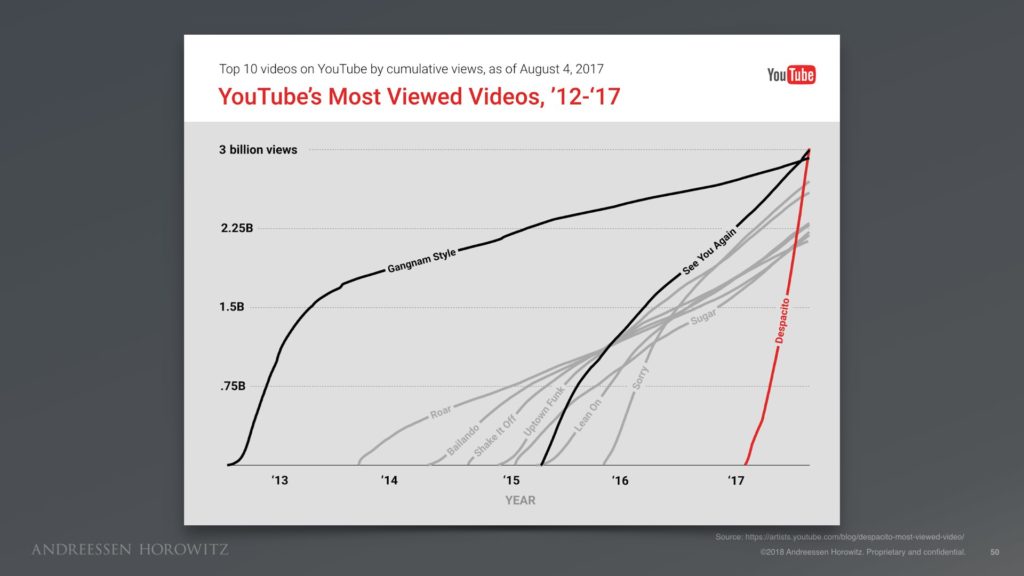
It took Gangnam Style nearly 5 years to be viewed three billion times. It’s an amazing feat, but even more amazing is that it took Despacito just a year!
Today, as of this writing, Depacito has been viewed 5.7 billion times. Wow.
Video is huge, but not just for music videos. It can be used by many other forms of entertainment and media to boost their growth as well.
My hypothesis: One of the big opportunities right now is that any product that automatically generates video when users engage will create more video sharing activity, thus more viral acquisition and engagement.
No wonder eSports are such a big deal right now. And it’s one of the reasons I’ve been spending time in this space.
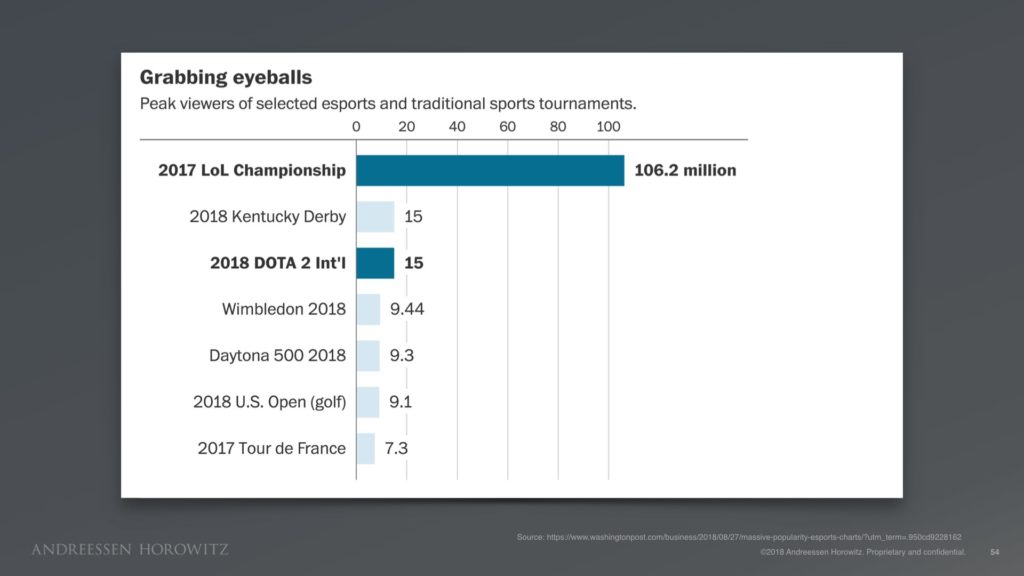
When you look at a game like League of Legends, created by Riot Games, you see some amazing stats.
The 2017 League of Legends championship was viewed by over 100 million live viewers. Compare that to Wimbeldon, which had a mere 9.4 million viewers. That’s over 10X. And yet we think of video games as a vertical niche – it’s certainly not. It’s mainstream, and it’s big.
One startup I’m excited about is Sandbox VR and the category of location-based virtual reality (LBVR). I think this is the format that is most likely to break virtual reality into the mainstream – not in-home. Sandbox asks for people to bring their friends, as a group, to a retail location to use what I think is the best VR experience on the planet. You wear haptic suits, there’s a motion capture system, props, and special effects. It’s next level.
With your friends, you fight pirates and zombies. And pirate zombies. They currently have two games, with more coming.
The whole experience is cool, but part of the reason I’m excited about the company is that they have an awesome growth tactic that connects directly to video.
Above: Every time you go with friends, it’s an event – you take a ton of pictures and video. In fact, Sandbox helps you generate a mixed reality video with that’s shareable. You publish it on Facebook and other social media, and it looks like so much fun that friends want to try it too. All of this generates viral growth! It’s a fantastic growth tactic.
It’s no wonder that one of the company’s slogans is – “Fun to play, but fun to watch too.”
The second example I want to use is “Offline to Online.” We all know about going online to offline, which has been enabled by companies like Amazon, eBay, and more. You can think of the first generation of marketplaces and internet products as filling this niche. However, this is the other way around.
Above: The fundamental technology shift that’s allowing this is everything to do with maps, GPS, and AR – all in your pocket, on your mobile phone. This enables both new product experiences but also new growth tactics too.
The growth hack I have in mind is that you can now have highly visible offline experiences that then drive people towards using their app. As online channels become saturated – Facebook and Google ads are expensive, there are literally millions of apps in the app store – it turns out the real world gets pretty attractive.
Let’s look at some examples:
First, there’s Pokemon Go, by Niantic. You see yourself on a map, with Pokemon all around you. Collect them all! It’s fun, but it also means that people are watching others play. Sometimes this is a small reminder, if you see a small group gathered trying to collect a rare Pokemon.
But sometimes it gets big – really big.
Here’s a photo of tends of thousands of people who showed up for a Pokemon event. This is just one example, but Niantic does events all over the world, all the time.
Of course, rideshare looks like this too. Who can forget the pink mustaches from across the city that remind us to try and use Lyft?
Transportation is an intrinsically viral product – they are social activities. You bring your friends and loved ones in the car with you, to share the costs. Even the fully utilitarian version – going from point A to point B – can be social, since there’s often a person on the other side. These mean that the rideshare companies all benefit from significant viral and organic traffic to their products.
Scooters are another great example. Our portfolio company Lime has their scooters deployed across a city, and each scooter is literally a mini-billboard to try it out. And the first time you’ve seen someone ride a scooter, they probably had a big smile on their face! It looks fun. And because of that, they benefit from the offline to online effect.
Above: So these are two quick examples – I’m keeping my eye on more, but again, it’s all about the intersection of new tech, existing consumer behavior, and an insight about growth. If you can get these three together, it’s super interesting.
There are a ton of new plaforms hitting scale. I’m also interested in GSuite, which is hitting critical mass across SMBs and enterprises. I mentioned Alexa. You can see products like Twitch and Tik Tok growing quickly – with the former adding extensions and the ability for apps to integrate. And Minecraft and Roblox are fascinating virtual worlds that bundle social networks and content together in one place – also fascinating to track.
As these platforms emerge, there will be new startups can be built adjacent or on top of them.
I’m very excited about what’s going on in consumer – and am excited to see what people build.
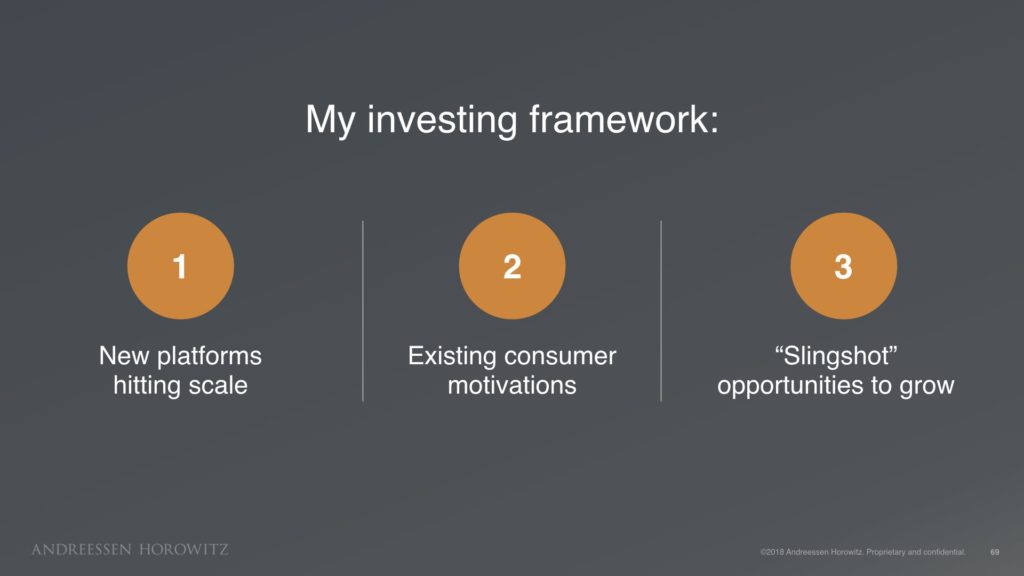
Again, here’s my investing framework – 1, 2, and 3. It’s important to see the intersection.
The important idea here is simple:
Technology changes, but people stay the same. If we can spot the new, breakthrough products that can grow at the intersection of this technological change, and peoples’ behaviors, then we’ll build the next generation of startups. (And yes, we have really always loved selfies – it’s not a new thing).
[Dear readers, this essay is on the future of marketplaces. Is there still room for marketplace startups to innovate? We answer, emphatically, yes! Am excited to share a vision on the past and future of the service economy, in a collaboration by my a16z colleague Li Jin. From “Unbundling Craiglist” to “Uber for X” – we lay it all out in a single framework. Hope you enjoy our thinking! -A]
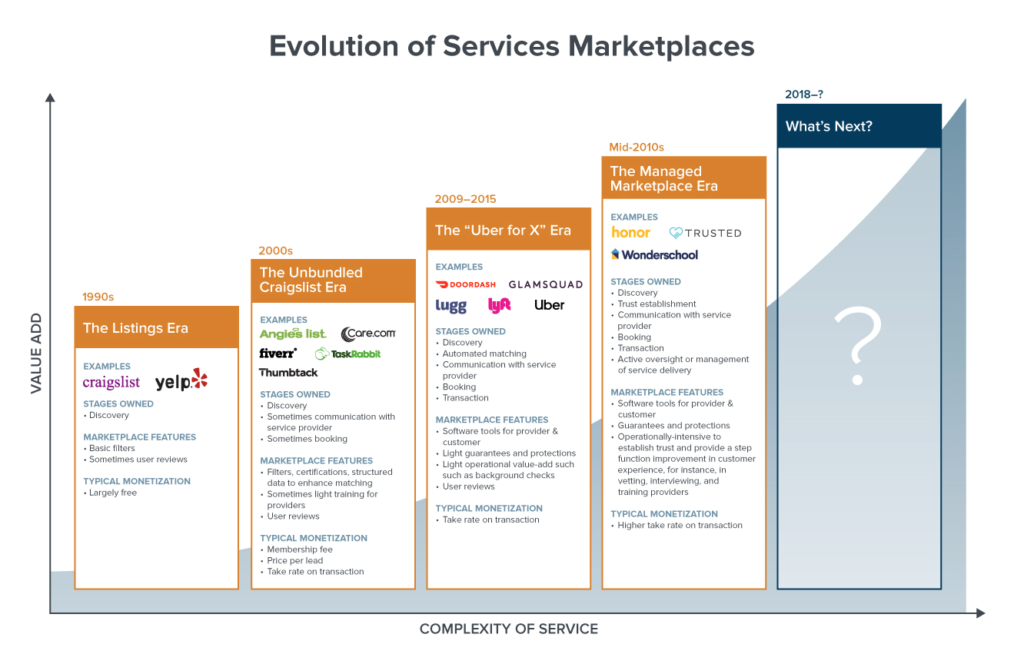
Above: 4 eras of marketplaces focused on the service economy – and what’s next
Goods versus Services – why a breakthrough is coming
Marketplace startups have done incredibly well over the first few decades of the internet, reinventing the way we shop for goods, but have been less successful services. In this essay, we argue that a breakthrough is on its way: While the first phase of the internet has been about creating marketplaces for goods, the next phase will be about reinventing the service economy. Startups will build on the lessons and tactics to crack the toughest service industries – including regulated markets that have withstood digital transformation for decades. In doing this, the lives of 125 million Americans who work in the services-providing industries will join the digital transformation of the economy.
In the past twenty years, we’ve transformed the way people buy goods online, and in the process created Amazon, eBay, JD.com, Alibaba, and other e-commerce giants, accounting for trillions of dollars in market capitalization. The next era will do the same to the $9.7 trillion US consumer service economy, through discontinuous innovations in AI and automation, new marketplace paradigms, and overcoming regulatory capture.
The service economy lags behind: while services make up 69% of national consumer spending, the Bureau of Economic Analysis estimated that just 7% of services were primarily digital, meaning they utilized internet to conduct transactions.
We propose that a new age of service marketplaces will emerge, driven by unlocking more complex services, including services that are regulated. In this essay, we’ll talk about:
Why services are still primarily offline
The history of service marketplace paradigms
The Listings Era
The Unbundled Craigslist Era
The “Uber for X” Era
The Managed Marketplace Era
The future of service marketplaces
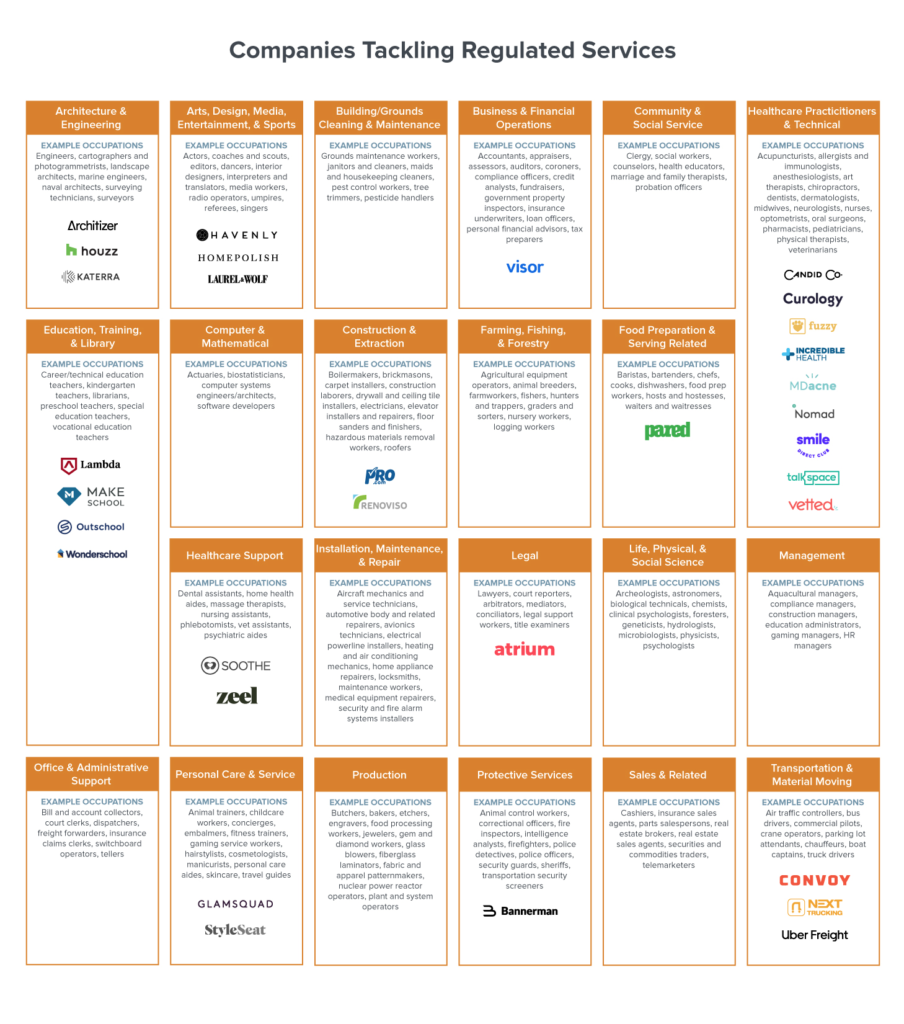
Regulated services
Five strategies for unlocking supply in regulated markets
Future opportunities
Let’s start by looking at where the service economy is right now and why it’s resisted a full scale transformation by software.
Software eating the service economy, but it’s been slow
We’ve all had the experience of asking friends for recommendations for a great service provider, whether it be a great childcare provider, doctor, or hair stylist. Why is that? Why aren’t we discovering and consuming these services in the same digital way we’ve come to expect for goods?
Despite the rise of services in the overall economy, there are a few reasons why services have lagged behind goods in terms of coming online:
Services are complex and diverse, making it challenging to capture relevant information in an online marketplace
Success and quality in services is subjective
Fragmentation – small service providers lack the tools or time to come online
Real-world interaction is at the heart of services delivery, which makes it hard to disaggregate parts of a purchase that might be done online
Let’s unpack each reason below:
First, on the complexity and diversity of services, services are performed by providers who vary widely, unlike goods which are manufactured to a certain spec. Even the names of services can vary: what one home cleaning service calls a “deep clean” can be different from another provider’s definition. This lack of standardization makes it difficult for a service marketplace to capture and organize the relevant information.
Second, services are often complex interactions without a clear yardstick of success or quality. The customer experience of a service is often subjective, making traditional marketplace features like reviews, recommendations, and personalization more difficult to implement. Sometimes just getting the job completed (as in rideshare) is sufficient to earn a 5-star review, whereas other higher-stakes services, like childcare, have complex customer value functions, including safety, friendliness, communicativeness, rapport with child, and other subjective measures of success.
Third, small service providers often lack the tools or time to come online. In many service industries, providers are small business owners with low margins; contrast this with goods manufacturing where there are economies of scale in production, and thus consolidation into large consumer products companies. As a result of industry fragmentation, service providers often don’t have time or budget to devote to key business functions, such as responding to customer requests, promoting and marketing themselves, maintaining a website, and other core functions. While major e-commerce platforms have taken on the role of distribution, merchandising, and fulfilling orders for goods, there are few platforms that service providers can plug into to manage their businesses and reach customers.
Fourth, real-world interaction is central to services, which can pull other steps of the services funnel into the offline world as well. Many services are produced and consumed simultaneously in real-world interactions, whereas goods entail independent stages of production, distribution, and consumption. The various stages of the goods value chain can be easily unbundled, with e-commerce marketplaces comprising the discovery, transaction, and fulfillment steps. Conversely, since the production and consumption of services usually occur simultaneously offline, the discovery, distribution, and transaction pieces are also often integrated into the offline experience. For instance, since getting a haircut entails going to a salon and having interactions with the providers there, the stages of the value chain that precede and follow that interaction (discovery, booking, and payment) also often get incorporated into the in-person experience.
All of these factors make it very hard for services to come online as comprehensively and widely as commerce – but there’s hope. We’ve seen multiple eras of bringing the service economy online, and we’re on the verge of a breakthrough!
The 4 eras of Service Marketplaces, and what’s next
There have been 4 major generations of service marketplaces, but coverage of services and providers remains spotty, and many don’t provide end-to-end, seamless consumer experiences. Let’s zoom out and talk through each historical marketplace paradigm, and what we’ve learned so far.
Above, you can see that there have roughly been four major eras of marketplace innovation when it comes to the service economy.
1. The Listings Era (1990s) The first iteration of bringing services online involved unmanaged horizontal marketplaces, essentially listing platforms that helped demand search for supply and vice versa. These marketplaces were the digital version of the Yellow Pages, enabling visibility into which service providers existed, but placing the onus on the user to assess providers, contact them, arrange times to meet, and transact. The dynamic here is “caveat emptor”–users assume the responsibility of vetting their counterparties and establishing trust, and there’s little in the way of platform standards, protections, or guarantees.
Craigslist’s Services category is the archetypal unmanaged service marketplace. It includes a jumble of house remodeling, painting, carpet cleaners, wedding photographers, and other services. But limited tech functionality means that it feels disorganized and hard to navigate, and there’s no way to transact or contact the provider without moving off the platform.
We’ve all had the experience of a listings-oriented product, like Craigslist. You find something you want, but everything else – trust/reviews/payments/etc – that’s all up to you!
2. The Unbundled Craigslist Era (2000s)
Companies iterated on the horizontal marketplace model by focusing on a specific sub-vertical, enabling them to offer features tailored to a specific industry. We’ve all seen the diagram of various companies picking off Craigslist verticals – it looks something like this:
As a reaction to the “Wild West” nature of Craigslist, to improve the customer experience, each startup would create value-add via software. For instance, Care.com carves off the Childcare section of Craigslist, and provides tech value-add in the form of filters, structured information, and other features to improve the customer experience of finding a local caregiver. It’s a huge leap in terms of user experience over Craigslist’s Childcare section.
Angie’s List, a home services site founded in 2005, carves off Craigslist’s household services category. The platform has features including reviews, profiles, certified providers, and an online quote submission process. But the marketplace doesn’t encompass the entire end-to-end experience: users turn to Angie’s List for discovery, but still need to message or call providers and coordinate offline.
Unmanaged vertical marketplaces like Angie’s List go a step beyond Craigslist and take on some value-add services like certifying providers when they meet certain standards, but customers still need to select and contact the service provider, place their trust in the provider rather than the platform, and transact offline.
Like previous listing sites, these platforms in this era try to use the ‘wisdom of the crowds’ to promote trust. These platforms have a network effect in that more reviews means more users and more reviews. But user reviews have their limitations, as every user has a unique value function that they’re judging a service against. Without standardized moderation or curation, and without machine learning to automate this process, customers have the onus of sifting through countless reviews and selecting among thousands of providers.
3. The “Uber for X” Era (2009-)
In the early 2010s, a wave of on-demand marketplaces for simple services arose, including transportation, food delivery, and valet parking. These marketplaces were enabled by widespread mobile adoption, making it possible to book a service or accept a job with the tap of a button.
Companies like Handy, Lugg, Lyft, Rinse, Uber and many others made it efficient to connect to service providers in real-time. They created a full-stack experience around a particular service, optimizing for liquidity in one category. For these transactions, quality and success were more or less binary–either the service was fulfilled or it wasn’t–making them conducive to an on-demand model.
These platforms took on various functions to establish an end-to-end, seamless user experience: automatically matching supply and demand, setting prices, handling transactions, and establishing trust through guarantees and protections. They also often commoditized the underlying service provider (for instance, widespread variance on the driver side of rideshare marketplaces is distilled into Uber X, Uber Pool, Uber Black, Uber XL, etc.).
Unlike the previous generations of marketplaces, in which the provider ultimately owns the end customer relationship, these on-demand marketplaces became thought of as the service provider, e.g. “I ordered food from DoorDash” or “Let’s Uber there,” rather than the underlying person or business that actually rendered the service.
Over time, many startups in this category failed, and the ones that survived did so by focusing on and nailing a frequent use case, offering compelling value propositions to demand and supply (potentially removing the on-demand component, which wasn’t valuable for some services), and putting in place incentives and structures to promote liquidity, trust, safety, and reliability.
4. The Managed Marketplace Era (Mid-2010s) In the last few years, we’ve seen a rise in the number of full-stack or managed marketplaces, or marketplaces that take on additional operational value-add in terms of intermediating the service delivery. While “Uber for X” models were well-suited to simple services, managed marketplaces evolved to better tackle services that were more complex, higher priced, and that required greater trust.
Managed marketplaces take on additional work of actually influencing or managing the service experience, and in doing so, create a step-function improvement in the customer experience. Rather than just enabling customers to discover and build trust with the end provider, these marketplaces take on the work of actually creating trust.
In the a16z portfolio, Honor is building a managed marketplace for in-home care, and interviews and screens every care professional before they are onboarded and provides new customers with a Care Advisor to design a personalized care plan. Opendoor is a managed marketplace that creates a radically different experience for buying and selling a home. When a customer wants to sell their home, Opendoor actually buys the home, performs maintenance, markets the home, and finds the next buyer. Contrast this with the traditional experience of selling a home, where there is the hassle of repairs, listing, showings, and potentially months of uncertainty.
Managed marketplaces like Honor and Opendoor take on steps of the value chain that platforms traditionally left to customers or providers, such as vetting supply. Customers place their trust in the platform, rather than the counterparty of the transaction. To compensate for heavier operational costs, it’s common for managed marketplaces to actually dictate pricing for services and charge a higher take rate than less-managed marketplace models.
Managed marketplaces are a tactic to solve a broader problem around accessing high-quality supply, especially for services that require greater trust and/or entail high transaction value. If we zoom out further, there’s many more categories of services that can benefit from managed models and other tactics to unlock supply.
What’s next: The future of Service Marketplaces (2018-?)
We think the next era of service marketplaces have potential to unlock a huge swath of the 125 million service jobs in the US. These marketplaces will tackle the opportunities that have eluded previous eras of service marketplaces, and will bring the most difficult services categories online–in particular, services that are regulated. Regulated services–in which suppliers are licensed by a government agency or certified by a professional or industry organization–include engineering, accounting, teaching, law, and other professions that impact many people’s lives directly to a large degree. In 2015, 26% of employed people had a certification or license.
Regulation of services was critical pre-internet, since it served to signify a certain level of skill or knowledge required to perform a job. But digital platforms mitigate the need for licensing by exposing relevant information about providers and by establishing trust through reviews, managed models, guarantees, platform requirements, and other mechanisms. For instance, most of us were taught since childhood never to get into cars with strangers; with Lyft and Uber, consumers are comfortable doing exactly that, millions of times per day, as a direct result of the trust those platforms have built.
Licensing of service professions create an important standard, but also severely constrains supply. The time and money associated with getting licensed or certified can lock out otherwise qualified suppliers (for instance, some states require a license to braid hair or to be a florist), and often translates into higher fees, long waitlists, and difficulty accessing the service. The criteria involved in getting licensed also do not always map to what consumers actually value, and can hinder the discovery and access of otherwise suitable supply.
Five strategies to unlock regulated industries We’re starting to see a number of startups tackling regulated services industries. As with each wave of previous service marketplaces, these new approaches bring more value-add to unlock the market, with variations in models that are well-suited to different categories.
The major approaches in unlocking supply in these regulated industries include:
Making discovery of licensed providers easier
Hiring and managing existing providers to maintain quality
Expanding or augmenting the licensed supply pool
Utilizing unlicensed supply
Automation and AI
1) Making discovery of licensed providers easier
Some startups are tackling verticals that lack good discovery of licensed providers. Examples include Houzz, which enables users to search for and contact licensed home improvement professionals, and StyleSeat, which helps users find and book beauty appointments with licensed cosmetologists.
2) Hiring and managing existing providers to maintain quality
Companies can raise the quality of service by hiring and managing providers themselves, and by managing the end-to-end customer experience. Examples are Honor and Trusted, managed marketplaces for elder care and childcare, respectively, which employ caregivers as W-2 employees and provide them with training and tools. In the real estate world, Redfin agents are employees whose compensation is tied to customer satisfaction, unlike most real estate agents who are independent contractors working on commission.
3) Expanding or augmenting the licensed supply pool
Expanding the licensed supply pool can take the form of leveraging geographic arbitrage to access supply that’s not located near demand. Decorist, Havenly, Laurel & Wolf, and other online interior design companies enable interior designers around the world to provide design services to consumers without physically visiting their homes (yes, in many parts of the US interior design requires a license!). With improvements in real-time video, richer telepresence technologies, and better visualization technologies, more synchronous services are also shifting from being delivered in-person to online. Outschool and Lambda School are examples of de-localizing instruction, enabling teachers and students to participate remotely while preserving real-time interaction.
Another approach is to help suppliers navigate the certification process. A16z portfolio company Wonderschool makes it easier for individuals to get licensed and operate in-home daycares.
Lastly, there’s the approach of augmenting certified providers so they can serve more customers. Fuzzy, an in-home veterinary service, uses AI and vet technicians to augment the productivity of licensed veterinarians; and a16z portfolio company Atrium builds automation and workflow management to provide efficiency gains in the legal industry.
4) Utilizing unlicensed supply
Some companies utilize unlicensed supply–notably Lyft, Uber, and other peer-to-peer rideshare networks. Another example is Basis, a managed marketplace for guided conversations with trained but unlicensed specialists to help people with anxiety, depression and other mild to moderate mental health issues.
In the pet space, Good Dog is a marketplace that brings together responsible pet breeders and consumers looking for a dog. Going beyond existing breeder licensing, which the company felt didn’t map to what consumers valued, Good Dog established its own higher set of standards and screening process in conjunction with veterinary and academic experts.
5) Automation and AI Other startups automate away the need for a licensed service provider altogether. These include MDAcne, which uses computer vision to diagnose and treat acne; and Ike Robotics and other autonomous trucking startups which remove the need for a licensed truck driver.
Opportunities for companies addressing regulated services The last twenty years saw the explosion of a number of services coming online, from transportation to food delivery to home services, as well as an evolution of marketplace models from listings to full-stack, managed marketplaces. The next twenty years will be about the harder opportunities that software hasn’t yet infiltrated–those filled with technological, operational, and regulatory hurdles–where there is room to have massive impact on the quality and convenience of consumers’ everyday lives.
The services sector represents two-thirds of US consumer spending and employs 80% of the workforce. The companies that reinvent various service categories can improve both consumers’ and professionals’ lives–by creating more jobs and income, providing more flexible work arrangements, and improving consumer access and lowering cost.
The companies mentioned in this essay just scratch the surface of regulated industries. You can imagine a marketplace for every service that is regulated, with unique features and attributes designed to optimize for the customer and provider needs for that industry. (A full list of regulated professions in the US can be found here.) We fully expect more Airbnb- and rideshare-sized outcomes in the service economy.
If you’re a founder who is looking to take on the challenge of tackling more complex services and bringing them online, we’d love to hear from you.
Building a new growth team is hard. You have to figure out the macro organizational issues – how it fits in with marketing, product, and other functions – as well as the micro, like how to measure the success of these teams. It’s a tricky topic and something that a lot of teams are thinking about right now.
A few months ago, I spoke on lessons learned from various organizational structures for the growth teams at Uber, organized as 5 broad topics:
Why create a growth team?
What’s the difference between a “growth hacker” and a growth team?
What’s the difference between growth and marketing/product/whatever?
Where should growth teams focus?
I’m starting or joining a growth team! What should I expect?
To answer these questions, Brian Balfour and I worked on a deck, based on materials from Reforge. (Check them out for more practical reference materials on this topic)
The deck is presented below! Hope you enjoy the materials, and feel free to reach out or follow me for realtime updates at @andrewchen on Twitter.
Above: Today, I’m going to present a few key topics that you need to figure out as you build a growth team for your company. First, why you might want to create one in the first place. Then, the differences in skillsets for both individual practitioners versus the org – and versus existing functions like Product and Marketing. And finally, where teams should focus and how to make an impact in the early days.
The ideas within these topics are drawn from several places – interviews and discussion with the folks who lead growth teams at places like Slack, Dropbox, Hubspot, Pinterest, and others, but also my own personal experiences at Uber.
Above: Many of you may remember when Uber looked like this. It was all up and to the right.
The growth team was originally created in 2013, founded by Ed Baker. It experimented with a ton of different organizational configurations – I joined a few years after it was created and spent about 3 years there, and spent most of my time on driving growth on the rider side of the platform.
Above: While I was at Uber, a lot of amazing projects were run out of the growth team. My colleagues in China Growth made incredible progress – shoutout to Ben Chiang, Han Qin, Michelle Chen, Jia Zou, Vinay Ramani, and many others – in addition to much of the progress being made across the US and the rest of the world.
At its peak , the growth team included China Growth and had over 500+ people. It was an amazing, dynamic time for the company. I learned a ton and am excited to share some of the ideas today.
Uber has changed a lot over the years. We certainly changed logos many times. But I think there are some really critical things that we can pass along to others in the ecosystem.
Let’s start with the basics…
Above: First, why create a growth team in the first place? We know that a lot of companies have folks with formal growth teams, and informal ones with growth PMs/marketers/etc running around.
Above: When you just look at the cross-section of companies in the industry, many of the newest and best B2B and consumer companies have all built growth teams.
We’ve also heard many Boards ask their CEOs to invest in growth teams. Why did this even emerge in the first place?
Above: The easiest way to talk about The Product Death Cycle.
Unfortunately, this is how products are often shipped and released. You have someone with a vision, who builds some features and does a launch. They might get an initial spike of traction, but when growth flattens, it’s not clear where to take things. They talk to some customers, ask what they want, and try again. They add a few more features, re-launch, and so the cycle goes on.
Do that too many times, and all of a sudden, you’re dead.
Why?
Above: If you build it, they may not come, it turns out. Better products, and more features, do not necessarily equal growth.
Many of the key levers for driving more user acquisition, retention, engagement, can sometimes sit outside the toolkit for most great product leaders. There’s a long laundry list of skills that are critical, but not often considered core to the product: adtech integrations, signup funnel A/B testing, optimizing notification delivery, testing price points, testing cohort curves, etc. Yes, occasionally there are people who know all of it – but they are rare!
Furthermore, no one individual can drive this. Instead, you need to bake this into your organizational goals and DNA. You need to collect these efforts within the larger framework of the company.
Above: Thus, we seek to build a framework for growth that’s a discipline and organizational structure within its own right.
We’ve come to see that “design thinking” and “agile engineering” are their own systems of organizational structures, workflows, philosophies, and skillsets. They are key to how we work within a company.
In the same way, we can build growth teams as a system too.
Above: Product Growth is the discipline of applying the scientific method to business KPIs.
It provides an underlying system for increasing metrics whether it’s revenue, acquisition, retention, engagement, or another key business metric.
Above: And just as you’d expect with the scientific method, the steps are build on understanding the data, creating hypotheses that identify why certain processes are happening, prioritizing those ideas, running the experiments, and then repeating the cycle.
That way, if you think your active user count is low, you can analyze the data to understand that you need more top of funnel user acquisition, then hypothesize that a combo of paid advertising and referrals can help, and then execute against that.
That is much, much better and more targeted than just building more features that your users ask for, and expecting growth to magically increase as a result. (Maybe you should build those features anyway, but don’t do it for growth!)
Above: Second topic. Let’s talk about the difference between the “Growth Hacker” – a term that Sean Ellis invented and I helped popularize – and a “Growth Team.” This is an important one.
Above: In the early stages of the growth skillset, there were no teams. There were a number of individuals and startup founders who were putting the necessary ideas, workflows, and tactics together. Some of these folks would refer to themselves as “growth hackers” in a tongue-in-cheek way.
As the skillset grew, it was clear that to do anything impactful, especially within the context of a larger/complex product, you needed to organize entire groups of people.
Above: Thus the growth team emerged, with the philosophy that you don’t want a lone genius with all the levers, and a team of helpers. Instead, you need to create an organization with a broad set of skills.
Growth is a team sport, and to run the scientific method on your KPIs, you need a lot of people who can help you.
Above: For most of the missions for a growth team, you need many different functional roles to help – from Product, Marketing, Engineering, Data, Ops, Finance, etc., etc. You combine all of these folks into individual teams and organize them together into a growth org.
Above: What are people doing within all of these roles?
Growth PM: A product manager that’s responsible for the experiment roadmap
Growth engineer: An engineer who’s focused on technical decisions and implementing experiments
Growth marketer: A versatile marketer with an expertise in a given channel – from paid marketing to SEO to email to others
Growth data: An analyst focused on creating insights – both macro on the user lifecycle, and micro, on specific experiments
Growth design: A designer leading the UX, but with an emphasis on speed
You might also loop in other function – for example at Uber, a lot of decisions around incentive spend had to include folks from Finance or Pricing. And you’d always have to include Ops to think through how it affected things on the ground.
Above: Depending on the problem you’re trying to solve, you might have a different makeup on the team. For the new user experience – which might include increasing signup conversion, and maybe even integration into ads – you’d probably emphasize engineers. You’d want an Android and iOS engineers. Plus even performance marketing folks, some data analysts to look at the metrics, etc.
Above: If you were working on SEO, on the other hand, then maybe you wouldn’t need designers. This might be more about optimizing page structure, where the content goes, etc. In this case, you might emphasize SEO marketing, data, and a full-stack engineer for web.
Ultimately, the goal is to define the problem based on your insights and hypotheses, and staff the team to solve that particular problem. The individual teams might emphasize different skills, and the macro organizational structure of where the growth team fits has the some complexities depending on the missions of other teams.
Above: One common structure is to treat the Growth Team as a set of pods, each one matrixed to their respective functions. So you might have a Growth PM that reports into Product, plus the others, and all together they are the growth team. Many product teams look like this, and this is set up to match.
Alternatively, at Facebook and in an early incarnation of the Uber growth team, you have things set up more like a business unit. You have functions reporting into a GM, and the pods underneath. This has the advantages of creating a lot of independence within the team, with the complication that you split the various orgs – this can cause complexity and sometimes conflict as well.
Above: You can obviously pick and choose and have hybrid models as well.
Above: Too many startups are beginning with “I need a growth team!” and accepting a random org configuration, without thinking it through from the fundamentals. Ultimately, You have to start with the problems you are trying to solve. Begin with the KPIs, the insights you’ve generated, and then move onto execution. You staff the problem area and the type of execution you want. The organizational structure follows from there.
Above: This is a question I often get. Isn’t growth and marketing just the same thing? Isn’t growth and product just the same thing? Can’t everyone just be responsible for growth?
In this section, I’ll walk through some of the practical differences.
First, when it comes to Marketing and Growth, there are a lot of specialties that you want to solve:
Brand marketing
PR
Events
Content marketing
Email
SEO
Paid marketing
Viral/referral features
New user experience
User-to-user notifications
etc
You could house all of these in a bunch of different configurations, but roughly speaking, you often have three categories of functions:
Brand
Growth marketing
Growth product
It’s usually obvious that Brand ends up in Marketing. And similarly, things like NUX and product-generated notifications end up in a Growth team. But some of the middle levers, like SEO/Paid marketing/Email/etc, could potentially sit in either. I’ve seen both. Facebook has much of performance marketing sitting inside the Growth team. Uber started that way, but ended up having it all go into Marketing. There’s a lot of different possible configurations.
Above: If core product teams have engineers, designers, and PMs, and so do growth teams, what’s the difference? It’s all dependent on what they do. Product teams focus on creating core value. Enhancing product/market fit over time. This means obsessing over every little interaction in the core engagement loop – it’s a game of inches, and those inches count.
On the other hand, growth teams should focus on getting the core value out there to the world – getting as many folks as possible to experience that value.
There’s a middle ground on making users experience core value as frequently as possible – you could imagine putting that in either team, but if the solutions tend to be very iteratively/quantitatively-driven, then maybe put it in the Growth team.
Above: You also have to decide the ownership model. There are two extremes: Growth-as-a-Service and Autonomous. And everything in between.
In “Growth as a Service” – the team doesn’t technically own any feature or codebase. They jump into the highest value part of the product, do their analysis and optimizations, ship a bunch of improvements, and move on. It’s important for the team to be gentle, as they are the guests, but it’s also important that they stay lightweight. If the growth team ends up owning every piece of code they touch, then they would eventually get stuck in maintenance mode for everything.
On the other hand, a full ownership model means that the growth team could own the new user funnel, notifications, ad tech, the A/B testing platform, payment flows, and many other critical areas where numbers trump intuition. This can work, but then the team needs to be staffed properly.
Above: There are ultimately lots of pros and cons to each model. Uber went through the entire spectrum, but over time, came to own more and more pieces of the product. But you’ll have to decide based on your own constraints, org, and product requirements.
Once the growth team’s been set up, where should they focus? As discussed previously, their mission and toolkit ought to be distinct from those used by the marketing or product team. Especially in the early days of the team, there should be low-hanging fruit that can be picked off easily.
Although it’s easy to jump right into user acquisition, or looking at churn, let’s zoom out and look at the system. Let’s start with a prioritization framework.
Above: Ultimately there are three key things you’re trying to trade off – and one is particularly tricky:
Effort. How much design/eng/marketing resources does it take to execute?
Success. How likely will it be to be successful?
Upside. This is the tricky one – but if it works, how much will it affect overall growth?
Every growth experiment is ultimately a prioritization based on the ranking of these three axes, and over time, your growth team will be smarter about how to pick. But I wanted to provide some notes on where a growth team is likely to go wrong in their prioritization.
The most common anti-pattern on picking growth projects is where a +50% increase on a feature touching 0.01% of users is celebrated, but a +5% increase that touches 50% of your active users feels smaller. Of course when you do the math, the latter is much more important as you ultimately want these bottoms up experiments to hit your top-down KPIs.
Another common anti-pattern is to focus on large effort, large upside projects over low effort, low/medium upside projects. Almost everyone overestimates their chances of success, so it’s better to go for more execution throughout over big bets… until you run out of easy ideas or you have enough resourcing to build a portfolio of small and big projects.
Some notes on each factor:
In general, Effort is the easiest to understand. If you define a project, your team will be able to execute against it like anything else. The usual advice I give here is to bias towards low effort projects early on in a growth team
Success rate can be controversial, because the things that work in growth are not necessarily things that users will self-report – and thus, people on teams will usually say, “I would never want this. I would never do this.” And yes, you implement the best practices and things work. The classic example here is the desire to add comprehensive content on landing pages, with links to a million other places. It’s a well understood design pattern to provide just as much information as is needed to get the signup – nothing more.
Upside, of the three, is the trickiest thing to understand though. It’s also the lever with the most power, as it provides strong guidance on where in the product the growth team should be focusing.
Let’s do a deep dive on Upside.
Above: Upside is ultimately measured in absolute terms – how many additional subscribers did you gain, the number of signups generated, etc. You calculate it using two components – Reach and Impact. Reach is the measurement of how many end users are touched by the change of a feature. Impact is how much the metric moves as a result of the change.
Between these two factors, Impact tends to be the most random. Sometimes a change you’ll make moves things by +5% and sometimes it can move things +50%. In the main, you’ll get something in between for the vast majority of your projects. For some projects, impact can be huge if it’s a product experience that can happen multiple times – for example, a new highly-relevant notification that’s sent in the core engagement loop of a product. Or something that significantly amplifies a viral loop, causing the flywheel to spin faster and faster. (But that’s out of the norm- but also tells you that you might want to focus on these outsized impact cases)
Reach, on the other hand, is an amazing lever that is often misunderstood. This is often the sweet spot for understanding the best kinds of projects.
Above: In the main, most product teams focus on making their core product experience better, which benefits their core users. This has a lot of benefits – after all, they are the most engaged, the most valuable from a monetization perspective, and in a multi-sided platform, they produce the photos/content/sales/etc that sustain the rest of the ecosystem.
On the other hand, core users are often only a small % of your total active users.
Above: Depending on how you define core users, they are usually only 5-25% of your active user base. If you are looking at the segment of your userbase that actually produces content, rather than just consuming it, you’ll see it’s usually a small %. Or the ratio of your hardcore users who are generating a ton of content, versus purely passive consumers. It’s always a small amount.
As a result, if you have projects that can target your active users, but not your core ones, then you might have 4-20X more reach! Wow.
But that’s not all, there are more concentric circles.
Above: On average, only 10-50% of your registered users might be active in any given month. 50% is world-class good – like Facebook and their ilk. Usually most products are closer to 10-20% because the vast majority of products have a ton of one-hit wonders: People who try the product once, but then forget to ever come back.
Projects at this level ought to focus on activation. If you can understand what gets a user to become active, then you can introduce that during the onboarding flow, thus converting them to active or core users.
The other set of activities here – for products with large, established audiences – is the flow from being inactive/churned to coming back into the product. Are they getting relevant emails to get reactivated? If they’ve forgotten their password, are you optimizing that flow as critically as if it were a signup flow?
Above: Of course, for many products – and this is more of a web thing – there are people who look at a product but never sign up. Most landing pages might only have 10-50% conversion rate to signup! Furthermore, a lot of products have “side doors” – like Dropbox shared file links, or YouTube video pages – that get the majority of the traffic. Those become critical places to optimize.
Above: Of course, even bigger than all the people who have interacted with your product at all – even in a logged out state – there’s everyone in your primary acquisition channel (whether that’s on Facebook or Google or something else) that have never heard of you before. This is true top of funnel acquisition.
And of course, there are all the channels you haven’t even experimented with. That’s why adding a new channel – like trying a referral system when it doesn’t yet exist – can be such a big needle mover.
Above: All of this is to say that if you are looking for the biggest lever on growth upside, it’s probably in addressing Reach. And think of the concentric circles when you are finding that your growth team’s projects collide with the core product team – move to further and further concentric circles, whether that’s targeting new users, churned users, and everyone out on the edge who hasn’t yet bought into your product.
The other fascinating exercise is to look through your existing features and roadmap and circle everything that touches non-users (or inactives) as opposed to active/core users. You’ll be surprised that there are generally very few.
The above was shared from Airbnb’s growth team who did exactly this exercise – only 6 items out of 33 were for non-users. (Shoutout to Gustaf, who ran their guest growth!) A growth team can rapidly expand this list and give some love to everyone out on the edges of the audience.
Above: Final topic. Let’s say that you as an individual are thinking about joining (or starting) a growth team at a company. What should you expect, and how might you evaluate the opportunity?
Above: There are a lot of organizational and cultural aspects that can get in the way of setting up a successful growth team. First, there’s leadership DNA – is there an understanding of what the growth team does? In particular within the Product and Marketing peers? Or is this something that’s being forced top-down by the CEO or board without leadership buy-in? It can get painful if people don’t fundamentally get the mission of the growth team.
Company culture is an important aspect too. If the culture is like Uber 1.0’s, where experimentation is encouraged – as long as it’s scoped to a city or two at a time, or as a 1% test – then that’s great. “Move fast and break things.” On the other hand, if the company is extremely design and brand conscious, it can be harder. Famously, Apple and Snap are two companies that rarely ran A/B tests until the recent era. In evaluating a company for experimentation, it’s good to understand how open folks are to a big change to the homepage, for instance, even if it’s 1%. Or in the new user flow.
The ownership model, as previously discussed, can either on a spectrum: SWAT team model, with little/no code ownership, or strong ownership of areas like NUX/notifications/adtech/etc. Both can work, just make sure you know what you’re getting into and that the staffing reflects it.
IMHO, the best case scenario, in my opinion, is to have a team that is:
Bought into having a growth team, and knows how it compliments the existing functions
Supports experimentation, even extreme as long as its tested with a small group
Dedicated staffing that’s already in place, with a bias towards strong ownership on for everything outside of the active user base
The worst version, of course, is where people don’t really get why you have the growth team, there’s a ton of risk aversion on rapid experimentation, and no staff… just an expectation to run around and convince other teams to build your amazing ideas. That’s a recipe for failure.
Above: There are common lines of disagreement to implementing a growth team. Sometimes the incentives of a company are set up to reward large, complex projects (with codenames and executive oversight) rather than many lightweight changes that move the business along. This can get baked into everything from how projects are reviewed to perf review, to everything else.
Similarly, before starting a growth team, almost certainly there were also folks looking after growthy parts of the product. By moving those responsibilities away, or starting to encroach on “engagement” which overlaps with the core product team, there can be anti-bodies that make growth projects much, much slower.
Above: The foundation of the organization has to be ready to accept a growth team, and that starts with a fundamental understanding that the environment has changed:
Growing tech products has changed, and the playbook has changed in the last decade
Explicit headcount/roadmap has to be dedicated towards making growth happen – “build it and they will come” doesn’t work
Creating a pipeline of growth experiments will need a different process. The scientific method as applied to KPIs. Not just a subset of marketing and product projects
And finally, the team structure and skillsets to make this successful are different
As you might imagine, creating this foundation of mutual understanding is a big effort by itself. And y0u’ll need the help of your startup’s CEO, or your business unit’s GM, and the layer above them too. And all your peers.
Above: There are tactics to overcome the inevitable organizational friction you’ll hit. Here are a few of them.
OK, that’s all folks! Thanks for reading this far, and hope you enjoyed this deck
Growing startups and evaluating startups share common skills Earlier this year, I joined Andreessen Horowitz as a General Partner, where I focus on a broad spectrum of consumer startups: marketplaces, entertainment/media, and social platforms. This was a big moment for me, and the result of a long relationship that began a decade ago, when Horowitz Andreessen Angel Fund funded a (now defunct) startup I had co-founded. One of the reasons I’ve been excited about being a professional investor is the ability to apply my skills as an operator. The same skills needed to grow new products can be used both to evaluate new startups to invest in, and once we’ve invested; to help them grow.
The reason for this is that the steps for starting and scaling a new startup share many of the same skills as investing in a new startup: 1) First, we seek to understand the existing state of customer growth – including growth loops, the quality of acquisition, engagement, churn, and monetization. 2) Then, to identify potential upside based learnings from within the company as well as across benchmarks from across industry. 3) And finally, to prioritize and make decisions that impact the future. Of course, as an investor you can’t run A/B tests or analyze results directly, but you can form hypotheses, ideate, and apply the same type of thinking.
As part of my interview process at a16z, I eventually put together an 80 slide deck on how to use growth ideas to evaluate startups. In the spirit that this perspective can help others in the ecosystem, and to share my thinking, I’m excited to publish the deck below.
Disclaimer: This was just one presentation in a 10 year relationship But before I fully share, I have a disclaimer. This is one presentation I made within a series of dozens of meetings and interactions I had with the Andreessen Horowitz team. It was just one ingredient. I’ve been asked by friends and folks on the best path into venture capital. From my experience, it’s a long, windy experience – others have written about their processes as well.
My journey took a while too:
10 years in the Bay Area (and blogging, building my network, etc)
Dozens of angel investments and advisory roles in SaaS, marketplaces, etc
Once kicked off, 6 months of interviews (dinners, sitting in pitches, analyzing startups)
100+ hours of interviewing and prep
This deck was just one step, but one that I’m proud of, and want to show y’all.
📥 Get this deck as a PDF, plus new updates and essays in the future:
The Deck
Above: I presented this deck as part of my interview to join Andreessen Horowitz to help demonstrate my expertise and “superpower” and how it might be used in an investing context.
As a result, it’s split into three sections:
About me and my superpower
How to apply user growth ideas in an investing context
My continuing leadership in the field
Let’s get started!
Above: When I first arrived in the Bay area, if you had searched for “growth hacking” – you would have gotten zero results. It wasn’t a thing. Some early companies like Linkedin and Facebook had started the notion of “growth teams” but this wasn’t a widely understood set of ideas in the industry.
While there were people thinking about user acquisition and ad tech, and some early consumer teams (like Eric Ries’s IMVU) thinking about cohort curves to mention retention, it hadn’t been centralized into a team that could execute against it.
I started my blog originally to write down everything I was learning. My previous background up to that point was in user acquisition and ad tech, and I was making the pivot to consumer products. There was a lot to learn.
As I learned from the best in the industry – in particular from the PayPal mafia who had employed a metrics-driven viral approach to build some of their most iconic companies – I started to write about what we’d now call growth.
If you look at Google Trends, you’ll see that “growth hacking” all of a sudden became a term people in the industry were interested, and were searching for, in 2012.
There’s a reason for that. I’d like to take some credit :)
I was lucky with the right timing, the right content, and with inspiration from my friend Sean Ellis to be able to popularize the terminology and ideas around “growth hacking” in an essay I wrote in 2012.
And these days, it’s spread and become its own ecosystem.
Teams focusing on user growth have spun up across some of the best companies in the ecosystem!
(As of early 2018, when I had presented this, these were some of the companies that had growth titles or formal growth teams)
Of course “growth hacking” has changed a lot – it’s no longer about hacks as much as a much bigger umbrella as it’s become a more professionalized, formal function within a team.
One evolution is the number of books and conferences now dedicated to growth.
The other evolution in the ecosystem is that people are thinking about different things – about how to build growth teams, not just hacks. Thinking about new user experience, engagement metrics, and other important concepts.
I continue to contribute to this ecosystem by writing, being involved in social media, and press.
As part of that, as folks search for important concepts like “product market fit” and “user growth” – my essays are often on the front page. These are evergreen concepts and were relevant 5 years ago, relevant today, and will be important in the next phase of tech as well.
Beyond writing, I’ve also extended my efforts to bring together the high-end professional network of people working on startup growth. This hits a different part of my network as it’s a deeper relationship, and Bay Area focused, as opposed to my essays and social media which are global.
To accomplish this, I’ve been working with Brian Balfour (ex-VP growth from Hubspot) to start up Reforge which has educated 1000s of employees from top tech companies.
The flagship program on growth is 8 weeks and pulls together some of the foundational concepts.
The speakers include executives who run growth or related functions from across the industry. (Thank you to all the wonderful people who are involved with Reforge! Y’all are awesome and I’m happy to count you as my friends)
In the past few years, over 1500+ folks have attended the program from almost every company in the Bay Area and many F500 enterprises as well. This includes CEOs/founders, VPs, PMs, marketing folks, data science, engineers, and so on.
In the coming years, I want to stay as active as possible – to stay ahead of the curve by spending time with the smartest people from across industry, to bring communities together, and to continue to publish ideas. Establishing myself in the industry has taken a decade in the Bay Area and I intend to spend the next few decades at the same pace!
Next, let’s change gears. After all this talk about startup growth, how might you use this to evaluate new products in an investment context?
In this next section, I’ll present some of the central ideas in user growth and how you might use that to evaluate the quality of a startup’s growth as opposed to getting stuck on vanity metrics.
Above: To start, oftentimes you’ll find a new startup that presents their growth curve, which might look something like this – up and to the right! This is great. Time to invest, right?
The problem is, you don’t know where it’s going to go.
In the long run, over the course of an investment, you’ll find that this curve might go in a direction you may not want it to go – perhaps it’ll plateau. Perhaps it’ll even collapse. Or you may find that it’s going to continue going up, and even hockey-sticking.
How do you predict the future? Is it working and will it sustain? Will it even accelerate?
There’s a couple common frameworks to try to understand this, and one is the Growth Accounting Framework.
The Growth Accounting Framework looks something like this – within each time period (say a week, or a month) – you’ll add some users, reactivate some folks who had previously churned, and some go inactive. You add this up and it’s the “Net MAU” for a product – the difference between each time period.
If your positive terms (New+Reactivated) are smaller than your negative terms (the number who become Inactive) then you stop growing, and the whole thing goes negative.
Let’s look at each term in isolation.
The New+Reactivated term tends to look linear or be an S-curve. The reason is that it’s really really hard to scale acquisition – only a few, like viral loops, paid marketing, and SEO can bring you to millions or tens of millions of users. And as the acquisition channel gets bigger, it tends to get less effective. Ads become more expensive to buy, viral loops end up saturating your target market, etc. This term dominates.
Reactivation tends to be hard to control. If someone quits your product, emailing them a bunch of times probably won’t help. (But if you have a network, something like photo-tagging or @mentions might!). But most products don’t have a network, and as a result, the acquisition term tends to be much bigger than the reactivation one.
Above: The Inactive curve is also an S-curve, but it lags acquisition. It’s simple to understand why, which is that until you have a base of active users, you can’t really churn. You can’t churn anyone when you have zero users. So it goes up over time. So usually your acquisition curve pushes you up, and then churn starts.
At the moment that your New+Reactivated is equal to your Inactive users, each time period, then you hit peak MAUs. This is the thing to watch for, because then it’s all flat or down from there.
I use MAUs in this example but you could also use active subscribers, or users who have bought something in the past 30 days, or some other definition. The underlying physics are the same.
If you’re following all of this, it’s already a pretty profound insight. We’ve moved from looking at a single curve that might have been growing and decomposed it into its underlying terms, and shown how a curve that’s been going up and to the right for a while might go flat the next month. And why. That’s important.
But there’s a problem.
The problem is that the Growth Accounting Framework provides for lagging metrics. It’s hard to predict the future. It’s the equivalent at looking at company’s current year P&L and its constituent parts – it’s useful, but not enough. It’s hard to be predictive. It’s also hard to be actionable for product teams.
That’s why for the growth and product teams I’ve advised over the years, this isn’t something you can look at every day or every week. It’s not helpful.
Instead, you need leading indicators and a more predictive conceptual model.
Above: To do this, I advocate that we look at two key loops:
Acquisition loops, which power the positive term for New
Engagement loops, which power the negative terms on Reactivation and Inactive
Understanding these underlying loops is the key to the whole problem of predicting where a graph is going to go.
In understanding these loops, I don’t mean to simply chart them out in a spreadsheet. I mean to think about the quality of the loops – how defensible and proprietary are they? How scalable and repeatable? Is there upside in optimizing them or adding to them further?
In other words, we want to understand the quality of the user growth. If we understand that, we can forecast into the future as opposed to looking backwards.
To start, let’s look at the Acquisition Loop.
Above: There’s 4 sections of content we’ll go through- first, to understand the examples, then what metrics to examine. Then to look at how to best improve the loops. And finally, we’ll try to apply the framework.
Let’s start with examples.
Above: The key thing to ask for the Acquisition Loop is to understand how a cohort of new users leads to another set of new users. If you can get that going, then by a conceptual proof by induction, you’ll be able to show how it scales.
Importantly, these loops are flows within the product that are created on top of pre-existing, large platforms. Sometimes the loops are built because they are bought – via Ads. Sometimes they are built via API integrations, to allow for easier/faster sharing. And sometimes it’s via a partnership.
Let me talk through some examples.
A product like Yelp or Houzz fundamentally is a UGC SEO driven loop. New users find content through Google, a small % of them generate more content, which then gets indexed by Google, and then the loop repeats. Reddit is also like this. So is Glassdoor. And so on.
Paid marketing is also an obvious loop. Spend money, sell products, take the money and buy more ads. Keep going.
Above: Viral loops are important because they are extremely scalable, free, and don’t require a formal partnership. This is based on users directly or indirectly sharing a product with their friends/colleagues, and having that loop repeat itself.
The important point here is that loops aren’t just conceptual, but you can actually measure their efficiency as well. If you can get 1000 users to invite and sign up +600 of their friends, then you have a ratio of 0.6. But that’s just in the first cycle of the loop. But then those 600 new users generate 0.6*600=360 new users, who then generate 216, and so on, until the entire cohort is +1500 signups total from a base of 1000. Wow! That’s meaningful because then for every user you get through other means, you’re amplifying their effect.
This can be particularly important when you have a large paid marketing budget, because it can drive down your cost of acquisition by blending in a scalable form of organic. It can be a huge advantage.
Above: What about PR, conferences, in-house content marketing, etc.? Aren’t they important? Yes, they can be- but they don’t scale. For example, conferences happen irregularly, have poor ROI/attribution tracking, and every dollar made from a conference can’t quickly be reinvested. Contrast that to paid marketing, which can be highly accountable, become very optimized, and can scale to $1B+ spend/year.
So when it comes to PR, conferences, partnerships, etc. – they’re useful, but they are more like one-off opportunities, and certainly not where the bulk of your customer acquisition takes place. Instead, you use them to drive traffic into your loop, which then gets amplified.
As a result of this model of linear channels versus loops, when you are meeting a company for the first time, you have a framework to understand if their growth will scale over time or not. If it’s a one-time launch, like they just got announced as part of the latest YC batch, well that’s not a loop.
If they have been quiet on PR, conferences, etc., but users are telling each other as part of the native functionality of the product – okay then you have my attention!
Once you understand the loop, you have you understand if there’s upside. Is it possible to improve the loop? Maybe it sucks now, but maybe it can be fixed? Or even better, maybe there’s a product growing like gangbusters but you could accelerate even further.
To understand this, you have to move out of spreadsheet world and get into product experiences.
The first move is to decompose the simplified loops we were looking and actually get into the details.
Above: Instead of just 4 steps, as shown before, now we go even more tactical. Of course new users will have to land on the app store page, then sign up. They have to mobile verify. They have to go to a certain screen on the product, then add something to their cart – hypothetically. And so on. Each step is friction. Each step drives down performance.
We ought to be able to look at every single one of these steps and improve them further.
Let’s dive into one example, which is the app store screen.
On the app store screen – and this is a real example – there’s reviews. There’s a star rating. The bounce rate on the app store screen can often be very high, sometimes 50-80%.
In 2016, the star rating on Uber’s rider app was low. 1.7 stars, in fact. Ouch.
There were a lot of reasons for this, but on fundamental issue was that only unhappy riders were rating the app. It’s a common best practice to ask a broad spectrum of users to rate your app, and the Uber app wasn’t doing that. This was controversial because there was some desire to “cherry pick” only happy riders, for fear that the rating might stay low.
Nevertheless, the best practice was implemented and shipped.
Here’s what it looked like- after a trip, regardless of what the rider rated their trip experience, it would ask the rider to rate the app. And very quickly, the 10s of millions of users who had happy, successful trips weighed in. Quickly things moved from 1.7 stars to over 4.7 stars, where it still sits today.
A change like this is worth on the order of millions of incremental downloads for Uber. It’s a small change, but had a lot of upside. (Congrats to the Rider Growth team for shipping this! Miss you guys!)
Let’s look at another example- having all of your users verify their phone numbers. You’ve done this a million times.
It turns out, having people verify their numbers is a high friction step and oftentimes, there’s a 10-40% dropoff rate just on this screen. It might be because your phone number was entered incorrectly. Maybe you’re international – an important use case for travel-oriented apps like Uber. There’s a whole series of updates you can make to improve this step – from partnering with carriers, allowing a voice call to verify, and so on.
One more example on creating upside – which is on the back part of the paid marketing loop, when a new user clicks on an ad and lands into the product. The landing page they see is important.
And it’s so important, years later, they all look the same.
There’s a reason why so many landing pages are just signup forms. Not a ton of information about the product, not a lot of frills- just an ask to sign up. The reason for this is that after years of testing, this is what performs best when you are invited by a friend.
So if I see a startup that doesn’t directly ask for the signup, I assume there’s upside that can be gained.
These landing pages – often the first experience of a new user – are super important because the bounce rates are often over 80%. Wow. That’s almost everyone! So there’s a playbook of common changes you can make – from removing friction, pre-filling fields, adding video, optimizing for everything being above the fold, etc.
OK, we’re done with the examples. Now once you understand the upside, let’s say you want to dig into the data. What KPIs do you look at, and what are you looking for?
Above: The first thing to ask for is the product’s Acquisition Mix. This is a look at signups broken down by channels/loops and by time period (ideally weeks). I’m looking for signals that the dominant channel(s) are proprietary and repeatable. Ideally they are loops. I want low platform risk, where there isn’t a dependency on a larger company that might change their mind. (I.e., Instagram, Google SEO, etc.). A good mix might be 33/33/33 where you have a third organic, plus two loops, like viral and SEO.
📥 Get this deck as a PDF, and get new updates and essays in the future:
The red flags I look for are around new channels appearing, but which aren’t sustainable. Especially ad spend that comes and goes, indicating maybe everything’s been juiced for before the fundraise. I don’t love to see spikes for that reason.
But a signup isn’t always a signup – thus it’s important to understand the quality of a signup.
A startup shouldn’t care much about signups, they should care about how well they translate into paying customers, or active users, or whatever an “activated user” looks like. It turns out that one of the biggest determinants of “quality” of new users is the source of the user. As a result, you want to understand both how signups are being generated by various channels, via the Acquisition Mix report above, but also a sense of the quality by understanding the activation rate by channel.
The red flags here are a bunch of new users from a new channel that’s actually low quality. Or a doubling down on a new low-quality channel just to pump up the signup numbers. After all, a spike of new users count into whatever month’s MAU metric that they joined under, and it’s an easy way to juice their short-term MAU. Watch for that.
The other aspect to analyze is the concentration of new users from different sources. Perhaps a particular channel/loop dominates but seems brittle or is expensive. If all the users have come from beta users list or Product Hunt, that won’t scale over time.
On the other hand, if marketing spend and product efforts are going towards high-quality channels, that’s fantastic.
Above: As noted before, loops are usually build on top of another platform. Sometimes that’s Google SEO, email systems, Instagram, or more.
If the startup’s new product adds value to the underlying platform, and isn’t too horizontal, it might be stable. There might be a strategy to become a destination product in itself. That’d be great. But that’s often not the case.
The red flags here are focused on the integrations between the growing product and its platform- if it’s built on iOS and one of the core integrations is push notifications (like the recent live quiz apps), then look at the clickthrough rate trend for the notifications. If it’s decreasing over time, then you know it’s not working. Or on a per user basis, perhaps the average user is tapping through on the first push but isn’t engaging much with the fifth. Or perhaps the underlying platform is shrinking. If you built a product that depended on AOL Instant Messenger to thrive, that’s not a smart bet.
It’s important to understand the underlying platform of any acquisition loop because things can collapse quickly.
One cautionary tale is what happened with Branchout, which was trying to build a Linkedin on top of Facebook Platform. You can see how fast it grew – to 14 million Daily Active Users, and how it was 1/10 the size just 4 months later. You don’t want to invest at its peak.
Once you understand the acquisition loop concept, can forecast the upside, and have metrics to look at to evaluate quality- then it’s time to go back to our original challenge: The up-and-to-the-right graph.
OK so does this go up, or not?
The key here is to ignore the graph, and instead use all the tools we discussed to create a baseline forecast on the engagement and user growth. Do the signups stay linear? Grow as a percentage over time? Or go flat?
Above: Using our understanding of the potential product improvements, we ought to be able to create a bottoms up roadmap of all the improvements. We can use our expertise to understand when changes might be a +5% and when they might be a +20%. Combine all of it together, and you get a picture of the upside.
Once you have all of this together, then you ought to be able to create a series of scenarios on where your growth curves are going to go. Perhaps you can assume the product and marketing teams execute aggressively, and capture all the upside you saw. Or perhaps you can assume there’s no engineering help, and it’s just a matter of adding a few new advertising channels. All of these scenarios can be combined to create a new curve. This is your forecast. It’s a prediction of the future.
If you did all of this, you’d still have a major problem. Your prediction would suck, because you only looked at one half of the problem. The other side is Engagement, and all the loops there.
There’s an Engagement Loop, similar to what we looked at with the Acquisition Loop. Let’s take a look there.
Above: We’ll go through the same format. First examples, then how to improve, then how to measure, and then let’s bring it together and apply it.
Above: The key question with engagement is similar to the one we asked on acquisition. If you have a network-based product, like Dropbox or Slack, then you need active users to engage each other. If it’s purely a utility, then you want engagement in one time period to help set up engagement in a future time period.
Let’s run through some examples.
In an engagement loop that’s based on social feedback, you get a game of ping pong. One user messages/follows/mentions another, and they draw them back. And then that user might do the same, and draw in a different user. And this repeats. This is why achieving network density and easy content creation is so important- you need ways to bring people back into the network.
On the other hand, there are engagement loops that are more like planting seeds. If you sign up for Zillow and put in your home address, and favorite a couple new real estate listings, then Zillow will start re-engaging you with personalized emails. Sometimes it’ll be when your house goes up in value, other times it’ll be when new listings show up in your neighborhoods. Credit Karma is the same, where a single setup session leads to important notifications about credit score changes over time.
These are just two engagement loops, and there are many more.
Another fun one is rideshare, where seeing physical on-the-street reminders of the product might prompt you to use it too. Mapping works in a similar way, often starting with a real-life trigger of “I’m lost!”
Just like the acquisition loop, there are linear channels to re-engage users. These are useful, of course, but again, they don’t scale. It’s better when users re-engage each other or when users re-engage themselves.
This is part of why marketing-driven one-off email campaigns are often ineffective. They don’t scale, aren’t interesting to users, and with enough volume, can cause folks to churn. Not good.
It’s much better to see a natural engagement loop that leverages push notifications and email in a way that’s user-initiated.
In the same way we analyzed acquisition loops to understand upside, we can do so for engagement loops.
The first step is to break down the loop into much smaller, more granular steps.
Above: Here, we’ve taken a Social Feedback loop that starts with a user creating content and publishing, to their friends viewing, adding comments, and then the notification back to the original user.
Now let’s zoom in on a particular step.
Above: The social feedback loop fundamentally is built on the content creation step. If it’s not easy, then it won’t work. So it has to be an activity that a lot of users want to do. That’s why taking a photo, typing in a text, or hitting a heart are all so effective. They’re dead simple actions.
Above: Pinterest has many examples where they’ve optimized content creation – or more specifically, more pinning/repinning per new signed up user. One method is to use the term “Save” as opposed to the more wonky term “Pin it.” Another is to up-sell the mobile app where it’s easy to interact. Education during onboarding helps too. All of these changes doubled the activation rate for new users, causing them to repin more, kicking off engagement loops for themselves and other users.
Once you create content, then you need to circulate it within your network.
One key aspect of every network is the density of connections. It’s important to build the number of connections up, but they have to be relevant. And there’s diminishing returns too.
A decade+ into the social platform paradigm, there’s now a playbook for how to do this. Let’s cover some of these ideas.
Above: An important way to build a social graph is to bootstrap on an existing network. For consumer products, that might be your phone’s addressbook or Facebook. Within the enterprise, it might be your colleagues’ emails in ActiveDirectory or GSuite or your work email. There’s tactics like asking people to “Find Friends” and to build “People You May Know” features to increase density.
The red flags here are folks who claim to have explosive viral growth just based on inviting. It won’t last, and they’ll be low quality signups. Similarly, if the core activity is all inviting and friending and there’s no main activity, that’s not good either. Better to let those ones go.
As a final examination of looking for upside in user engagement, it’s important think about an otherwise innocuous step- your users clicking on a notification, trying to get back into your product, but perhaps they’ve logged out.
How bad can it be to get logged out?
Turns out, being logged out and failing your password attempts can become a huge drag for established products with large audiences. It’s common for 50-75% of signed up users to actually be inactive – that is, the majority of your users will have tried the product but never get hooked.
The problem is when those inactive users come back, perhaps because of a notification or some other reason, and try to log back in. They often are locked, can’t remember their password, and become permanently inactive. Not great. The solution is manifold – first to treat this flow seriously, with KPIs and optimizations. There’s tactical things, like integrating into iCloud keychain, logging in with other apps if you have a multi-app strategy, and so on.
A company like Uber might literally see tens of millions of failed sign in attempts. Amazing. And perhaps a good percentage of those riders are trying to log back in, standing at an airport wanting to take a trip, and eventually, in frustration, they walk across the street and grab a cab. It’s worth fixing.
Now that we have the conceptual idea of an engagement loop set, and understand potential upsides, let’s dig into the metrics. What should we look for?
Above: The first, as everyone knows, is to look at everything in cohorts. We want to understand conceptually why the user cohorts are being brought back – is there value being created at each visit that makes the product more sticky over time? Are they building a network? We want to understand the classic D1/D7/D30 metrics – for which there are many comps – and also look at the month to month numbers.
There are a couple key things to watch for: The cohort curves need to flatten. Ideally >20%, so that each signup activates into a sticky, active user over time. If only 5% of users stick, then you’d have to sign up 2B users to get 100M MAUs. Not tenable.
You can project out the total size of the company with this, by combining TAM with the cohort % you have left after a year (D365 or D730) and then the ARPU. This needs to be big enough to have venture scale.
Above: One of the key tools for the engagement loop is the use of notifications – whether that’s email, push notifications, or some other on-platform channel. They are easy to be abused.
To detect artificial engagement that’s being manufactured, not organically created by users, you can look at a breakdown of every notification that a product sends out. And the volume and CTRs over time. You should do a quick spam check on Reddit, Twitter, Google, and other places.
Ultimately, the right attitude towards notifications is that they accelerate engagement that’s already there – you can’t make it out of thin air. Some products naturally generate a lot of notifications, and others don’t. Some are higher CTR than others.
Above: This is one push notification chart I’ve used in the past. Ecommerce companies often use push to advertise sales- no wonder the CTRs are low. But if you are looking at ridesharing, you’ll probably interact with the push because you want to make sure your car is here!
Another set of metrics we want to understand on user engagement is frequency of use. Almost every product I’ve seen has a “ladder of engagement” where you come for one use case, but ultimately become stickier and higher frequency by adding use cases.
For Uber, riders would often do their first trip because of travel use cases, like getting to the airport – this is a 2 trips/year activity. Then they’d layer on “going out” – like dinners on the weekend, which might be 1 trip/week. And eventually a number of other use cases until they got to commuting, which could be 2 trips/day.
What I want to understand with a Frequency diagram is to segment high- and low- frequency segments, and start digging into their usage of the product. If you can upsell new use cases, then there’s a ton of upside.
Now that we have all the tools, we can build the forecast.
The prior forecast on the acquisition loops can plug into this, because each cohort starts with the number of new users who have been acquired. We can then use the cohort retention curves to build curves that translate to monthly actives or customers.
We can forecast MAUs once we have both the acquisition and engagement curves. Project that out a few quarters, and you can get a fine-grained understanding of where MAUs will be in 2 years.
Engagement metrics are very hard to move compared to Acquisition. As a result, it’s better to assume the curves are what they are. But if you must add a bullish forecast, the right way to go is to focus on new user activation. And up-selling users from one frequency segment into the other. That’s the quantitative way to do it.
Get this deck as a PDF, and get new updates and essays in the future:
And so there we have it!
We have the engagement loop, and the acquisition. We have forecasts for each. We have upside scenarios.
So what can we do with this?
This whole discussion started with the Growth Accounting Framework. If we have a deep understanding of both acquisition and engagement, then we have the inputs.
With the inputs, we can build scenarios that model the outputs.
We can get a granular sense of the risks involved. Ultimately this is about a forecast that’s about the quality of acquisition, and the quality of engagement, not a single number in 2 years.
Startups aren’t spreadsheets.
With all of this, we can answer the questions that matter. If a startup walks in the door, and shows a graph, we can have a real discussion of what might happen next.
OK, and that was it. (I chopped off a couple slides off the end since it’s more self-promotion – you got the meat of it!)
The epilogue One month after I presented this deck, I got the offer to join a16z! So it worked. 10 years in the bay area, dozens of angel investments, 6 months of interviewing, culminating in my new role.
For all of you read this far – thank you! Hope you enjoyed this deck and essay. If you have feedback, shoot me a tweet: @andrewchen.
Thank you Also, special shoutout to Brian Balfour, Shaun Clowes, Casey Winters, Bubba Murarka, and Aatif Awan who helped me at various points in iterating the content here. Couldn’t have done it without you guys! Appreciate your help on this.
The consumerization and developerization of B2B
Dropbox is the fastest SaaS company to $1B in revenue run rate with 600+ million users. This is just an example showing that companies are adopting software in a completely different way in recent years – we have individual users/developers picking out products that they want to use, and then it eventually spreads inside the organization.
This is the engine that powers Dropbox, Slack, Asana, and many other new companies. It brings together all the growth levers: Viral growth, performance advertising, consumer growth techniques – but also inbound marketing, enterprise sales, etc., etc.. It’s a great trend that brings together folks with consumery backgrounds (like myself!) and my colleague Martin Casado (prev Nicira, acquired by VMWare).
There’s a spectrum that goes from Atlassian (all self-serve, no enterprise sales team) all the way to a traditional enterprise company like Oracle. Startups have to choose where they want to play, and what organization they want to build. A lot of interesting nuances here.
a16z Podcast
Today, I want to share a new podcast on When Organic Growth Goes Enterprise – this is a podcast that includes Martin and myself, with DocSend CEO and co-founder Russ Heddleston, in conversation with Hanne Tidnam.
What exactly does more bottoms up growth for enterprise look like?
How does organic growth map into the direct sales model we traditionally see in enterprise?
How does it affect company building overall?
What changes in how we evaluate growth
How can those two different models work best together?
Transcript
Hi and welcome to the a16z Podcast. I’m Hanne, and today we’re talking about another aspect of growth. This episode is about the growth typically attached to bottoms up consumer companies, but that’s now more and more showing up in enterprise. So what does that more bottoms up growth for enterprise look like? How does it affect company building, how does it change how we evaluate growth, and what do we look at?
Joining us to talk about the tactics and questions we should be thinking about in this kind of hybrid scenario are a16z General Partners Martin Casado and Andrew Chen, and Russ Heddleston, CEO and co-founder of DocSend.
Hanne: Let’s start with the super basic question, which is what exactly are you starting to see happen with this shift in enterprise?
Martin: So traditionally in the enterprise, you’d build a product, and that product would be informed by your knowledge of the market. And then once that product was ready, you’d go ahead and sell it by hiring salespeople and the salespeople would go directly engage. You’d probably do some sales-led marketing where maybe the salespeople would go find the customers or you’d have some basic marketing to do it. But the majority of the go-to-market effort in the early days was this kind of direct sale.
And we’re seeing kind of this huge shift, especially in SaaS and in open source where companies establish massive market presence and brand and growth using these kind of more traditional consumer-ish growth motions. And then that very seamlessly leads into sales, and often a very different type of sale. And so I think a lot of people in the industry are on their heels, both investors and people that have started companies in the enterprise before, they’re trying to understand exactly what’s going on.
Hanne: Is it actually seamless? Is it a seamless transition there?
Martin: Well, I mean, that’s often the question, right? So we’ve seen companies moving on either sides of this. Some companies are like, “You know, listen, we’re just going to do organic growth.” And they don’t actually do sales. And in our experience, these tend not to be kind of hyper growth on the revenue side. Right? So they’ll continue to kind of growth customers, but it’s hard for them to get these nice, hyper linear revenue growth.
On the other hand, we see companies that will just do sales. And for them, it’s actually very difficult to grow quickly because they don’t have the type of funnel that you’d get from the growth metrics. And the ones that seemed to have figured it out the best, what they’ll do is they’ll create kind of a brand phenomenon. They’ll get this growth, they’ll get that engine working and then they do kind of tack on some sort of sales on the backend and then those two motions work in tandem.
Russ: So if you’re a small startup, breaking into that big ACV sale is tough. You’ve got to have a really high annual contract value and everything is going to be more crowded. And it happens occasionally but it doesn’t happen as often. And if you’re trying to target a specific buyer, just getting access to them can be very challenging and that’s just a huge hurdle to overcome. Like, how on earth could anybody break into that? Consumer understands a lot of different tips and tricks because you have to be really frugal to acquire a customer that you’re just supporting with advertising to get someone who you make six bucks a year off of. You can’t spend any money to get that person. So there are a lot of tactics there that are really interesting. If you apply those to some of the B2B value propositions, you can actually break in in a way that no one else was really thinking about before.
Hanne: Well, let’s get into those. What are some of those?
Russ: The way we broke into the market is we took a relatively simple workflow which is sending content from one business to another business. And so we said, “Okay, a better way of doing that is to allow the person sending it to create 10 different links to the asset, send them off to 10 different companies and see what happens to them.” How long do they look at each page? Who do they forward it to? You can see what people care about.
And so the first version of DocSend was just free. That actually just gets people using the product, and it’s cheap enough that they can keep everything else in their stack. So we’re not replacing anything, we’re purely additive at that point. And that’s really how we got our toe hold in the market.
Andrew: Russ, how did you get your first 100 users?
Russ: I think the first revenue we got was in the form of a bottle of whiskey that someone gave me as a thank you for giving them a account that they used for their own fundraising process.
Hanne: What kind of whiskey?
Russ: You know, I don’t actually remember it. I think the office consumed it relatively quickly so I don’t think it was around for very long.
Andrew: But from a top of funnel standpoint, where did you get the first…
Russ: It was all word of mouth. Forty-two percent of our signups are still word of mouth. Twenty-eight percent of our signups are from someone viewing a link and then getting interested and coming into the product.
Andrew: when you look back at Dropbox the first thing they did to get traction was to announce on “Hacker News” and also “Dig” at the time was such a big deal, right? These days, maybe the actual platforms have changed, like, maybe you go to “Product Hunt” instead, maybe you go to Twitter. But ultimately, doing a big announcement but then kind of getting the all sort of viral word of mouth means that a lot of your first users end up experiencing it because one of their friends wants to show them the product, or they just decide they want to try it. As opposed to having somebody sort of email you or call you up.
Hanne: Is there a certain kind of company that this works for better than others?
Andrew: I think that there are certain kinds of products that can be all the way pegged to completely self-serve, bottoms up versus maybe what’s kind of in the middle. Is the product a horizontal enough product that literally you can bring almost all of your coworkers things like Dropbox, Asana, Slack, these are all things that everyone in your company can use, and so naturally is going to spread much faster because at every moment, each node in the network is going to be able to have access to all 15 to 30 people around them where it can spread.
The second thing is products that are actually really front and center in your workflows, all the acquisition that we see, especially virally, happens because of engagement. They’re deeply, deeply linked with each other. Because as you engage and as you’re using the product more, inevitably then you’re sharing links, you’re assigning tasks to people, you’re commenting on people’s files. These are all things that bring people back and bring new people into the product. there’s a whole class of products that aren’t completely horizontal that maybe only apply to a particular job title or function. And so that all of a sudden gets harder because maybe it can spread within the department, within the function, but it’s not going to go really broadly. And eventually you get to the set where it’s like, maybe there’s only a couple buyers in the entire company. And for that, you don’t go bottoms up at all. It’s just literally impossible.
Hanne: So this middle zone is what we’re talking about, where there’s some indication but it’s not completely horizontal and viral. It needs a little bit layered on.
Andrew: The new thing is that the fact that users can then bring these products into their workplace, and you might get a large company of 20,000 people with a patchwork of folks using a whole bunch of different products before IT actually makes a decision. Like, that’s new and very interesting.
Russ: Every company tends to have some form of super power that’s available to it based on just what their business is and what their product does. So we typically add features in one of three buckets. One is to increase the spread of a business to another business. One is to get more lock-in within a company itself, so getting that spread within the company. And then the third is just making our customers more engaged. because the more they’re using it, the more they’re sending it outside the company. Our top request at one point was, “I need to send a folder of content.” And you’re like, “Okay, that makes sense.” But what they really wanted was this kind of deal room thing. So we ended up building Spaces. And that just really increased engagement of our customers.
Andrew: That is why with the investor hat on, one of the really interesting things that, Martin, you and I end up talking about with these bottoms up companies is evaluating the engagement on the products using consumer metrics. Because often, it’s the engagement that’s really the leading indicator for growth, but from an acquisition standpoint as well as retention, which then is sort of the leading indicator for, like, are they actually going to renew their subscription over time?
Martin: So to me, this is one of the key questions. We see these companies that fall in between this kind of consumer-ish growth in this enterprise thing. And actually a question I’ve been meaning to ask you that I haven’t yet but this is a good opportunity, so is it the right thing to evaluate these things purely from a consumer lens? Are the growth patterns the same as you would see in consumer XX? Let’s even just put aside the question of sales. Should the growth metrics be the same as a consumer company?
Andrew: When you’re evaluating even purely consumer products, you have to really look at what the expected behavior is. And so I would kind of turn the same question for the kinds of things we’ve been working on, which is obviously if you have users that are trying out some new email security product, let’s say, hopefully they’re not interacting with it that much. But if the whole pitch of the company is, “Hey, this is going to be the system of record for everything that your team’s going to work on for all of their projects, or whatever, and they’re going to use it every day,” then it’s like, “All right, then let’s actually start using, you know, daily active metrics in order to evaluate if that engagement is actually there.
Hanne: What about from your point of view, Martin? Are there metrics that you…
Martin: Well, yeah, I think it starts to get a little complicated. So there are a number of consumer metrics you track. One of them is engagement which gives you a sense of how often it’s used, and maybe that’s something that you can proxy to value. There also is just simply top of funnel growth, right? How many people know about it, what is the brand? The world I come from is nobody knows about the product when you start. There is no organic growth. Marketing is, at best, linear with the dollars you put in, the number of customers that are top of funnel, it’s probably sub-linear. All the value and monetization is driven my direct sales and so you’re…
Russ: It’s account-based sales.
Martin: It’s account-based sales. So your ACV has to be high enough to cover the marketing cap. So that’s one bookend. The other bookend is all of this growth stuff you do acquires tons of customers and then the product will monetize itself, right? So my big question is, is there a slider bar here? If you slide the slider bar all the way to the left, there’s the Atlassian model, and there’s very little sales, And if you slide your slider all the way to the right, then it’s just direct sales and no marketing. And then the question is, what does it look like in the middle? Because you look at it like the slider bar is all the way to the left, and I look at like the slider bar is all the way to the right. But more and more, we’re seeing companies that actually they’re very interesting on both sides, but they’re not classic on either.
Andrew: Totally.
Martin: So let’s assume we take the case of the slider bar as all the way to the organic growth and it’s purely horizontal and it’s growing like crazy. So the question is does it still make sense to build a direct sales force? As in, will it increase the unit economics if you do? I think our experience here Slack and with Hub and with many companies is…
Andrew: It’s definitely yes, right?
Martin: Yeah, the answer is yes.
Andrew: Because definitely yes.
Martin: Because that’s how you maximize ACV per customer, because there is a procurement process and just finding the budget and maximizing that is something a human can do much better than a product at this point in sales.
Andrew: Right, and in fact, I think actually even the virally spreading products end up going tilting towards enterprise over time for a really simple reason, which is that with larger companies your cohorts will look better because there’s revenue extension. Because no matter what, when you’re working SMBs, I find it very hard to get better than, let’s say, a 5% per month churn rate. All these little companies keep going out of business all the time, they’re fickle, they have small budgets, etc. And so what you quickly find is you have to go to the big guys, all the budget’s there. And so then that inevitably leads you, even when you’re completely bottoms up, to start building stickier new products for enterprises and add the sales team, add customer service, and all of that. So I think that is the natural trend.
Hanne: my question is when is that happening? Is that happening in tandem all along? Are they sort of naturally that hybrid from the beginning or do they slide along as things change in the company’s cycle?
Martin: Specifically were you thinking about sales when you started?
Russ: No. Not at all.
Martin: The common refrain.
Russ: When we launched DocSend, we didn’t have any background in B2B. So it kind of caught us by surprise and we got a lot of interest that we weren’t able to convert into dollars because we weren’t even charging people. If we could do DocSend over again, I think we could build it in half the time. Because I think this is a new type of company that there aren’t that many examples for.
Hanne: if you were to put that very broadly as like the type of company you mean what is that type of company?
Russ: If you create a business value, like a B2B value for something, you build some product and you release it for less money than you should or free, you’re going to get some usage of it. if you’re creating a B2B value, you kind of picked your target audience, you get your 100 accounts you want to sell it into, and you have people just pound on their doors to get in there.
Martin: You literally start at the top of the list, you go to the bottom, and then you go back to the top of list.
Andrew: And I think when you compare it to consumer…I mean, for most consumer audience-based plays, you really defer monetization for a really long time. Because you have to aggregate this huge audience and then you start talking about, like, okay, let’s look at ad-based models. And so, and you contrast that to these B2B products where you can actually monetize from early on. And in fact, when you monetize it actually unlocks a bunch of paid acquisition channels, and it’ll unlock sales, and it unlocks a bunch of stuff. I think that’s very confusing for people who, you know, they get started and they’re kind of in this consumer products mindset. And so they often end up kind of like, “Oh, how I do grow? How do I increase acquisition?”
Hanne: What are the signs that that’s the right time when it begins shifting, the sort of tipping point where you’re like, “Okay, should I need to pay attention to this?”
Russ: We were just selling some small deals on the side. So I was like, “I think we should hire a salesperson.” So we hired our first SMB AE, and in our first month we’re like, “We don’t think she’s going to sell anything.” And she sold twice what the quota was supposed to be. There was just a lot of money laying around where if you actually talked to someone on the phone and explained it to them, they might have bought one seat before but now they’re going to buy 15.
Martin: Didn’t you have a support collecting checks?
Russ: We had a support person selling a lot of DocSend for quite a while.
Martin: That’s a pretty good indication it’s time to do sales.
Russ: Yeah, that’s another really indicator. Also, now that we’re going a little bit more up market, you actually need someone who’s able to run a good sales process even though they’re not doing the outbound part of it once you get them in the door, running a good sales process, having good sales hygiene, really understanding who your buyer is, you need to do all those things too. So you really need to marry both sides of it.
Martin: Another shift I’ve seen, which is important from a company building perspective, so if you think about direct enterprise sales, the actual lead up to the sale can take nine months to 18 months. You’re working the account, you’ve got an SE in the account and you’re educating them, etc. So with these new companies, often the customer is education themselves, they’re already trying, and so much of the actual total value of the account comes after they’re users of the product. So it’s about expanding the account. So now there’s this very interesting relationship between sales and customer success where a lot of the value is actually being driven by customer success. I don’t think the direct enterprise is used to this model.
Russ: Yeah, we always say, “You win the renewal when you do the onboarding.” And getting everyone engaged quickly with an account really helps with expansion and renewal. When we do onboarding, we have a little raffle. So if you’ve got 50 salespeople at your company and if you send a certain amount of DocSend links externally in the first two weeks, then you’re eligible in this raffle and you get one of three different prizes. It’s like a $200 bottle of whiskey or tequila or Amazon gift card. And that’ll actually…
Martin: What kind of whiskey?
Russ: I also don’t know. But that’ll actually get everyone using the product really quickly, and then they look at that and they say, “Oh, we bought the product for our sales team. Man, we should use this for our customer success team or our support team.” And so they build faith in it and then it naturally expands. Sometimes you need a salesperson involved, but more often than not, customer success is just saying, “Yeah, you can use it for that too.” And then they expand.
Hanne: So I want to get into the timing question of when, when this starts happening. When you happen into this moment, when all of a sudden you realize, this would be helpful, how do you begin to actually make that happen? What are the signs and signals that are telling you now is the time?
Andrew: Well, I think one really important one is what kinds of companies and people are signing into your service? Where you’re starting to see both prominent tech companies as well as Fortune 1000s just signing up to try it. Even on a purely bottoms up basis, you create the funnel from signing to using a contact enrichment service and starting to score all of these new users that are coming in. And if you find out that a large proportion of them are actually enterprises, that’s actually pulled demand from the market that you should actually be up leveling faster.
Russ: One of the things we actually did to spread that awareness faster is we decided that marketers will send off tons of things to people, so why don’t we just support the marketing use case? Not because we make more money from that. If we power, for instance, a researcher port for a company, they’re sending that to tens of thousands of people that then get exposure in lots of areas that we weren’t even in before. So it really kind of allows it to hop into other places, and then we generate more of that demand coming in. You need to take a look at who’s signing up for your product and you need to think about what might they be looking for and what problems might we be able to solve for them?
Andrew: Another thing I might add is what kinds of feature requests folks are having. If you’re building something that’s like an email client, something that is really horizontal or it’s a new document editor, everything’s great and all of a sudden, you start getting these future requests for Salesforce integration, and you’re like, oh, okay, this is like a different…
Russ: Another request we’ve always gotten has been DocSend, you can’t actually send anything from DocSend and it’s really nice to be able to send from email and customize it, and there’s a different philosophy around that but we were thinking, like, “Man, just let people send stuff right from DocSend. Because then it’s got a DocSend email that they get.” And so it’s actually a good growth thing, as well. So you can, kind of, reprioritize your product list based on how much it’s going to spread awareness about your product outside of the company, which is a great lens for every company to use when thinking about trying to make these viral loops go faster.
Hanne: That’s interesting. Okay, so say ideally you do have this kind of blended model going on. Are there conflicts ever in the types of information that you’re getting from the different sources?
Martin: At the highest level, I think there actually are a lot of conflicts in these motions and in a number of areas. And the most obvious one and this is something that’s so prevalent in open source is, a good way to get organic growth is to give something away for free. And if you give it away for free, it may be hard to monetize it because a lot of the assumptions here are predicated on organic growth, there’s always an open question of how much do you give away versus how do you monetize it? Enterprise really is all about monetization because there is no conversion between eyeballs and dollars like you do in kind of more advertising-like domains. And so there’s a real tension there.
Hanne: So how do you think about that balance?
Andrew: It’s sort of funny because it sort of implies that you can go one way and not the other. Meaning, if you have a product that’s making a bunch of money and you have a highly functional sales team, and then a product person in the org is like, “Hey, let’s have a free offering,” that is not going to happen. Versus the other way where you have something that’s product led and it generates a lot of users and then you build this whole pipeline off of that and you build the sales org. If you do it in that order, all of a sudden the freemium product actually feels like it’s actually very helpful. Nevertheless, eventually free tends to go away or become pretty crippled as the whole business evolves. But freemium can be so disruptive in these industries because if you’re a large enterprise, B2B software company, you’re not going to be able to do this kind of low end free offering.
Russ: Yeah, a lot of what we’re talking about is just pricing and packaging which is something that’s so hard for everybody. because you’ll look at a company and you’ll look at their pricing and packaging, and you’ll be like, “Congratulations. You’ve done it.” But then when you look at a new company and be like, “What should their pricing be?” Everyone’s like, “I have no idea.” And it’s hard because you can’t AB test it. And so you have examples of what’s worked but it’s really hard to predict what will work for any given business and so you could say on the low end, we got a free thing. On the high end, we got an enterprise thing. And then maybe there’s something in the middle.
We actually just increased the pricing and added a couple new plans. And we thought the conversion would come down but we’d make more money. What happened was that conversion went up and we made way more money.
Hanne: And why do you think that was happening?
Russ: We moved some features around and then we talked about the plans differently and who they’re for. And so people also trusted it a bit more because they’re paying more for it. People then value it more and actually use it more because they’re paying for it.
Andrew: Right. Well, I mean this is the difference between also when Netflix increases their monthly subscription by $2, everyone’s screaming bloody murder. And B2B is obviously less elastic.
Hanne: “Oh, it must be good.”
Andrew: There’s some price signaling as well.
Martin: But it’s also important to compare it to traditional pricing and packaging. the general model used to be when you first come to market, you are as expensive as possible and you know you’re going to go for a limited set, but ACV is high enough to cover it. And the sales cycles are long anyways. And then after you feel like you’re saturating that, you offer lower priced units so that the aggregate market is larger net cannibalization. So you don’t want to cannibalize yourself. And the way you do this is market research of existing customers, you know the target customer base, and you can AB test. You can actually do fairly small rollouts because it’s not marketing led.
That motion is lost in this world because basically, as soon as it’s publicly available for free, everybody knows about it and it’s very difficult then to kind of retract that. So you have to be very thoughtful about pricing and packaging upfront because any experiment basically is reality now. And that’s very, very different from the traditional enterprise motion. I mean we experimented with pricing so much in the early days and the only thing you had to hold sacrosanct was price very expensive early on because you’re only going to get 10 customers anyway and you just can’t do that motion now.
Andrew: Even the way that you do pricing, it can potentially impact engagement. Where do you put your pay wall? Is it a time-based trial, is it a usage-based thing? those things become really important because, especially when you have a product that is growing virally, it’s building a network inside these companies, you don’t want to cut off the network prematurely, because the network is what makes the whole thing sticky. So for example, it would not make sense for a product like Slack —
if they were like, “Well, we’re going to cap the number of people that can join the channel to five,” that doesn’t make sense because the entire network effect is based on having all of your colleagues there. So what you end up wanting to do is you’re gaining these features that the IT admins want, and those are the things that end up being how you differentiate the enterprise customers from purely the consumer ones.
Hanne: When you start thinking about forecasting or planning, do you ever get competing signals and information from this blended model where you’re doing two different kinds of growth and sales?
Martin: Well I think this is a really interesting question of…for wherever you are in the lifecycle of the company, let’s say you have $1 to spend on go to market, how much of that $1 goes to brand and marketing, versus how much of that $1 goes to sales? And that is a question I don’t think anybody knows the answer to.
Hanne: But what are some of the ways you start figuring it out?
Martin: The traditional view in the enterprise is you spend it all on sales, basically, until you’ve got a working pipeline or a repeatable sale. Then you have economics you understand and then you start increasing the top of funnel. That’s the traditional model. But now, we’re marketing led. And so, how do you know how to split those dollars up and when to do it?
Russ: A lot of it has to do too with the DNA of the founding team. my two co-founders and I are all engineers and product people. And so we’ve basically used our product as the marketing engine for the company so far. We haven’t done any paid acquisition, we haven’t been doing a lot of marketing stuff that’s been driving a lot of the top of the funnel. The product itself is driving the top of the funnel.
Hanne: But that would be what most of these companies are doing kind of? In this kind of company, that would be common?
Martin: Well, okay, I mean there are a number of companies that will actually just buy their users. I’m totally not used to that. Andrew’s totally used to that. And so this is kind of…
Andrew: …Yeah, and I hate it. Yeah, there’s folks that they’re spending tons and tons of money on Facebook, on Google, etc. That’s very common. The other one as well is a huge focus on content marketing as being one of the primary channels I think that is really different.
Russ: It’s kind of going back to what we said earlier where, should companies invest in sales? And my view on that would be, if you show me a company that’s growing organically, I’ll show you a company that’s performing better if you also add a sales team to it. If you can get it working with the product, you can actually probably get a good baseline of growth, but you should probably spend more on marketing and sales on top of that. And if you can get the unit economics anywhere near reasonable for a paid acquisition, you should probably put everything you can into that channel, knowing it’s just a component of your overall strategy.
Andrew: The thing that makes it hard to normalize a bunch of these efforts is they happen on very different time scales. You can literally increase your paid acquisition budget and see a spike in signups and self-serve conversions within a 24-hour period. If you’re going to go and hire and build out your sales team, it’s going to take you months to build the team, and then months to recruit them. But when the revenue hits from these really large contracts, it’s huge. Hopefully, you have multiple systems that are mutually reinforcing each other as opposed to feeling like they’re in conflict. But that certainly happens if you are trying to figure out, where do I put the next dollar?
Hanne: I mean, what are some ways around dealing with that discrepancy between timeframes and planning and forecasting when you’re trying to match up these two very different chronologies?
Martin: I don’t think there’s any recipe. There’s never a recipe to doing a startup anyway. There’s no recipe to find product market fit. I don’t think there’s any recipe to knowing what’s the right balance between growth and sales and when to do it. But here are things that a founder should think about that has traditional enterprise expertise in the new world. The first one is brand. You normally don’t think about brand, but brand does drive viral growth. Product focus, right? The product itself actually creates virality. The enterprise very rarely thinks about, believe it or not, product. They think more about solving problems.
Hanne: Really? That’s so surprising.
Martin: It’s not about making the product “delightful” or easily consumable. It’s solving a real problem and adding business value and less about consumability, right? Now you have to think a lot more about consumability, like single-player mode, like self-service mode. Right? Very different than traditional enterprise. You need to design your company for bottoms up growth whether you’re open source or you’re doing SaaS or whatever, because this is the new method of consumption. And I do think that the one most important is if you’re doing bottoms up growth, I think you have to expect a lower ACV which is a different way to build a sales team. And so you just have to be more comfortable with your inside, inside/outside models and then you have to be more comfortable with focusing in on expansion rather than upfront ACV.
So these are all very, very different than the traditional enterprise.
Hanne: They’re sort of mind shifts.
Martin: They’re all mind shifts.
Andrew: There are new organizational structures that end up being built within these companies that sit alongside sales because all of a sudden, you can have multiple revenue centers, right? And that’s a very different approach. Then the people that you hire for this end up being designers and PMs and engineers that are kind of this business-y, metrics focused folks. Going back to Dropbox, I know the most recent incarnation were sort of biz ops people turned PMs that were previously working oftentimes in consulting or banking.
Hanne: So it’s a new hybrid kind of role in organization as well that comes down from this?
Andrew: Right, exactly.
Hanne: That’s interesting.
Andrew: Do you want to hire the nth engineer into this team that can run a whole bunch more of these AB tests? Or do you build out your sales team more?” These are the kinds of decisions that these companies have to make these days.
Hanne: Russ, did you see that as well that kind of hybrid role?
Russ: Yeah, there are a lot of things that aren’t just salespeople calling and getting contracts signed. Enterprise sales is like a playbook that makes sense. For the bottoms up company, you’ll see this perfect curve and kind of the outside view of that is they did something brilliant at the beginning and then everyone went on vacation and it just kept growing. But in reality, behind the scenes is a series of every smart things you did to keep that growth going. And what got you from A to B is not going to get you from B to C. So you often have to do redo your organization, you have to add in new roles, and you have to recognize when you’re going to hit points of diminishing return for a type of investment. And you have to get ahead of that and say, “Well, what’s the next type of investment we’re going to be able to do to get us to the next stage of things?”
Hanne: Add on another layer, right?
Russ: Right.
Hanne: As Jeff would say.
Russ: Yeah, it’s different for every company. There’s no one right answer.
Andrew: The really important key thing is the importance of not just a great product but literally great user experience and design, and all the fit and finish that you would expect with a completely modern consumer-facing application.
Hanne: Now that’s coming to this world too.
Andrew: Right, exactly. Like, Envoy, that is an amazing B2B viral story. They’re very rare, But the reason why people use that now is because offices are part of the brand experience. And then after they use the thing, then they’re kind of like, “Oh, yeah, we’re using pen and paper back at the home office. We need to upgrade to this too.” These examples crossover both the consumer sort of design world, all the way to sales, all the way to performance marketing. You really have to leverage a lot of skills in order to execute these strategies.
Russ: The expectation for the usability of software I think is going up in enterprises. Larger companies expect more polish and more usability. And if it’s not there, they start to really worry about it being shelf-ware or not the value proposition. And shelf-ware is a pretty big problem at a lot of big companies.
Andrew: One of the funny anecdotes at Uber was that for a long time, we were officially on Hip Chat but there were so many teams across the company that would have their little secret Slack team chat going because they just didn’t wanna…
Hanne: Illicit Slacking?
Andrew: I feel comfortable saying that now that Hip Chat’s been shut down. employees will literally rebel and use whatever they want. And so as a result, as companies selling into these, your products have to be really good to compete with everything else that’s out there.
Martin: I didn’t understand how powerful actually just growth tactics were. independent of product. Actually independent of sales. Andrew, you and I were looking at a company which was amazing. Like the growth was amazing. Like all of these numbers were amazing. The engagement, they were monetizing, like everything looked great and the conclusion we came to was, like, it’s because they just had, like, such an amazing growth team that was almost independent of the product that they were selling.
Hanne: Oh my gosh.
Martin: We literally came to the end and we’re like, “Wow, this could be anything. This could be, like, you know, dog food. This could be, like,
Hanne: Doughnuts.
Martin: Yeah, whatever if you figure out how to do it right, it’s a very, very powerful thing. And by the way, that used to be what you said about sales. What you used to say about sales is if you have a very good sales team that understands the buyer, you know, it’s kind of independent of product.
Hanne: Awesome. Thank you guys so much for joining us on the a16z podcast.
Dear readers,
It was my pleasure to be on my first ever Andreessen Horowitz podcast! if you haven’t checked it out, you can subscribe here. I’ve linked to the Soundcloud and included a transcript below.
In the podcast, we cover a broad overview of growth/marketing topics, including:
The natural “gravity” that slows down high-growth businesses
What’s really happening beneath the surface of exponential growth curves
Organic, paid marketing, and LTV/CAC
Why blended CAC numbers are misleading
Why offline products are so compelling for acquiring customers
Cohort analysis and looking for “smile curves”
The Power User Curve aka L28
Why onboarding is so important for retention/churn
Phases of growth- why early companies focus on acquisition, but big companies focus on churn
High frequency versus episodic usage products
Why adding lots of spammy email notifications decreases your DAU/MAU
Network effects and why different products’ network effects are different from each other
Why Google measures many short sessions, versus other products focus on long sessions
Hope you enjoy it!
And thank you to my colleagues Sonal and Jeff for making this happen :)
Andrew
Palo Alto, CA
Part 1: User Acquisition
Hi everyone welcome to the a16z Podcast, I’m Sonal. Today’s episode is all about growth, one of the most top of mind questions for entrepreneurs — of all kinds of startups, and especially for consumer ones.
So joining to have this conversation, we have a16z general partners Andrew Chen and Jeff Jordan. And we cover everything from the basics of growth and defining key metrics to know, to the nuances of paid vs organic marketing and the role of network effects and more.
Part one of this conversation focuses specifically on the aspect of user acquisition for growth, and then we cut off and go into the aspects of growth for user engagement and retention, in the next episode. But first, we begin by going beyond the concept of growth hacks — and beginning with the fundamental premise that businesses do not grow themselves…
💌 Are you up to date?
Get new updates, usually once a week – featuring long-form essays with what’s going on in tech.
Sonal: So the topic we wanted to talk about today is growth, which is a big topic. What would you say are the biggest myths and misconceptions that entrepreneurs have about growth? Andrew: You know, not only is there the misconception that it happens magically, then the next layer I think is that it’s really just like, oh, a series of, you know, tips and tricks and growth hacks that kind of keep things going as opposed to like a really rigorous understanding of, you know, how to think about growth not just, as kind of the top line thing but actually that there’s acquisition, that there’s engagement, that there’s retention, and each one of those pieces is very different than the other and you have to like tackle them systematically.
Jeff: It is a scientific discipline, done right, because it requires you to understand your business and business dynamics at this incredibly micro level. Sonal: I love that you said that because one of the complaints I’ve heard about “growth hacking” is that it’s just marketing by a different name, and what I’m really hearing you guys say is that there’s a systemic point of view, there’s rigor to it, there’s stages, there’s a program you build out.
Jeff: If you’re fortunate enough to achieve product-market fit and your business starts to take off, typically, you know, when in the wonderful situation do you get this hyper growth where you’ll grow year over year, you know, it’s triple digits. It’s just exploding. And then gradually the law of the large numbers starts to kick in and maybe the 100% growth becomes 50% growth the next year, and then the law of large numbers continue to kick in and there’s 25% and then it’s 12.5% and so growth tends to decay over time even in the best businesses. And so the– Sonal: — Didn’t you use to call it like “gravity”? Jeff: I called it gravity, you just would…it comes down to earth. And then the job of the entrepreneur is to be looking years down the road and say, “Okay, at some point growth in business A is going to stop and so I want to keep it going as long as I can and there’s a whole bunch of tactics to do that,” but then the other tactic, the other strategies, okay, I need new layers on the cake of growth.
At eBay the original business was an auction business in the U.S. and so, you know, some of the things we layered on early days we layered on fixed price in the U.S. — it’s not revolutionary but it really did grow then we went international. And then we layered in payment integration and each time we did that the total growth of the company would actually accelerate which is very hard to do at scale. Sonal: That’s the whole point… like there’s intentionality to it. It’s not an accident that you guys introduce new businesses, new layers on the cake.
Jeff: Businesses don’t grow themselves, the entrepreneur has to grow them. And, you know, occasionally, you stumble into a business that seems to almost grow itself but they’re just aren’t many of those in the world and that growth almost never persists for long periods of time unless the entrepreneur can figure out how to continue its growth. Sonal: Right. I remember a post you wrote actually a few years ago on “The ‘Oh, Shit Moment!’ When Growth Stops” because people are a little blindsided by it. Jeff: And that’s the flip side of it. You know, early on you get this great growth, you had to keep it going. When it stops your strategic options had been constrained dramatically.
Andrew: A lot of times when you’re looking at what seemingly is an exponential growth curve. In fact, it’s really something like, oh, you’re opening in a bunch of new markets, right, so there’s sort of a linear line there, but then you’re also introducing products at the same time and you’re also reducing friction and, you know, sign-ups or retention or whatever, and so, the whole combination of those things is really kind of like a whole series of accelerating pieces that looks like it’s, you know, this amazing viral growth curve. But it’s actually like so much work underneath. <Sonal: Right.> You know, that makes that happen. Sonal: I’ve also heard you [Andrew] talk about, being able to distinguish what is specifically driving that growth, so you don’t have this like sort of exponential-looking curve without knowing what that lever that you’re pulling to make that happen or knowing what’s happening even if it’s kind of happening naturally or organically. Can we break down some of the key metrics that are often used in these discussions including just what the definitions are and maybe just talk through how to think about them? Andrew: Right. Yeah, so when you look at a large aggregate number like, you know, total monthly active users, right, or you’re looking at like — Sonal: — “MAUs” Andrew: –Yeah, MAUs, right. Or you’re looking at, you know, the GMV like all the…adding up all the transactions in your marketplace–
Sonal: — So, “gross merchandise value”. Andrew: Yup. And so, you know, when you look at something like that and if it’s going up or down, you don’t have the levers at that level to really understand like what’s really going on. You want to go a couple levels even deeper: How many new customers are you adding? As you’re growing more and more new customers, a bunch of things happen. If you’re using paid advertisement channels, things tend to get more expensive over time because — you know, your initially super, super excited core demographic of customers — like they’re gonna convert the best and as you start reaching into different geographies, different kinds of demos, all of a sudden they’re not gonna convert as well, right?
Sonal: Just to pause in that for a quick moment, you’re basically arguing that growth itself halts growth in that context. Andrew: Right. Yeah. So the law of large numbers means that you know there’s only a fixed number of humans on the planet, there’s only a fixed number of people that are in your core demographic, right? Once you surpass a certain point, it’s not like it’s it falls off a cliff, it’s just more gradual that you know that the customer behavior really changes. Sonal: How do you determine what’s what when you don’t have product-market fit? Sometimes aren’t these metrics ways to figure that out or is this all when you have product-market fit… like is there a pre- and a post- difference between these?
Andrew: Very concretely, you want to understand how much of the acquisition is coming from purely organic (people discovering it, people talking to each other), as opposed to, oftentimes you’ll run into the companies that have over 50% of their acquisition coming from paid marketing and that tells you something that you’re, you know, needing to spend that much money to get people in the door. Sonal: Yeah. So CAC, “customer acquisition cost”, that’s what you’re talking about when you talk about acquisition.
Jeff: CAC is what it cost to acquire a user, “blended CAC” is what it costs to acquire a user on a paid basis plus then also what free users you acquire. So if you’re acquiring half your users through paid marketing you’re paying a $100 to acquire a user but half of your users are coming at zero, paid CAC is 100, blended CAC is 50.
I think blended time is a really dangerous number. Most of the best businesses in the internet age of technology haven’t spent a ton on paid acquisition. And so the truly magical businesses, you know, a lot of them aren’t buying tons of users… Amazon’s key marketing right now is free shipping. And then, yeah, the economics of paid acquisition tend to degrade overtime. Sonal: As it grows. Jeff: As it grows and you just try to scale it and, you know, largely you’re cherrypicking the best users and then you’re trying to also scale the number you get to grow. I need twice as many new users this year as last year and you typically pay more so that magical LTV to CAC ratio which early on says, “Oh, we are three to one, you know, in two years it’ll probably be one and a half to one if you’re lucky,” or something like that. So we typically do try to look for these other sources of acquisition be it viral, be it, you know, some other form of non paid <crosstalk>
Sonal: I want to quickly define LTV — it’s “lifetime value” of the customer, but what does that mean? Jeff: When you’re showing an LTV to CAC ratio you have no idea of what you’re seeing essentially given all the potential variations of the numbers. So we will almost always go for clarity. LTV, lifetime value, should be the profits, the contribution from that user after all direct costs.
Sonal: How do we define the LTV to CAC ratio? What do the two of them in conjunction mean? Jeff: Well, let’s break them down. LTV is lifetime value. What you’re describing there is the incremental profit contribution for a user over the projected life of that user. So not revenue per CAC is that you know typically there’s cost associated to user. What’s the incremental contribution that the user brought from that <crosstalk> <Sonal: And that you mean the user brought to your company’s value.> To the company, yeah. Sonal: So it’s a value of your customer to the bottom line? Jeff: It’s the value of each customer to the bottom line, and then you compare that to the CAC or “cost of acquired customer” to understand the leverage you have between what I need to spend to acquire a customer and how much they’re worth. If your CAC is higher than your LTV you’re sunk. Because it’s costing you more to acquire a user… Sonal: Than the value you get out of it. Now I get it. Jeff: …then you’re going to get out of that user. Sonal: Yeah. Jeff: If it’s the opposite, at least you’re in the game. You know, I get more profit out of the user than I get the cost to acquire that user. And then there’s this dynamics on how does it scale over time, CAC tends to go up, LTV tends to go down. Because you’re, on the CAC side, you’re acquiring the less interested users over time. So they cost more to acquire and they’re worth less, and so that the LTV to CAC ratio, in our experience, almost always degrades as over time with scale. And so, you know, when you’re in that conversation, you’re in a very specific conversation of, “Okay, how much room do you have?” “How is it gonna scale?” “You know, what’s gonna impact your CAC like a competitive thing?” So there has to be a lot, it had to be like 10 to kind of get you over that concern that oh, my goodness, those two were so close, that you have no margin for error. Sonal: Right. This also goes back to the big picture, the layers on the cake, because if you have other layers you don’t have to only worry about one layer CAC to LTV ratio. Jeff: It really does affect the calculation. If it’s, I’m in a new business, and I have a whole different CAC versus, you know, LTV ratio then that’s a different conversation as well.
Sonal: And the big picture there, is that if you don’t know the difference of what’s doing what when you may get very mistaken signals, mixed signals about your business, and so you guys don’t want blended CAC because you want to know what’s driving the growth.
Andrew: I think what blended CAC gives you is it gives you a sense for at this particular moment in time, you know, what’s happening. The challenge is that when it comes to paid marketing, in particular, it’s easy to just add way more budget and a scale that than it is to scale organic or to scale SEO. So your CAC is giving you a snapshot, but then as you’re trying to scale the business you’re trying to increase everything by 100% over the next, you’re trying to double everything then all of a sudden, you know, your blended CAC starts to approach whatever your dominant channel actually looks like. And so if you’re spending a bunch of money then it’ll just approach whatever is your paid marketing, you know, CAC. What entrepreneurs should think about is what is the unique organic new thing that’s gonna get it in front of people, without spending a bunch of money, right?
Jeff: A lot of the best businesses have this very interesting, I’ll call it a growth hack. I mean OpenTable, when I was managing it, did not pay any money at all to acquire consumers. Like how can you do that? You know, it had millions of consumers. The restaurants would mark it OpenTable on our behalf. Sonal: Right. Jeff: They go to The Slanted Door website like when they were an OpenTable customer and you’d see, you’re looking…you go there to try to get the phone number to make a reservation and they’d say, “Oh, make an online reservation.” And we then got paid to acquire that user in its core form. But that hack was a wonderful thing. It scaled with the business and got us tons of free users.
Sonal: To be fair, and this is another definition we should tease apart really quickly before we move on to more metrics, that also had a quality of network effects which we’ve talked a lot about in terms of these things growing more valuable to more people that use it… is that growth? What’s the difference there? Jeff: Well, the business grew into the network effect. The key tactic to build the network effect was that free acquisition of consumers that the more restaurants we had, the more attractive it was to consumers the more consumers who came, the more attractive it was to restaurants. So there is a wicked network effect. Sonal: Like a flywheel effect, right. Jeff: If you’re not spending anything on paid acquisition of consumers, how do you start it? And the placements that OpenTable got in the restaurant book both physically in the restaurant but particularly in the restaurant’s website was the key engine that got the network effect started. You had to manually sell some restaurants come for the tools, stay for the network, but then once the consumers got enough of a selection and started to use it, it was game over. Sonal: Right, that was one way of going around the bootstrapping or the chicken-egg problem and seeding a network.
Andrew: Network effects have…there’s a lot of really positive things about them and one of the big pieces is that virality is a form of like something that you get with the network. You know, the larger your network is, the more surface area, the more opportunities you have in order to encounter it, right. And so, you know, in the case of Uber (where I was recently), by seeing all the cars with the Uber logo like those are all opportunities to be like, “Oh, what is this app? I should try it out.” And so it’s mutually reinforcing: then you get more riders and then you get more drivers that are into it and so, I think all of that kind of plays together.
Jeff: I’ll bring two examples up, the pink Lyft mustache when I first got to San Francisco. Sonal: I remember that. Jeff: You can see it once in the car and you’d go, “Oh, that’s pretty weird.” You see it twice in the car and you say, “Something is going on here that I don’t know about, and I have to understand what it is.” Lime is the same kind of thing. Sonal: Right. Jeff: They’re bright green and they glow essentially. So when someone sees one in the wild, someone bolts by them in a glowing green electric scooter and you’re just like, “Okay…what is that?” And Lime hasn’t spent a penny on consumer acquisition. <Sonal: Right.> Because their model is such that physical cue in the real world leads to it.
Andrew: The other one I’ll throw in as well is within workplace enterprise products there’s a lot of kind of bottoms-up virality that comes out of people, you know, kind of sharing and collaborating. Sonal: Like with Slack. Andrew: Yeah, like for example Slack is a great, it’s an example of this. And so, these are all kind of really unique ways that you can, you know, get acquisition for free. And so then your CAC is, you know, “zero” as a result. Sonal: Yeah.
You guys have talked a lot, about organic. It makes it sound to me as a layperson that you don’t want paid marketing! Like what’s your views on this — is it a bad thing, is it a good thing; I don’t mean to moralize it but — help me unpack more where it’s helpful and where it’s not. Are they any rules-of-thumb to use there? Jeff: I mean a lot of great businesses that have leveraged paid marketing. The OTA sites (online travel agencies – Priceline and Expedia) just spends, you know, they spend a GDP of many large countries in their acquisition; and then it’s often a tactic in some good business. But if it’s your primary engine, a couple of things happen: One is it tends…the acquisition economics tend to degrade over time for the reason we’re saying… <Sonal: Right this is…> And it leaves you wide open to competition. Sonal: It gets commoditized basically. Jeff: If you need to buy users, I mean if you’re selling, you know, the new breed of mattress and you need to buy users and early on, you’re the only person competing for that word, flas-hforward a year or two, they’re like six new age mattress manufacturers with virtually identical products competing for the same consumer. The economics are not going to persist over time. And so, you know, one of the key questions in businesses driven by heavy user acquisition is how does the play end? You know, it usually looks pretty good at the beginning of the play but in the middle it’s starts getting a little complex and there’s tragedies at the ends. Sonal: There’s literally an arc.
Andrew: And I think, you know, if it is something that you’re using in conjunction with a bunch of other channels and you’re kind of accelerating things, that can be great. For example when Facebook in the past broke into new markets they started with paid marketing to get it going. And so in a case like that really paid marketing is a tactic to kind of get a network affect jumpstarted right? <Sonal: Gotcha.> And then you can kind of like pull off from that if you’d like. <Sonal: Right.> Andrew: But if you’re super, super dependent on it and you don’t have a plan for a world that you know all the channels atregonna degrade [in] then you’re gonna be in a tough spot in a couple of years. Sonal: Totally. Do you have sort of a heuristic for when to stop the paid? Is there like a tipping point, you know, THIS is when you move?
Andrew: I think in terms of how much paid should you do as part of your portfolio, I think that’s the right way to think of it is it’s one out of a bunch of different channels, right? And so I would argue the following: First is you really have to measure the CAC and the LTV and be super disciplined about not spending ahead of where you want it to be and not to do it on some, you know, blended number that doesn’t make any sense. <Sonal: Right.> And then I think the other part is you really want it to be kind of a small enough minority of your channels. Such that if you were to get to a point where it turns out to be capped that you’re okay, that you can live with that. Sonal: Your business will survive and you continue to grow and be healthy. Andrew: Right, exactly, and you can still get the growth rates you want and you can still, you have such strong product-market fit that you’re able to maintain that. Jeff: Take a couple of sector examples. You know, ecommerce, a lot of companies struggle with, “Okay, how do I get organic ecommerce traffic?” So most ecommerce companies rely heavily on paid user acquisition, you know, typically one of the interesting things is they degrade over time and they’re all competing for the same user. It’s hard for ecommerce companies in most segments to be profitable and you’d look at the same kinds of dynamic and restaurants delivery. You know, if you can’t differentiate yourself and you’re highly reliant on paid marketing, the movie typically doesn’t end really great, and so, we look for segments where there’s a balance or they come up with that really unique growth hack and they’re not then reliant on paid channels.
And then by the way, paid channels can degrade too. I mean, I’d made a couple of investment mistakes where the paid acquisitions looked really good and then actually what they were doing is they’re arbitraging something like Facebook’s early mobile attempts where the people who participated with Facebook mobile ads early got real deals. They were nowhere near kind of the price they should have been trending at, so you’re like, “Look at these user analytics. They’re awesome!” And then Facebook, you know, kind of got the equilibrium when supply and demand met and the cost went up multiples, and those businesses that looked so good early just got incredibly stressed because they had no alternative to that inflation. Sonal: That’s the case of platform risk where you’re dependent on the channel of on Facebook mobile or whatever the specific channel was there. But Andrew, you were also earlier talking about just a cap on how much is possible, and you both referenced the fact that things can become very competitive, that your competitors can also buy the same channels and then it gets very crowded or very expensive. So there’s multiple layers of the risk of the paid is what I’m hearing, but you have to be aware of that.
Andrew: Yeah. So I think on the acquisition side today, there’s a couple of really interesting opportunities that might be, you know, temporal, right, and like it may go away, right? <Sonal: Like, anything that crosstalk> For example, I think that if you have a product that is very highly visual, and I think this is, you know, one of the reasons why eSports has gotten so huge is because you have a product that naturally generates a ton of video in an age which all the platforms are trying to rush to video. Sonal: That’s fascinating. Andrew: Right? And so, you know, maybe this will be less of an opportunity coming up but like, you know, that’s a thing. Sonal: Why would you say that’s temporal because it seems like… Andrew: Because the competition will… Sonal: …Do the same thing? Andrew: …Yeah, will do the same thing, right. I think we’re now gonna move to a thing where all of these different kind of software experiences all are incredibly sharable. Like there’s no point these days in building a new game that doesn’t have like built-in recording and publishing the Twitch stream. And built-in tournament systems and all the community features and all that stuff that you need and, you know, I think it used to be that you would think of a game is just the actual IP but in fact, it’s sort of these layers and layers and like social interaction and content around it. And I think that’s about true as well as, all of these different brick-and-mortar experiences that are making themselves highly Instagrammable, they are adding the areas where you actually stand there and pose… Sonal: Oh, my god, my favorite story about this is the restaurant trend of making square plates and layouts so it really fit beautifully with Instagram. That’s like one of my favorite cases; that’s one of my favorite things in the world is when the physical world adapts to the digital!
Andrew: And then you can go the other way too which is, physical products like scooters that remind you to engage digitally. The other, fun example I always like is everyone’s had the experience now where they’re just like in the room talking and then their Amazon Echo just turns on and it’s trying to go and I’m like, you know, they have no incentive to fix that. <Sonal: Yeah.> Because it reminds you that it’s there and reminds you to talk to it.
I think the big takeaway here is that you have to really be creative and really be on the edge of what everyone’s doing, right? And so if it turns out that everyone’s really into video and they’re really into Instagram right now, you have to think about like how does my product actually fit into that trend? <Sonal: Yeah.> And if you can find it, then you can get an amazing killer way to get jumpstarted and if the trend lasts then great, accelerate it with paid marketing, accelerate it with PR, do all that stuff to kind of keep it going.
I also want to make the distinction that we’re mostly talking about growth and acquisition.
Sonal: Yesss!
Andrew: And that is what startups mostly care about in the early days, because you don’t really have any active users, right? But the other part of this is that you see all the users would show up and how active they are starts to change over time… <overlap/crosstalk> Sonal: <overlap/crosstalk>…The engagement. Well, thank you guys for joining the a16z Podcast.
Part 2: Engagement and Retention
Hi everyone welcome to the a16z Podcast, I’m Sonal. Today’s episode continues our series on growth — the first part covered the basics of user acquisition — and so this part covers, more specifically, engagement and retention. Including, as always, key metrics and how to think about them.
Joining us to have this conversation, we again have general partners Andrew Chen and Jeff Jordan. And we cover everything from how do network effects come in to is there really a magic number or aha moment for a product? To who are the power users and what is the power user curve for measuring them. But first, we begin with what happens after the initial acquisition phase, as different kinds of users join a product or platform over time — what does that mean for engagement; and how do you analyze them, using cohort analyses?
Andrew: One of the things that you see is that people end up using these products very differently. Because the kinds of users that you’re getting are changing over time. When you look at something like rideshare, you know, all the early cohorts are basically people in urban areas. And in these days all of rideshare is more like suburban or rural folks because you’ve saturated all of the center. And so what you tend to see is as you acquire your folks, your core demographic out that actually ends up showing up in the engagement. And so, you know, going back to a natural “gravity” to the whole thing [discussed in episode one], this gravity also hits the engagement side of things as well — and then ultimately the LTV because your users were typically getting less valuable. I may take years to see this kind of play out but that’s kind of the natural law of things. Jeff: There is a progression in these and particularly the ones that are really successful. Early on it’s all about getting users. <Sonal: Right.> And it’s just like users, users, users. If you’re widely successful at doing that you run out of users (or you start running low on users) and you have to go to engagement. So Pinterest has a very high-quality problem right now. Most women in America, have downloaded the Pinterest app. Sonal: Oh yah, I’ve had it for years. Jeff: Some growth can come through, okay, there’s some number of women who never heard of Pinterest somewhere in the country. But much more so they need to engage and re-engage the existing audience. I mean, we love engagement from an investor standpoint because it’s just, you know, that [crosstalk] Sonal: [crosstalk] It shows stickiness. Jeff: You can often hack your way into new users. It’s really hard to hack your way into true engagement. <Sonal: Keeping them.> Someone is spending 20 minutes a day on your site. Offerup, Pinterest the major investment thesis was, “Oh, my God!” look at that engagement … And, you know, if they can scale the userbase it’s a beautiful thing. Sonal: Right. What we mean by engagement is actually interacting with them and seeing their activity. Because to Andrew’s three points of acquisition, engagement, retention, the third piece is keeping them.
Andrew: The way that we’ll often analyze this is looking at cohort analysis.
Sonal: Yesss. Andrew: Where we’ll look at kind of each batch of users that’s joining in each week and really start to dissect like well, how active are they really and to compare all these cohorts over time. You’re basically putting the users that come in from a particular timeframe, let’s say it’s a week, and you’re putting them into a bucket, right? And what you’re doing is you want to compare all of these different buckets against each other.
And so what you typically do is you look at a bucket of a cohort of users and you say, “Okay, well, you know, once they’ve signed up the week after, how active are they?” And what about the week after that and the week after that and you kind of like can build out a curve. And it just turns out that these curves once you’ve looked at enough of them surprisingly, human nature, they all look kind of the same. They kind of all kind of curve down and for the good ones they start to flatten out and plateau and then, for the really good ones they’ll actually swing back up and people will come back to the surface. What you want to do is you want to compare the various cohorts against each other in time to see if you can spot any trends on how the usage patterns are, increasing or decreasing. When you add a new layer to a layer cake, you might unlock a bunch of new behavior. You might unlock a bunch of new frequency that didn’t exist before. Or alternatively, over long thresholds of time, people tend to become less active as you move out of your cohort segment. Sonal: The cohort graduates.
Andrew: Whether or not a specific cohort of users flattens out is really important, right? Because, you know, if you’re in a world where they kind of slowly degrads and then all of a sudden it’ll actually go to zero, that means that you’re always kind of filling up the bucket — You have a leaky bucket, you’re constantly filling it up. Sonal: You’re always filling it up. Right. Andrew: Right, and what happens is that gets progressively harder because, if you want to keep your overall growth rate, because that means you have to double, triple, quadruple your acquisition in order to counteract for that.
One growth accounting equation that’s often thrown around is that you know your incremental — your net — MAUs, right? So your net monthly active users equals all the new people that you’re acquiring, minus all the people that are churned, and then plus all the people that you’re resurrecting… Sonal: …Re-engaging. Andrew: Re-engaging, exactly, that are coming back after they’ve churned. And so what happens is for a new startup you are completely focused on new users because you don’t really have that many users to churn, and over time as you get bigger and bigger and bigger what you find is that your churn rate starts to — it’s a percentage of your actives.
And so the evolution of most of these companies as they’re getting bigger tends to start with acquisition, then focus much more on churn and retention, and then ultimately also to layer in resurrection as well. Jeff: And the cohort curves have a couple of other features that I love. Usually in marketplace businesses, the best models are built off of the cohort curves. Sonal: Interesting! Jeff: Because you have to understand that degradation and where it goes. Using cohorts really give you a sense of their network effects, and network effect is the business gets more valuable to more users that use it; if it gets more valuable, your newer cohorts should behave better than your early cohorts. Sonal: Why is that? Jeff: Because the service is more valuable given how they are. Sonal: Interesting. So that’s kind of a tip– Jeff: So in OpenTable if there’s ten times more restaurants you’re going to get a whole lot more reservations per diner because you were serving more of their needs. The OpenTable cores would climb up and get more attractive over time versus, you know, we talk about typically they tend to degrade over time. If you’ve reversed the polarity and they’re growing over time it means you’ve made the business more valuable. And then you start projecting forward. Okay [crosstalk] Sonal: What a better way to know the business is actually more valuable than thinking it’s valuable and believing your own myth. Jeff: In a network effects businesses we always ask, show us the cohorts. Everyone is [inaudible] on network effect, I’m a network effect But, you know, when you say, “Show me the data, cohort curves, or [crosstalk].” They don’t like it. Sonal: It’s like show me the money, it’s now show us the cohorts, I get it. Jeff: They don’t lie.
Andrew: The other really interesting part is segmenting it. Sonal: I was about to actually ask you what are “the buckets” of cohorts? Are they all demographic data?
Andrew: For a bunch of hyper-local type businesses, the reason why segmenting it based on market geography, why that’s so valuable is because then you can compare markets against each other. You can say, “Well, you know, this market which is like, has much more density in terms of the numbers of scooters behaves like this.” And you can start to draw conclusions, sort of a natural A/B test in order to do that.
And I think the similar kind of analysis you can do for B2B companies is for products that have different sized teams using it. If you have a really large team that they are all using a product, well, are they all using the product more as a result? And let’s compare that to something that maybe only has a couple. … And so this way you can start to kind of disassemble the structure of these networks and do they actually lead to higher engagement. Jeff: Slack would be a perfect example of that, you know, just if you have five people in the organization using Slack you get one use curve. If you have the organization it’s the operating system for the organization; you have a very different curve.
Sonal: Though it’s not just an accident, you have to sort of architect it, not just expect, like, serendipity to fall into place.
Andrew: So after you get the new users, the way that you have to think about it is around quality, right? You have to make sure that the new users turn into engaged users. One of the things people often talk about is just sort of this idea of like an “a-ha” moment or a magic moment where the user really understands the true value of the product. But often that involves a bunch of setup. So, for example, you know, for all the different social products (whether that’s Twitter or Facebook or Pinterest, etc.), you have to make sure that when you first bring a new user in, they have to follow all the right people. They have to get, you know… Sonal: It’s like the onboarding experience. Andrew: …which, by the way, isn’t just signing up but it’s actually doing all the things to get to this a-ha where you’re like, “Oh.” Sonal: “I get this product.” Andrew: I get this product. It’s for me, And once you get that, then they’re kind of, you know, then you have the opportunity to keep them in this engaged state over time. Sonal: Is that really such a thing that there is, like, an a-ha moment? Or is it sort of like a cumulative… a lot of the later users on Facebook came because everyone else was already there. Is this only tied to new users? Andrew: In the case of Facebook actually, the fact that everyone was already there makes the a-ha moment that much more powerful, right? Because all your friends and family, they’re already there; your feed’s already full of content. And the first time that you see photos that maybe, you know, someone that you went to high school with, right? That is like whoa. Sonal: That’s actually what happened to me. I was so excited when I saw an old friend, right?
Andrew: Right. Yeah, exactly. And so what that means is, you get the product and then afterwards, when you actually are getting these push notifications or emails that are like, “Hey, it’s someone’s birthday,” or whatever, you’ve internalized what that product is. And, you know, this moment is different for all sorts of different companies.
Jeff: I’ve always heard this referred to as the magic number. When you show up and it’s a blank slate, it’s like, “What is this about?” But they would drive you maniacally to follow people because when you got to their magic number where they had statistically correlated the number of followers with long-term engagement and retention — they would kill you to get you there, doing what felt like unnatural acts of, like, you log on, follow, and you say no, and they say yes — but when they got you there, it kicked in, and the service then quote/unquote worked for you.
A lot of the entrepreneurs I work with are trying to figure out what is my magic moment that then creates the awareness of the value prop. So take the example of Pinterest. Pinterest when it goes into a new market, first of all, they figured out they need a lot of local content to make it compelling to local users. The U.S. corpus of images doesn’t necessarily…is helpful in international markets but isn’t sufficient. And so they needed to supplement… Sonal: …You’re right. If I’m Indian, I want, like, saris. I don’t only want, like, skirts, which I may not be able to wear in certain regions. Jeff: Yeah. Exactly. I haven’t worn a sari in North America in a long time ;) <team laughs> But then once you have the content set, then you have to get compelling information to that individual in front of them, which, you don’t know the individual when they walk in the door, the faster they do that, the more quickly, the better the business performs; engagement goes up; retention goes up; and it works. So different entrepreneurs had to figure out what is that…what experience do they want to deliver where people get it? And then how do you engineer your way into delivering it?
Sonal: Okay. So we’ve come up through acquisition and you’ve gotten new users. They get the product. You even hopefully have a way to measure that and see and track it over time. Do you want then go into trying to get different users? Do you take your existing users? One of the things that we covered very early on is that with SaaS, you always wanna try to take existing users and upsell them because it’s way more expensive to acquire a new customer in that context. (I mean, of course, you wanna grow your customers.) How does this play out in this context? What happens next? Jeff: In a lot of companies, it’s a progression. So almost all the early activity in a company is, “Okay, how do I get the users?” As you get users, you get more and more leverage from efforts at activation and retention and engagement. So, I mean, use Pinterest as an example: again, a very high percentage of women in America have downloaded Pinterest. Then the leverage quickly goes into, “Okay, how do I keep them engaged? Reactivate the ones who disappear?” And their acquisition efforts in the U.S. get de-emphasized and all the leverage is there except as they’re going international, they’re still in that acquisition part of the curve. And so I think the leverage changes over time based on the situation of the company. Facebook hasn’t had any users in the U.S. in forever because they have them all. Sonal: This kind of goes back to this portfolio approach to thinking about your users.
Andrew: Once you have an active base of users and customers, what starts to get really interesting is to really analyze what are the things that actually set that group up to be successful really long-term sticky users versus what are the behaviors and profiles where users aren’t successful, right? You actually throw your data science team on it to figure out all the different weights for both behavioral as well as the demographic and sort of profile-based stuff on there. And so one of the first things that you figure out is that each one of these products actually has this ladder of engagement where oftentimes new users show up to do something that’s, valuable but potentially infrequent. And you need to actually level them up to something that happens all the time.
For example, when you first install Dropbox, the easiest thing that you can do is you can use it to just sync your home and your work computers, right? And that’s great but really the way to get those users to become really valuable is for them to share folders at work with their colleagues. Because once they have that and people are dragging files in, and they’re really starting to collaborate on things, that’s like the next level of value that you can actually have on a daily basis versus this thing that kind of is in the background that’s just syncing your storage.
Sonal: So what are some of the things that people can then do to move those users up that “ladder of engagement”? Andrew: Step one is really segmenting your users into this kind of engagement map, oftentimes you’ll see this visualized as a kind of state machine where you have folks that are new, you have folks that are casual, and you want to track how much they’re moving up or down in each one of these steps.
And then once you have that, then the question is, okay, well, great, how do you actually get them to move from one place to the other? First there’s like content and education; they need to know in context that they can actually do something. So for example, if you can get your users to set their home and work for a transportation product then you can maybe figure out, okay, should I prompt them in the morning to try a ride based on what the ETAs are?
Sonal: Like in the app, there would be some kind of notification.
Andrew: Like lifecycle messaging kind of factors in there. The second is of course if your product has some kind of monetary component, then you can use incentives like $10 bucks off your next subscription if you do this behavior that we know for sure gets you to the next step. And then the third thing is really just like refining the product for that particular use case, maybe there are certain kinds of products that are transacted all the time and so you maybe want to waive fees or you give some credits or you do something in order to get people to get addicted to that as a thing.
Jeff: The really interesting thing is the frequency with which something is consumed. I mean, eBay had enormous levels of engagement early on for an ecommerce app in particular. People would spend hours just browsing because early on it was about collectibles and it was about people’s passion. So if someone’s passionate about Depression-era glass, they will spend hours if you give them that depth of content to say, “Oh, my God. I just found the perfect item.”
OpenTable and Airbnb are both typically much more episodic. Most people don’t dine at fine dining restaurants with high frequency; our median user dined twice a year on OpenTable. And so that has completely different marketing implications and user implications. Measurement is probably even more important in the engagement/ retention thing because we got our data scientist to understand the different consumer journeys through our product, and then we tried to develop tactics to accelerate the journeys we wanted and limit the journeys we didn’t want. But in order to develop your strategy, you really need to understand how your users are behaving at a really refined level. Sonal: So what are some of the engagement metrics?
Andrew: One really important area is frequency, like, just how often are you using the product regardless of the intensity and the length of the sessions and all that other stuff. Literally just frequency of sessions. We might often ask for a daily active user divided by monthly active user ratio, and that gives you a sense for how many days is a user active? Jeff: DAU to MAU.
Sonal: You recently put a post out on the DAU/MAU metric. Andrew: Right. Sonal: And when it works and when it doesn’t. There’s a lot of nuances around when to apply it and when not to.
Andrew: DAU/MAU was very much popularized by the fact that Facebook used it, including in their public financial statements, and it really makes sense for them because they’re an advertising business and it matters a lot that people use them a lot all the time. Sonal: It’s like counting impressions and being able to sell that to advertisers. Andrew: Exactly, their products have historically been 60% plus daily actives over monthly actives. And that’s very high. You’re using it more than half the days in a month. On the flip side, what I was talking about in my essay about this is that DAU/MAU can tell you if something’s really high frequency and if it’s working, but a lot of times products are actually lower DAU/MAU for a very good reason because there’s sort of just a natural cadence, you know, to the product. Like, you’re not gonna get somebody who is using a travel product to use it more than a couple times per year. And yet there are many valuable travel companies, obviously. Sonal: So you’re saying don’t live and die by that alone. Andrew: Exactly. Sonal: Because it really depends on product you have, the type of nature of use it has, etc.
Andrew: You just want to make sure that the metric reflects whatever strategy that you’re putting in place. If you think that your product is a daily use product and you’re gonna monetize using a little bit of money that you’re making over a long period of time but your DAU/MAU is low, is like sub 15%, then it’s probably not gonna work.
And then a metric called L28, which is something else that was pioneered certainly early at Facebook: It’s a histogram and what you want to do is — Sonal: — A histogram is a frequency diagram. Andrew: Right. A frequency diagram that basically says, okay, show a bar showing how many users have visited once in that month, then twice in the month, and then three times in the month, and then four times in the month. And you kind of build that all the way out to 28 days. Sonal: Because there’s 28 days in the month on average. Andrew: And the 28 days is to remove seasonality and then a related one obviously is like L7, right? So just like last seven days. And so what you want to see… Sonal: So would this be WAUs (“wows”)? Weekly active users? Is that really a thing, by the way? Or am I just making that up? Andrew: Right. WAUs, DAUs over WAUs. Jeff: You just coined it. Sonal: I know. Great. I coined retainment. Why not? Andrew: Right. And so the idea with L28 or an L7 is the idea that you should actually start to see when you graph this out that there’s a group of people who just use it 28 days out of 28 days, right? And that there’s a big group of people who use it 27 days out of 28 days, and that there’s a big cluster. And so that’s how you know that you actually have a hardcore segment. And that’s really important because in all these products you typically have a core part of the network that’s driving the rest of it, whether that’s power sellers or power buyers or, in a social network the creators vs. the consumers.
Jeff: I actually have heard this referred to as a smile because the one use is always pretty big. A lot of people show up once, “I don’t understand what this is,” and disappear… And then they typically slide down, more people use it…fewer people use it two days than one, three days than two. Done right, it starts to increase at the end. So you basically get a smile. [inaudible] And I mean, that’s really powerful. Facebook had a smile. WhatsApp had a smile. Instagram had a smile. If you take a step back, it’s a precondition for investing in a venture business essentially that there’s growth. If it’s end market [inaudible] you want to see growth, but growth by itself is not sufficient. Investors love engagement. So Pinterest, the key driver of Pinterest, it was growing but the users were using it maniacally. Sonal: Oh, my God. I think I spent an entire Thanksgiving using Pinterest.
Jeff: It was the engagement that blew my mind much more than the growth. OfferUp has engagement that’s similar to social sites like Instagram and Snap. I mean, a ecommerce site, you know, mobile classifieds, people just sit there and troll looking for bargains, looking for interesting things. Sonal: It’s a little addictive to see what’s nearby that you can buy. Why not? Yeah. Jeff: So DAU to MAU, smile, all these metrics are so core to us because a big engaged audience is so rare and, as a result, it’s almost always incredibly valuable.
Andrew: And the engagement ends up being very related to acquisition because when you look at all the different acquisition loops — whether it’s paid marketing or a viral loop or whatever — all of those things are actually powered by engagement ultimately. Like, you need people to get excited about a product in order to share content off of that platform to other platforms in order to get a viral loop going. And so one of the things I was gonna also add on DAU/MAU and L28 is that they’re actually really hard to game, right? Which is fascinating. Sonal: Yeah, why is that? Jeff: [inaudible] growth can be very easy to game. Andrew: Right, exactly. Sonal: Why is that? What’s the difference? Andrew: The typical approach is to say, “Well, you know, I’m gonna add in email notifications. I’m gonna do more push notifications. I’m gonna do more of this and that.” And then automatically, you know, these metrics ought to go up, right? The challenging thing is actually usually sending out more notifications will actually cause more of your casual users to show up because your hardcore users were already kind of showing up already. And what that does is that’ll increase your monthly actives number but actually not increase your daily actives as much. So I’ve actually seen cases where sending out more email decreases your DAU/MAU as opposed to increasing it.
Sonal: That’s really interesting. When you think about this portfolio of metrics, it really tells you a story about people are kind of coming but not really staying–
Andrew: If you get an email or a push notification every day, eventually you turn them off, and then you just stop. So then you get counted as a MAU for that period of time and then you lose them as a DAU. Acquisition is super easy to game because you can just spend money.
Jeff: Or you’ve got a distribution hack that works. Early on in the Facebook platform, companies literally got to a million users and it felt like minutes. Just because there were so many people on Facebook and the ones who were early just got exploding user bases. There were a number of [inaudible] whose mean number of visits was one. They never came back. So you get to see these incredibly seductive growth curves but our job is essentially to be cynical and just say, okay, we need to go be it below that because there are a lot of talented growth hackers who can drive growth. I looked at a number of businesses that had tens of millions of users and no one ever came back. [inaudible] Sonal: This is why engagement is so, so key.
So we’ve talked especially about the fact that growth and network effects are not the exact same thing. Because network effects by definition are that a network becomes more valuable the more users that use it. What happens on the engagement side with network effects? What are the things we should be thinking about in that context?
Jeff: Typically network effects, if they’re real, manifest in data. Things like the cohort curves improve over time. Usually there’s a decay. With network effects, there often is a reversal where they’re growing because it’s more valuable. Another smile, essentially. My diligence at OpenTable was I looked at San Francisco, which was their first market, and sales rep productivity grew over time, restaurant churn decreased over time, the number of diners per restaurant increased over time, the percentage that went that booked through OpenTable versus the restaurant’s own website moved towards OpenTable dramatically. Every metric improved. And so, you know, that’s where it both drives good engagement, but also it just improves the investment thesis. Sonal: The value overall, right? Andrew: One of the interesting points about network effects is that we often talk about it as if it’s a binary thing. Sonal: Right. Or homogenous, like all network effects are equal when they’re not. Andrew: Exactly right. When you look at the data, what you really figure out is that network effect is actually like a curve, and it’s not like a binary yes/no kind of thing. So for example, [turns to Jeff] I would guess that if you plotted the number, if you took a bunch of cities, every city was a data point, and you graphed on one side the number of restaurants in the city versus the conversion rate for that city, you would quickly find that when cities have more restaurants, the conversion rate is higher, right? I’m just guessing. Jeff: It’s actually almost perfect but with one refinement. The number of restaurants you have as a percent of that market’s restaurant universe; because having 100 restaurants in Des Moines is different than having 100 restaurants in Manhattan. Andrew: Makes total sense. So not only that, what you then quickly figure out is that there’s some kind of a diminishing effect to these things often in many cases. So for example, in rideshare, if you are gonna get a car called 15 minutes versus 10 minutes, that’s very meaningful. But if it’s five minutes versus two minutes, your conversion rate doesn’t actually go up.
If you can express your network effect in this kind of a manner, then what you can start to show is, okay, yeah, we have a couple new investment markets that maybe don’t have as many restaurants or don’t have as many cars but if we put money into them and invest in them and build the right products, etc. then you can grow.
You can do this kind of same analysis whether you’re talking about YouTube channels and the number of subscribers you might have, having more videos is better; I’m sure you can show that. If you go into the workplace, and you start thinking about collaboration tools, then what you ought to see is that as more people use your chat platform or your collaborative document editing platform, then the engagement on that is gonna be higher. You should be able to show that in the data by comparing a whole bunch of different teams.
Sonal: Okay… So we’ve talked about engagement and also how it applies to network effects. Are engagement and retention the same thing? I mean, in all honesty, they sound like they would be the same thing. Jeff: There’s overlap, but they’re different. Andrew: Yeah, there’s overlap, right. Just to give a couple exampleS: So weather is low frequency but high retention because you’re actually gonna need to know what the weather is… <Oh right!> Sonal: Only once a day, unless you live in San Francisco and you gotta check it, like, 20 times a day with all the microclimates. Andrew: Right, exactly. Jeff: Or if you live down here, you have to check it twice a year. Sonal: That’s true, it’s actually the same year-round. Andrew: That’s actually what it showed, was actually more that generally people didn’t really check it that often. However, you are highly likely to have it installed and running after 90 days because it’s a reference thing. You might need it. Sonal: It’s so important, yeah. Andrew: Like a calculator. Versus if you look at something like games or ebooks or those kinds of products, like Really high engagement because you’re like, “All right. I’m gonna get to…I’m gonna finish this like trashy science-fiction novel that I’ve been reading. I’m just gonna get to it.” But then as soon as you’re done, you’re like, “Okay, there’s no reason why I would go back and read it again.”
Sonal: So the real difference is that engagement obviously varies depending on the product, the type of thing it is, whether it’s weather or ebook, and retention is are you still using it after X amount of time.
Jeff: And different companies have different cadences. If the average user is twice a year, retention is did they book annually. Other businesses are, did they come daily? The model behind retention is completely different and the model behind engagement is completely different. Andrew: The chart that I’d love to really see is one that was like a bunch of different categories that’s, you know, retention versus frequency versus monetization. I think you got to be, like, really good at least on one of those axes. Sonal: So we’ve done sort of this taxonomy of metrics. We’ve talked about the acquisition metrics. We’ve talked about some engagement metrics, primarily frequency.
Jeff: On engagement, it’s also time. Not just how frequent someone is, but just how much time did they spend. Sonal: Right. Time spent on site, on the… piece, writing comments, not just pageviews. Jeff: Because, I mean, the number of businesses that have great engagement is not high. Because there are only so many minutes in the day. And so, you’re just looking for where, okay, they’re just passing time and enjoying, and they both have obvious monetization associated with that behavior. Sonal: This is why Netflix is so freaking genius because when they literally invented the format of binge-watching, which you could not do — I love it because it’s a very internet native concept — I mean, they’ve literally fucked up everyone else’s engagement numbers.
Andrew: I think that’s one of the narratives on why building consumer products is much harder these days. Cuz– Sonal: –And, do you think it’s true or not? Andrew: Well, because it used to be. It used to be that you were…what kind of time were you competing for in the first couple years of the smartphone. [inaudible] you were competing against literally I’m gonna stare at the back of this person’s head, or I can like use some cool app that I downloaded, right? Versus these days you actually have to take minutes away from other products. Sonal: Yes. Jeff: And it’s typically other [?] because the top apps are almost all done by Facebook, Amazon, Google. And you know, breaking through jusT — Marc calls it the first page, the people who are on the first screen — are just such the incumbents. And sure, most people have Facebook on the screen and YouTube on the screen and Amazon on the screen. Sonal: It’s hard to take that down, right? Jeff: You have that competition. It is a big overhang right now in consumer investing because you have to displace someone’s minutes. Sonal: Yeah. I would add one more layer to that, at least on the content side, which is I think a lot of people make a lot of category errors because they think they’re competing with like-minded players and, in fact, when it comes to things like content and attention, you’re competing with just about anything that grabs your attention. It’s not just other media outlets. It’s… Andrew: …Tinder. Sonal: It’s a dating app. It’s something else. Jeff: I’m riding in the train for an hour, I could, you know, see what my friends are doing on Facebook, watch videos on YouTube.
Sonal: It actually changes with time blocks. Xerox PARC did a really interesting study on “micro-waiting moments” and they’re literally the little snatches of time, like two seconds here and there, that you might be waiting in line or doing something, so you can do a lot of snack-sized things in that period, which is also another interesting thing to think about for how people engage with various things. Jeff: So it’s actually funny because there’s some businesses that have good engagement where it’s one session that goes on for a while, YouTube or Netflix or something like that. There are others that are multiple small sections that in aggregate… Sonal: …Like a podcast which might not finish in one sitting. Jeff: …Because it’s the micro-opportunities… Andrew: …And Google is the best example of this, right? In fact if you spend a lot of time on Google.com, you know, refining your searches and clicking around, that means actually the service is doing poorly. Jeff: They’ve failed. Their goal is to get you to their advertisers as fast as they can. Andrew: That’s a frequency play and a monetization play ultimately as opposed to an engagement one. Sonal: Yes, that’s fascinating. Andrew: And some products are more on the engagement side. Sonal: So sometimes you have to optimize it based on how you’re monetizing. What are some of the metrics for retention? I mean, is it just should-I-stay-or-should-I-go? Is that the retention metric? Andrew: I think the big thing is the concept of churn. Is a tricky one in some cases like subscription Hulu, Netflix, and then also in the SaaS world. Whether or not you’re still continuing to pay or not. And that’s really obvious.
The thing that’s tricky for a lot of these consumer products especially episodic ones — and, it’s actually less whether they’ve quote-unquote churned or not — it’s actually just whether or not they’re active or inactive, and whether or not that’s happening at a rate that you in your business strategy have decided is acceptable or not. If every Halloween, you know how there’s those costume stores that open all over the place. If every Halloween, you go back and you buy a costume, but you’re inactive the rest of the time, have you churned or not? It’s not clear and I would argue you’ve not churned because you’re doing exactly what they want, which is to buy a costume every Halloween. Sonal: It seems like it smakes assessing the retention of a consumer business very difficult.
Jeff: You adjust the time period that you’re relevant on. If the average diner dines twice a year… Sonal: …Then that’s your time frame. Jeff: You can [inaudible] apply that metric. Travel’s a similar thing. Airbnb is for the average user relatively infrequent. You have to tailor your look to what are they trying to do, so if you’re trying to stake up with your friends and you’re doing it twice a year, yeah, that doesn’t work. So Facebook has got a whole different setup.
Andrew: One of the things that companies can often do is to measure upstream signal. So for example, Zillow, you’re probably not gonna buy a house very often. Maybe a couple times in your life. However, what’s really interesting is they can say, “Well, you know, maybe folks aren’t buying houses but at least are we top of mind? Are they checking the houses that are going on sale in their neighborhood? Are they opening up the emails? Are they doing searches?” Right? Sonal: Interesting. Why do you call that “upstream”?
Andrew: In the funnel. You’re kind of going up in the funnel and you’re tracking those metrics. Sonal: I get it now! Andrew: As opposed to, you know, purchases. So even for OpenTable, it’s like, okay, great. Well, maybe if you’re not actually completing the reservations, are you at least checking the app for availability?
Jeff: Or what’s new restaurants where I want to dine? There’s some level of content consumption.
Sonal: So throughout this entire episode, there seems to be this interesting “dance” between architecting and discovering. Like, you might know some things upfront because you’re trying to be intentional and build these things, and then there are things that you discover along the way as your product and your views and your data evolves. How do you advise people to sort of navigate that dance?
Jeff: You iterate. You develop hypotheses. You put it out there and you test the hypothesis. I think my product’s gonna behave this way. And then, did it?
Probably the most important thing is for me, marketing can be art, marketing could be science; in the consumer internet, it’s more science. Some companies can effectively do TV campaigns, large media budgets, things like that. For me, the better companies typically just rip apart their metrics, understand the dynamics of their business, and then figure out ways to improve the business through that knowledge. And that knowledge can feed back into new product executions or new marketing strategies or new something. It’s constant iteration but it’s informed by the data at a level that on the best companies is really, really deep.
Andrew: Ultimately, you have a set of strategies that you’re trying to pursue and you pick the metrics to validate that you’re on the right track, right? And a lot of what we’ve talked about today has really been the idea that actually there’s a lot of “nature versus nurture” kind of parts to this. Your product could just be low cadence but high monetization, and so you shouldn’t look at, you know, DAU/MAU. And so you have to find really the right set of metrics that show that you’re providing value to your customers first and foremost and then really build your team and your product roadmap and everything in order to reinforce that.
Find the loops and the networks that exist within your product because those are the things that are gonna keeps your engagement improving over time even in the face of competition.
Jeff: Growth is good. Growth and engagement is really really, really good. Sonal: That’s fabulous. Well, thank you, guys, for joining the a16z Podcast.
Remember all the “Uber for x” startups?
A few years ago a ton of “Uber for x” startups got funded, but very few of them – maybe none? – worked out. It sounds good but ultimately most failed on the supply side. Let’s explore why.
Rideshare has better economics, at the same acquisition cost
Rideshare is special. Acquiring a broad base of labor for driving is expensive, often $300+. But then they can get requests all day. You can work 20 hours and even 50 hours a week if you want. You continually need the driver app to find new customers
Where a lot of “Uber for x” companies fall down – valet parking, car washing, massages, etc – is that demand is often infrequent and there’s spikes at a few points in the day. What’s your supply side supposed to do the rest of the time?
In other words, “Uber for x” cos often have the same cost of acquisition and cost of labor as rideshare, but can’t fill their time with work as smoothly / profitably
Marketplace outcomes are sensitive to unit economics
Rideshare networks are fickle and require a long period of being unit economic negative before they can break even, with enough scale/density. But a lot of “Uber for x” cos can never dig out of that hole, and stay unprofitable forever
This is one of the reasons why I’m bearish on food delivery as a stand-alone business in the long run. Uber can tap into their supply side and augment with food delivery earnings. Pure food companies have to get the same drivers but can’t pay as well
💌 Are you up to date?
Get new updates, usually once a week – featuring long-form essays with what’s going on in tech.
The key is to go for a different pool of workers
So what kind of “Uber for x” ideas can work? Ultimately the ones that go for a completely different pool of labor. Folks who prefer to work from home. People who don’t live near a city with rideshare. People who don’t own cars. Etc.
If you can find a different pool of labor, they still have the same motivations around flexible schedules and easy earning potential. You can use the same techniques as Uber – simple UX, transparent pricing, etc – and apply them to these marketplace opportunities
In that way, the lessons from “Uber for x” are a subset of best practices you can learn from marketplaces. You need a strong strategy to get the supply/demand flywheel going. A big market with a defensible moat. Fragmentation that can be solved w transparency and aggregation
Don’t emulate – approach from first principles, starting from the workers’ POV
IMHO “Uber for x” cos failed to become a thing because they sought to emulate ridesharing when they should have just approached their particular market from first principles. There’s still a ton of marketplace opportunities out there and am excited to see what people do!
Because all these marketplaces tend towards supply constrained, you should evaluate each opportunity/company from the POV of the supply side. Does it work for them? Can they do it 40 hours/week and stay sticky? When can you pull away subsidies? These are the key questions
[Today we have an essay on one of the common frameworks we use to analyze investments at Andreessen Horowitz: The Power User Curve. I worked closely with Li Jin, a partner on the investing team, to collect our ideas into this essay which she wrote. You can follow @ljin18 on Twitter for more thoughts. -Andrew]
The importance of power users
Power users drive some of the most successful companies — people who love their product, are highly engaged, and contribute a ton of value to the network. In ecommerce marketplaces it’s power sellers, in ridesharing platforms it’s power riders, and in social networks it’s influencers.
All companies want more power users, but you need to measure them before you can find (and retain) them. While DAU/MAU — dividing daily active users (DAUs) by monthly active users (MAUs or monthly actives) — is a common metric for measuring engagement,it has its shortcomings.
Since companies need a richer and more nuanced way to understand user engagement, we’re going to introduce what we’ll call the “Power User Curve” — also commonly called the activity histogram or the “L30” (coined by the Facebook growth team). It’s a histogram of users’ engagement by the total number of days they were active in a month, from 1 day out of the month to all 30 (or 28, or 31) days. While typically reflecting top-level activity like app opens or logins, it can be customized for whatever action you decide is important to measure for your product.
The Power User Curve has a number of advantages over DAU/MAU:
It shows if you have a hardcore, engaged segment that’s coming back every day.
It shows the variability among your users: some are slightly engaged, whereas others are power users. Contrast this with DAU/MAU: it’s a single number and so blurs this variance.
When mapped to cohorts, Power User Curves let you see if your engagement is getting better over time — which in turn helps assess product launches and performance of other feature changes.
Power User Curves can be shown for different user actions, not just app opens. This matters if the core activity that matters for your product is deeper in the funnel.
In other words, while the DAU/MAU gives you a single number, the Power User Curve gives entrepreneurs several avenues of analysis to assess their product’s engagement to the most addicted users — in a single snapshot, over time, and also in relation to monetization. This is useful. So how does it work?
The Power User Curve will “smile” when things are good The shape of the Power User Curve can be left-leaning or smile-like, all of which means different things. Here’s a smile:
The Power User Curve above is for a social product, and shows the characteristic smile shape that indicates there’s a group of highly engaged users using the app daily or nearly daily. Social products with frequent user engagement like this lend themselves well to monetization via ads—there’s enough users returning frequently that the impressions can support an ad business. Remember that Facebook would have a very right-leaning smile, with 60%+ of its MAUs coming back daily.
💌 Are you up to date?
Get new updates, usually once a week – featuring long-form essays with what’s going on in tech.
What matters is that, over time, the platform is able to retain and grow its power users: successive Power User Curves should ideally show users shifting over more to the right side of the smile. As the density of the network grow, and with stronger network effects, it’s expected that there’s more reason for users to return on a daily basis.
The Power User Curve can show when strong monetization is needed
Let’s look a different example, which doesn’t smile:
This Power User Curve of a professional networking product looks quite different than that of a social product. It’s left-weighted with a mode of just 1 day of activity per month, and decays rapidly after those few days. There’s no power users. But this light engagement can be okay — not every company needs to have a smile-shaped Power User Curve, just as not every product category necessarily lends itself to an ultra-high DAU/MAU.
When there’s low engagement, what matters is that the company has a way to extract enough value from users when they are engaged. Think about an investing product like Wealthfront or networks like LinkedIn — few users are likely to actively check it on a daily basis, but that’s ok, since they have business models that aren’t tied to daily usage.
CEOs of such companies should therefore,think about: Is there a way to create revenue streams where the business can still monetize effectively despite users’ infrequent engagement? Or, who are the users using this product more frequently, and how can I get more of them? Is there something about the product — e.g. onboarding, the core experience, etc. — where a significant chunk of the user base isn’t experiencing the ‘aha moment’ that makes them “get” the product, and therefore not getting value from it right now (and if so how to get there)?
Some products should be analyzed in a 7 day timeframe – like SaaS/productivity – and others on 30 days Another flavor of the Power User Curve is a histogram of users’ engagement for a 7-day period, also commonly called L7. The 7 day Power User Curve shows weekly actives, not monthly actives. Plotting this version can make sense if your product naturally follows a weekly cycle, for instance, if it’s a productivity/work-related product that users engage with Monday through Friday. B2B SaaS products will often find it useful to show this version, as they want to drive usage during the work week.
Note that using DAU/MAU wouldn’t be the appropriate metric for this product as it’s not designed to be a daily use product. You can also see there’s actually a smile curve through 5 days, but fewer users are using it 6-7 days, which makes sense for the power users of a workweek product like this.
CEOs of such product companies should therefore want to understand: Who are the users engaging just 1 or 2 days each week? Are there certain teams or functions within an organization that are getting more value, and how can I build out features to capture the teams with less engagement? Or, if the product is really driving a lot of value for specific departments — how can I understand their needs better and make sure we continue building in a direction that supports their daily workflow (and that we can upsell new features)?
The trend of over time can show if the product is getting more engaging over time
Plotting the Power User Curve for different WAU or MAU cohorts can also be very insightful. Over time, you can see if more of your user base are becoming power users, by seeing the shift towards higher-frequency engagement.
Here’s an example:
The Power User Curve for MAU cohorts from August through November shows a positive shift in user engagement, where a larger segment of the population is becoming active on a daily basis, and there’s more of a smile curve.
You can see when the line starts to inflect in order to see when a critical product release or marketing effort might have started to bend the curve. This might be a place to double down, to increase engagement. For a network effects product, you might expect to see newer cohorts gradually improve as you achieve network density/liquidity.
On an ongoing basis, you can measure the success of product changes or new releases by looking at different cohorts’ Power User Curves. If a product unblocks a bunch of features for power users, you might see a gradual increase in power users.
The Power User Curve can be based on core activity, not just app opens or logins
The frequency histogram can be keyed on actions beyond the visit — did someone show up or not — you can also go with deeper user actions. For instance, you may want to plot the core activity that maps closely to how your business is monetized… or that better represents whether users are getting value from your product. This is important because it forces you to think about what really matters to measure.
The above chart for a content publishing platform shows the total number of days in the month users posted content. A lot of products have smile-shaped core activity Power User Curves, because while most people tend to contribute lightly, there is a small contingent of users who are power users. Think of the distribution of Youtube creators, or Ebay sellers, or even how often you post on Facebook.
As the CEO or product owner of a platform like this, it’s important to design the platform such that the everyone has a chance to succeed. On Facebook, the news feed algorithm makes sure that if you feel strong affinity to a person or organization, you’ll still see their posts even if the sheer volume of other content (for instance, from more prolific media companies) would otherwise drown it out. On OfferUp, even if I seldom sell items, when I do list something, their algorithm makes sure that it’s surfaced to the relevant potential buyers.
Why does this all matter?
Not everything is a daily use product, and that’s okay.
Power user analysis allows you to get a better understanding of how users are engaging with your product, and make more informed decisions using that data. That might mean choosing an appropriate business model that works for your pattern of engagement, or designing better re-engagement loops for lower-engaged user segments, or doubling down on use cases that your high-engagement user base is already getting value out of.
The beauty of the Power User Curve over DAU/MAU is that it shows heterogeneity among your user base, reflecting the nuances of different user segments (and therefore what drives each of those segments). Creating versions of Power User Curve by various user segments can also be particularly insightful. For instance, for a business with local network effects (like Uber or Thumbtack), showing Power User Curves by market can reveal which geographies are developing density and strong network effects.
Power User Curves show if your product is hitting a nerve among a super engaged core group of users, even if perhaps the overall blended DAU/MAU is low. It also doesn’t have to just reflect app opens or logins — you can hone in on an action that maps closely to users getting specific value out of your specific product and plot the Power User Curve for that action. The key for founders is to know that there isn’t a single silver bullet to measure perfect engagement — rather, the goal is to find the set of metrics that are appropriate for their businesses. Comparing the Power User Curve of a social app vs. a work collaboration app doesn’t make sense, but looking at your own Power User Curve over time, or finding benchmarks for your product category, can tell you what’s working… and what’s not.
[Thanks again to Li Jin for pulling together this essay! Another plug for her Twitter account here. -A]
How DAU/MAU got popular
DAU/MAU is a popular metric for user engagement – it’s the ratio of your daily active users over your monthly active users, expressed as a percentage. Usually apps over 20% are said to be good, and 50%+ is world class.
How did this metric come into use? DAU/MAU has been a popular metric because of Facebook, which popularized the metric. As a result, as they began to talk about it, other consumer apps came to often be judged by the same KPIs. I first encountered DAU/MAU as a ratio during the Facebook Platform days, when it was used to evaluate apps on their platform.
Are you up to date?
Get new updates, usually once a week – featuring long-form essays with what’s going on in tech.
This metric was always impressive for Facebook because it’s always been high. It’s historically been >50%. In fact, I was curious at one point whether or not it’s always been that good. And it has! I found this from a Facebook 2004 media kit showing crazy high numbers even with a small base of 70k users:
Assessing product/market fit with DAU/MAU
It’s an important metric, to be sure, but it’s often misused to say that “XYZ isn’t working” when in fact, there’s a slightly less frequent usage pattern that’s still equally valuable.
For consumer and bottoms up SaaS products, this metric is super useful, but seems to mostly exclude everything besides messaging/social products that are daily use. These are valuable products, but not the only ones.
Products that aren’t daily, but still hugely valuable
Not everything has to be daily use to be valuable. On the other side of the spectrum are products where the usage is episodic but each interaction is high value. DAU/MAU isn’t the right metric there.
At Uber, our most profitable rides are to airports, via Black Car for a special night out, business travel, etc. These don’t happen every day, and although there are folks using us to commute, that’s not the average use case. So our DAU/MAU wasn’t >50%. The driver side has clusters of “power drivers” who are active >30hrs/week, but as it’s been widely published, our average driver is actually part-time. (Pareto Principle!)
Linkedin is another interesting example which is low frequency – only recruiters and people looking for jobs use it in daily spurts – but it throws off so much unique data that you can build a bunch of vertical SaaS companies on top of this virally growing database.
Products in travel, like Airbnb and Booking, are only used a few times per year by consumers. The average consumer only travels ~2x/year. Yet there are multi deca-billion dollar companies built in this space.
In fact, for SaaS, it seems to be the exception not the rule. While email and business chat can be nearly daily use, a lot of super important tools like Workday, Google Analytics, Dropbox, Salesforce, etc. might only be used 1-2x/week at most.
Much of e-commerce looks like this too, of course. You buy mattresses, new sunglasses, watches, etc fairly infrequently. Yet there are $1B+ wins in the category.
You may notice a pattern here. If you’re low-frequency/episodic, then you have to generate enough dollars or data that it’s valuable. If you’re high-frequency, you have a higher chance of growing virally and building an audience business that monetizes using ads.
Nature versus nurture
To extend this idea further, you can argue that messaging/social products with high DAU/MAU is actually the extreme case, and in fact most product categories don’t index highly. A few years back I shared this interesting diagram from Flurry which compared different app categories and their retention versus frequency of use:
In this chart, a couple categories jump out:
Social games have high frequency (“I’m getting addicted!”) but once you burn through the content, you tend to churn
Weather is interesting too – you don’t often check, maybe only on cloudy days, but you will have a need to check throughout your entire life- so it maxes out on highest retention rate over 90 days
Communication, for all the reasons discussed before, is both high frequency and high retention. That’s awesome!
What I’d love to see on this chart would be another overlay, monetization. There, I bet Travel, Dating, and Gaming would tend to stand out for different reasons. Travel because each transaction is big, and Dating/Gaming because it’s frequency combined with a focus on monetization because you won’t have the user for long.
So you want to increase DAU/MAU? It’s hard
So let’s say that you want your DAU/MAU to increase – so what do you do? Funny enough, a lot of people seem to implement emails and push notifications thinking it’ll help. My experience is that it tends to increase casual numbers (the MAU) but not the daily users. In other words, it’ll actually lower your DAU/MAU to focus on notifications because you’ll grow your MAUs more highly than your DAUs.
I’ve also not seen a 10% DAU/MAU product, through sheer effort, become 40% DAU/MAU. There seems to be a natural cadence to the usage of these product categories that doesn’t change much over time.
Increase, measure your hardcore users, network effects, monetization
If your DAU/MAU isn’t super high, this is what I like to see instead: Show me your hardcore userbase. What % of your users are active every day last week? What are they doing? How are you going to produce more of them? Showing this group exists goes a long way.
Similarly, show how the freq of use increases in correlation to something. Perhaps size of their network – showing network effects – or how much content they’ve produced or saved. Then make the argument that by increasing that variable, DAU/MAU will rise in cohorts over time.
Finally, maybe DAU/MAU is just not for you. Sometimes you don’t have to be a foreground app to be successful. Maybe you just need to build something awesome that does something valuable for people, makes enough money, and they use it twice a year! Also great.
DAU/MAU is useful, but has its limits
In conclusion, if your product is a high-frequency, high-retention product that’s ultimately going to be ads supported, DAU/MAU should be your guiding light. But if you can monetize well, develop network effects, or quite frankly, your natural cadence isn’t going to be high – then just measure something else! It’s impossible to battle nature… just find the right metric for you that’s telling you that your product is providing value to your users.
The current generation of marketplace startups has been incredibly successful. Airbnb, Lime, Uber, Lyft, Instacart, etc. I’ve been doing a broad survey of the best writing on this topic and wanted to share my list of 20 best links I’ve seen.
Marketplaces at Andreessen Horowitz
We look at a lot of marketplace startups at Andreessen Horowitz @a16z – and we fund a lot of them! – so it’s great to compile all the best thinking.
To lead off this list, my colleague @jeff_jordan has an awesome preso that covers everything from the marketplace “wheel” – network effects, and how they’re different than ecommerce products. Amazing, thoughtful preso. Must watch.https://www.youtube.com/watch?v=n57UaE08h7A
Solving the Chicken and Egg problem of marketplaces
Now let’s get to the links. First, here’s a series of links on the “Chicken and Egg” problem of marketplaces. How to do you get the initial liquidity to get the flywheel turning? Here’s a few links on the topic.
1. Josh Breinlinger (early oDesk) on “Liquidity Hacking.” Couple ways to do it: Provide value to one side: offer portfolios, community, tools. Find aggregators: Physical aggregators (like campuses), enterprise clients, supply aggregators, or scrape listings. Narrow the problem: geo, niche, vertical. Curate one side. Read the whole thing here: https://pando.com/2012/11/20/liquidity-hacking-how-to-build-a-two-sided-marketplace/
2. Here’s a nice podcast from Casey Winters (ex-Pinterest/Grubhub/etc) and Brian Rothenberg @bmrothenberg (VP Growth at Eventbrite) who talk about: The “chicken and egg” problem for marketplaces. Horizontal vs vertical. Online to Offline. https://news.greylock.com/paving-the-way-to-marketplace-liquidity-76c8e7854cad
Current trends in marketplaces
Next topic, the current crop of marketplaces has gotten huge for a reason. They’re doing a lot different, but going more “full-stack,” building deeper tools, etc. One important label is the new “market network” concept
6) Another by Casey Winters (ex-Grubhub) on how new marketplace companies are evolving: 1) connect buyers and sellers, 2) own the delivery network, 3) own the supply (managed/verticalized). http://caseyaccidental.com/three-stages-online-marketplaces/
7. Anand Iyer (Trusted) again, talks about the evolution from leadgen/search-based marketplaces to full-stack where the platform helps manage: 1) customer UX, 2) supply software tools, 3) retention/frequency, 4) transactional model, 5) trust/safety/risk, 6) pricing mgmt + guidance. Read the whole thing here: https://medium.com/@ai/the-evolution-of-managed-marketplaces-3382290963b2
8. James Currier (of NFX) pens one of the classics of the last few years, defining the term “Market Network” – multiple participants, SaaS tools, with transactions at the center.
Key differences: 1) Market networks target more complex services. 2) People matter – complex services mean each client is unique and not interchangeable. 3) Collaboration happens around a project. 4) There’s unique profiles of people involved. 5) Long term relationships between participants. 6) Referrals flow freely. 7) Increases transaction velocity and satisfaction. Re-read the whole thing here: https://www.nfx.com/post/10-years-about-market-networks
💌 Are you up to date?
Get new updates, usually once a week – featuring long-form essays with what’s going on in tech.
11. Angela Tran Kingyens (VersionOne) on a Marketplace metrics dashboard. GMV, revenue, Seller/supply metrics (engagement/overall), Buyer metrics (engagement/overall). https://versionone.vc/marketplace-kpi/
Product strategy for marketplaces
Finally, I wanted to add a section for overall marketplace strategy – how do you know you’re in the right vertical? What is a network effect exactly? How to think about frequency and retention?
12. Me! @andrewchen (ex-Uber). A few years back, I wrote this about Uber’s virtuous cycle around acquiring more drivers, keeping the marketplace in balance, and how to think about the hyperlocal nature of the product. http://andrewchen.co/ubers-virtuous-cycle-5-important-reads-about-uber/
13. My colleague Jeff Jordan again (a16z, on the Airbnb/Lime/Instacart boards) on how marketplaces must nurture and manage perfect competition. Gives a sense on why B2B marketplaces often don’t work: https://a16z.com/2015/01/22/online-marketplaces/
14. a16z has also put together two amazing resources on Network Effects. Defining them, case studies, strategies for building them, etc. https://a16z.com/2016/03/07/all-about-network-effects/
16. Another from Casey on 4 strategies to win on low frequency marketplaces: 1) SEO (expedia model), 2) Better/cheaper (Airbnb), 3) Insurance (HotelTonight), 4) Engagement (Houzz). http://caseyaccidental.com/low-frequency-marketplaces/
Also, the Reforge team collects key learnings from TaskRabbit as a case study: 1) Fixed pricing. 2) Faster txns, 3) Going vertical, 4) Raising enough VC , 5) Reputation systems, 6) Gig economy verticals are a power law. https://www.reforge.com/blog/taskrabbit-marketplace-growth
Re: Uber, I’ve read everything out there about Uber but there’s nothing good yet. @mikeisaac’s upcoming book is the one to watch.
I’m still collecting/curating my list! So if you have clues for other great pieces, please let me know. Also interested in books if I’m missing anything.
More ideas/thoughts welcome! I read every reply :)
[Originally tweetstormed, with some edits, at @andrewchen. Follow me there for more!]
When a +10% isn’t really a +10%
OK, this is an infuriating startup experience: You ship an experiment that’s +10% in your conversion funnel. Then your revenue/installs/whatever goes up by +10% right?
Wrong :(
Turns out usually it goes up a little bit, or maybe not at all.
Why is that? Let’s call this the “Conservation of Intent” (Inspired by the Law of the Conservation of Momentum 😊)
The difference between high- and low-intent users
For all your users coming in, only some of them are high-intent. It’s hard to increase that intent just by making a couple steps easier – that’ll just grow your low-intent users. Doing tactical things like moving buttons above the fold, optimizing headlines, removing form fields – those are great, but the increases won’t directly drop to your bottom line.
In other words, the total amount of intent in your system is fixed. Thus the law of the conservation of intent!
This is why you can’t add up your A/B test results
If you’re at a company that A/B tests everything and then announces the great results – that’s wonderful, of course, but just run the thought experiment of summing together all of those A/B tests. And then look at your top-line results. Rarely does it match.
The most obvious way to see this is to test something high up on a funnel, for example maybe the landing page where a new user hits, or an email that a re-engaged users opens – you can see that a big lift on the top of the funnel flows down unevenly. Each step of friction burns off the low-intent users that are flowing step-by-step.
Be skeptical of internal results, but more importantly, external case studies too
If you’re at a big company and another team publishes a test result, make sure you agree on the actual final metric you’re trying to impact – whether that’s revenue, highly engaged users, or something else. Make sure you always review that.
Similarly, this is a reason to be skeptical of vendors and 3rd parties who have case studies that’ll increase your revenue by X just because they increase their ad conversion rate (or whatever) by X. In these kinds of misleading case studies – often presented at conferences – not only do vendors have the ability to only cherry pick the best examples that reinforce their case, but also the metric that’s highest impacted! Be skeptical and don’t be fooled.
Unlock increases to the bottom line First, understand what’s really blocking your high-intent users. Those are the ones who’d like to flow all the way through the funnel, but can’t, for whatever reason. For Uber, that was things like payment methods, app quality (for Android especially!), the forgot password flow, etc. If you can’t pay or can’t get back into your account, then even if you use the app every day, you might switch to a different app that’s less of a pain in the ass.
Also, you can focus your experiments. You obviously get real net incremental increases on conversion the further down the funnel you go. By that point, the low-intent folks have burned off. You’re closer to the bottom line. Look the steps right around your transaction flow – for ecommerce sites that might be the process to review your cart and add your shipping info, or the request invoice flow for SaaS products, etc. Think about high-intent scenarios, for example when you hit a paywall or run out of credits/disk space/resources/etc. All of these can be optimized and it’ll hit the bottom line quickly.
Make sure your roadmap reflects reality
When it comes to your product roadmapping, yes you can definitely brainstorm and ship a bunch of +10% increases, but you need to add a discount factor to your spreadsheets to reflect reality. Can’t just add up all your results.
When you focus on low-intent folks, you’ll have to get creative to build their intent quickly. Things like being able to try out the product, having their friends into the product – these are the “activation” steps that generate intent. Here’s a great place to start – a highly relevant essay on getting users more psych’d, guest written by Darius Contractor from the Dropbox growth team.
Conservation of Intent
Many of you have directly experienced the “Conservation of Intent” but now you have a name for it! It’s tricky.
This is really a reflection of how working on product growth is really a combo of psychology and data-driven product. You can’t just look at this stuff in a spreadsheet and assume that a lift in one place automatically cascades into the rest of the model.
Brand marketing is mostly useless for consumer startups. Startups build a great brand by being successful, finding product market fit and scaling traction, etc. But it’s not a real lever. Let’s not mix up correlation with causation!
If this seems contrarian to you, it’s because there’s a vast ecosystem of consultants, agencies, and other middlemen who are highly incentivized to have you spend $ and effort on non-ROI/non-performant activities. Early startups should opt out of all of this
It’s easy to confuse correlation and causation: If you’re starting a consumer startup, you see successful late stage cos with fawning media coverage, amazing conference speaking slots, celebrities on the cap table, etc., and think that’s what caused their success: Great brand.
But great brand is the lagging indicator of success. The buzz is created by the hard work that the entrepreneurs put in: Finding product/market fit, hiring a great core team, finding acquisition channels that scale. Brand marketing is great, but it should be layered on later.
The greatest consumer products in recent years slogged through years of obscurity. The overnight success of Uber, Airbnb, Instagram, etc were actually multi-year successes driven by hard work and multiple pivots.
Anyone who’s been on the homepage of TechCrunch, AngelList, Hacker News, or even in the NYTimes knows that it’s a increase to your dopamine but not so much your customer acquisition :) It’s great for the early days, but you need a lot more to scale.
Furthermore, the metrics-driven argument is obvious. Ultimately, the engagement in every product can be deconstructed into a series of user cohorts that join and decay over time. How does brand help these cohorts? My observation: They don’t help much.
One argument is that brand marketing can create buzz and word of mouth. OK if that’s the case, why does every brand-driven commerce company have >60% of their customer acquisition happen through paid marketing? Why do they have to buy all their customers?
If brand marketing helps make acquisition ultimately cheaper, then why does every startup’s paid acquisition become less efficient over time, even as the company becomes more well known? The same arguments apply to startups’ re-engagement efforts.
It’s true that a strong brand can confer defensibility in a noisy space – but it’s brittle, hard to create, and hard to sustain. Hard to bet on that in the early days of a startup.
Where brand marketing does matter, especially outside of consumer: Recruiting a great team. Raising money. Partnerships. These are all small targeted audiences where you can reach them with more touchy feely efforts, and it can work! So put your emphasis there.
For early consumer startup efforts, it’s better to focus on the basics. Understand your users, deliver a great product to the market that grows by itself, built moats, monetize in a user-aligned way. Grow your team, work with the best advisors/investors/etc. The basics.
Do all that, and your product’s brand will take care of itself – and then you can layer on more brand marketing efforts to 10x the effect. Just don’t do the steps out of order!
We’ve heard about Facebook ads, Google adwords – but today let’s talk about the “IRL Channel.”
The IRL channel is an underappreciated advantage of companies that exist in the real world – Amazon Echo, Envoy, Lime, Uber, etc – that use constant in-real-life reminders to try out and use the product
The viral acquisition benefits are pretty obvious. If you’ve never seen/tried a product, but you see them swarming around your city (or your workplace), then naturally you’ll want to try it out
More importantly, some product usage patterns are naturally viral. Couple examples:
Transportation fits into this bucket, which is why Uber’s rider acquisition mostly viral/WOM Traveling and going out are social activities. You bring your friends and loved ones in the car with you, to share the costs. Even the fully utilitarian version – going from point A to point B – can be social, since there’s often a person on the other side.
The new scooter/bike trend is another obvious example. Lots of brightly painted Lime scooters all over SF makes a splash. Put some pricing and instructions on the actual hardware, and riders who have big smiles on their faces, and you have a natural acquisition channel.
With Amazon Echo, the physical presence gets you an retention/engagement benefit. Sitting on your kitchen counter naturally encourages you to use it. The newest one, the Show, has a display which invites you to interact. Sometimes the Amazon Echo thinks you’re talking to it when you’re not. I’ve always thought that Amazon is unlikely to ever fix this since it probably increases engagement when it occasionally gets things wrong :)
Envoy is a B2B example. I’ve signed in with the system at the lobbies of dozens of companies, which means if I ever have to make a purchasing decision in the category, they’ll be the natural choice.
There’s not a ton of entrepreneurs who are brave enough to build new consumer hardware cos, but if you are, I think this has to be a key consideration!
The IRL channel is about a physical experience that drives you into a digital one. But the other way around is pretty profound as well.
When you see your social feeds populated with photos from highly instagrammable retail experiences like Boba Guys or the Museum of Ice Cream, like below…
(📷 Boba Guys fb page)
(📷 laweekly)
… you can’t help but pull up Yelp to figure out the closest place to go!
The other mega trend here is esports and the fandom community, of course. One day you’re playing League of Legends and reading Star Trek fan fiction, and the next day you’re going to esports arenas and checking out vidcon. It’s a thing.
The IRL channel is real. It helps you with acquisition, retention, and more. It’s starting to go both ways – from online to offline, which has been a force in retail for the past few years – but also offline to online, where IRL products remind you to interact with their digital sides.
Super fascinating, and I’m excited to see where this will all go!
[Originally tweetstormed at @andrewchen, Follow me for more!]
Many of the biggest implosions in recent history – especially ecommerce – have been due to startups getting addicted to paid marketing while fooling themselves on Customer Acqusition Costs. As spend scales, it always gets more expensive and harder to track – never less.
A familiar story: New product launches. Nice spike, but it dies down. The product is low freq – gotta spend to grow. Marketing spend increases, it’s profitable! More is spent, more money is raised via VCs. OMG this is working! Party!
Suddenly top line hits a ceiling. Payback period goes from 9 months to 12, then more. Unit economic profitable, but not with staff + HQ. Without top line growth, more investment dollars can’t be raised. Budgets get slashed, then layoffs.
Even slower growth means a pivot is in order. Try something else, also powered by paid marketing. Maybe subscription? Premium? Try another thing. Then another. Irrelevance – or maybe bankrupcy.
This happens enough that y’all should be nodding your heads now – it’s tough, but there’s a pattern. This is the Paid Marketing Local Max.
The key insight here is that Paid Marketing is tricky to grow, at scale, as the primary channel. It’s highly dependent on both against external forces – competition and platform – as well as the leadership team’s psychology when things get unsustainable.
The first mistake is to start by thinking of everything as Blended CAC – dividing all your acquisition against dollars – as opposed to understanding CAC of each channel (Facebook, Google display, Google AdWords, etc.). The former is misleading.
Because your initial organic users are your biggest fans, your Blended CAC and per-channel CAC can often by off by 2-5X. As you scale your paid, your organic won’t follow 1:1. So as you grow, your Blended will approach your dominant channel’s CAC.
Scale effects mostly work against you in paid marketing. The longer your campaigns run, the less effective they become – people start seeing your ads too often. The messaging becomes stale, and novelty effects are real. Market performance has a reversion to the mean.
Saturation is also a thing. As you buy up your core demographic, the extra volume comes from non-core, who are less responsive. The first US-based ad impression on a property is the most responsive, but you eventually run out of those.
Competitive dynamics are real. They’ll come in to copy not just your product, but also ad messaging and creative. It’s not hard to fast follow, especially if you can start the test just with a experiments on millennial-friendly ad copy and landing pages.
Contrast that to viral channels, folder sharing in Dropbox or team channel creation for Slack – these are highly situational and only a few folks can copy. Whereas in ads you’re competing with everyone going after your same demographic.
Addiction to paid marketing can get you into a local maximum. It’s much harder to fix the underlying issues – creating real moats, product differentiation, doing deeper adtech integrations. Easier to just spend more and push the LTV window from 9 months to 12 to 18.
There’s a few scenarios where paid marketing is justified, but it’s situational. If your product has network effects that kick in after an activation point and really scale, you can use paid to help bootstrap that. Facebook uses paid to build out new regions, for example.
If you are really going to invest a ton of time from engineering/growth to integrate with all the APIs, try out a ton of things algorithmically, then you can develop a lasting edge. I’ve heard Wish does this well, but it’s not common.
The new generation of ad platforms makes it possible to scale revenue to new heights, but without profitability. Make sure you don’t get addicted. Build out new channels. Fix churn and frequency. Don’t congratulate yourself too early. And calculate LTV/CAC correctly :)
So what do you do about it? One of the best case studies of this is from @drewhouston’s Dropbox presentation from the early days. Lots of great stuff in this deck and it’s worth paging through, now nearly 10 years later. Here it is.
On slide 18, Drew talks about early experiments they did on paid search. They executed the industry best practices at the time – go to trial-based pricing, hide the free option, optimize landing pages. Slide:
What they learned was that, in the mature market for cloud storage, there was already a lot of competition. All the paid marketing channels were unprofitable. Hiding the free option wasn’t user aligned. Etc etc.
The obvious move would have been to continue to grind on the problem! Tweak pricing, optimize more ads/funnel/landing pages, etc. And many would have been tempted to do that, because it’s worked for others
The interesting thing, and you can see in the deck, is that grew virally instead – via folder sharing, the give/get disk space program, etc. It seems obvious now, remember that back in the day, “cloud storage” was the space, and it’s not clear that you can go viral there.
Dropbox has done well since then, of course!
As an aside, isn’t it interesting that exponential growth curves always look linear instead? Here’s Slack’s as well:
In some ways, you could argue that Dropbox is lucky that their initial forays into paid marketing didn’t work. That made it easier for them to stop their efforts there, and to focus on the viral channels that are now their bread and butter.
On the other hand, it takes a lot of insight and reflection to go away from the current industry “best practices” – even if they erode profitability, cause shark fins, etc.
So for those of you who are thinking about going all-in on paid marketing, I challenge you to go deeper on that strategy. Perhaps cap your paid acquisition at 30-40% of TOF. Instead, where can you innovate?
In addition to Dropbox, I sometimes use the story of @Barkbox, which created a whole media property, Barkpost (http://barkpost.com ) as a viral content sharing engine that can cross-sell the subscription product.
Or at Uber, although they never became significant channels, we were keen to work on sharing viral sharing features like Share ETA, Fare Split, and Location Sharing to potentially drive acquisition.
The point is, knowing that Paid Marketing is highly addictive and hard to scale down, all of us in the industry should always be thinking about the 2nd or 3rd channel, in addition to organic/WOM, to give us a way to wean off an ever-increasing ad budget.
To do that, you’ll need empower your creative team to attack the problem from all angles- new viral product features, really investing in your referral program, building out your content/SEO strategy even though it’ll take years. It’s worth the investment!
[Hi readers: I wanted to share a podcast interview I did with Adam Risman of Intercom, who interviewed me on a wide array of topics including Dropbox’s viral growth methods, my time at Uber, and future growth strategies. This was originally published on Intercom’s blog here. Hope you enjoy! -A]
Collaborative tools like Dropbox and Slack benefit from built-in virality, where teams adopt them together – and they represent a tidal wave of software products that truly understand the relationships between people.
When your users go through a high-consideration, high-intent signup funnel, like Uber drivers, the key to growth is understanding where folks fall off along the way and finding ways to simplify or shorten that process.
In high-profile cases where growth peaks and crashes, there are often two problems working in concert: The acquisition model might be a single channel, and/or the product might serve an infrequent need, like a mattress or a car. This creates an acquisition treadmill with built-in natural churn.
“The Law of Shitty Clickthroughs” posits that successful channels will become less efficient over time, thanks to a crowding effect that exhausts potential users. Those working in growth and retention must continually seek “fresh powder.”
Growth teams commonly make the mistake of picking random, off-the-shelf KPIs without thinking about how they all fit together. First zero in on a strategy for achieving your desired outcome, and then pick high quality metrics to validate your tests.
Full Interview with Adam Risman (Intercom)
Adam Risman: Andrew, welcome to Inside Intercom. You just started your new role at Andreessen Horowitz, and it’s a homecoming for you in that you were in the VC world previously. How are you settling in?
Andrew Chen: I’m wrapping up my fourth week at the firm, and it’s been incredible. The people are really great. It’s such a positive and happy job to have, with some of the best entrepreneurs out there coming to tell you about all the ways they’re going to change the world.
Adam: What drew you back? Was there a particular challenge or an itch you wanted to scratch?
Andrew: Definitely. Figuring out how to grow your business – how you acquire new customers, how you retain them, and how you engage them – is such an important topic for entrepreneurs. I found that after a couple of years at Uber, where I was laser-focused on ride sharing, it really excited me to bring all the knowledge and skills I’ve built over my career to actually help a lot of different entrepreneurs make a big impact across the ecosystem.
Secondly, Andreessen Horowitz is the firm that, for me as an entrepreneur, I’ve always wanted to work with. I’ve known Marc and Ben for a long time, and they originally seed-funded a startup of mine many years ago. It was just such an attractive thing to work somewhere where you have an awesome group of entrepreneurs who are in it to help other entrepreneurs.
Adam: A lot of our listeners are going to know you best through your writing; isn’t that how Marc originally found you back in 2007?
Andrew: That’s right. I moved to the Bay Area about 10 years ago, and I was writing down everything I was learning in my first year. At the time, everyone was like, “Are you crazy? This is your competitive advantage. Why are you writing everything down?” But one of the things that got me excited was saying, “I’m going to give this all away because I’m going to meet really amazing, interesting people.” My first year in the Bay Area, I actually got a cold email from Marc, who was working on his own stuff at the time. It kind of went from there.
What Dropbox can teach us about virality
Adam: You’ve gotten to work with a slew of interesting companies over the years: Gusto, Product Hunt, Angel List, even Boba Guys. You’ve also worked with Dropbox, who just had their very successful IPO. When I think about growth and Dropbox, Drew Houston’s classic talk from the 2010 Startup Lessons Learned Conference immediately comes to mind. He shares the story of how they were spending $200 or $300 to acquire a customer when the product was worth $99, and as a result, they shifted their approach toward virality. How did you get connected with Dropbox, and what can we learn from their story?
Andrew: Drew and Arash Ferdowsi started the company and put it through Y Combinator. I had gotten to know a lot of the folks within the YC community, including Drew. During that period of time he was working with Sean Ellis, who’s a close colleague of mine and coined the term “growth hacking.” We would spend time together and talk about a lot of these interesting challenges.
Dropbox is super unique and innovative today because of this thread they’ve been following over a long period of time, which is to take something that’s just part of your workflow – storing files – and making it spread because of the way people are working with each other. Those early experiments you’re talking about happened during a time when they knew that storing and syncing files had very high retention. Switching to a different service is something that takes a lot of effort.
The interesting early story there is that they had amazing retention but not a lot of top-line growth. The team’s remarkable insight was adding folder sharing. All of a sudden, you’re taking your storage product and then you’re sharing these folders with other people to create built-in, intrinsic virality. I think that’s a missing part of the story: they’re more recognized for the ‘give and get’ disk space, when it fact it’s that intrinsic virality that really powers things. They did an amazing job bringing that all the way up to hundreds of millions of users and then their products for the enterprise, like Paper, are all extensions of that core idea.
Adam: Those products do jobs associated with what Dropbox is built for, and they’re finding ways to grow into those spaces.
Andrew: Right, and that is one of the most exciting parts about products that are happening in the workplace. With B2B, bottoms-up SaaS companies, even Intercom, there is a lot of viral spread because so many people are busy collaborating with each other. Rather than spending years working on a social graph, there’s an interesting workplace graph based on all the people you’re working on projects with and documents you’re editing together. I think that Dropbox, Slack and these other collaborative tools that are emerging are the start of a tidal wave of software products within the enterprise that really understand the relationships between people.
Adam: Another one of those early learnings from Drew that sticks with me is when he talks about the realization that people weren’t really looking for a way to replace the USB drive in those early days. That seems to be when they changed their strategy.
Andrew: Totally. When I’m analyzing the growth strategy of a new product, I skip the homepage. The homepage is sort of what the company thinks it should be, but people often experience new products through some kind of a side door – like an invite or a shared folder. In the case of YouTube, I very rarely go to the homepage, because most of the time it’s a detail page where a video is playing, and that’s the beginning of your experience. So, when you’re in a world where no one is looking for a shared USB drive, it’s not a compelling pitch. However, if you get an email from a close colleague that says: “Hey, for this critical project we’re working on, here’s a shared folder with all the things that you need to look at. Let’s use this to keep up to date.” Obviously that’s an insanely compelling value proposition and has nothing to do with a shareable USB drive.
Navigating supply and demand at Uber
Adam: Shifting focus from your consulting and advisory roles, you spent the better part of three years in-house at Uber. You joined on the supply side, correct?
Andrew: I started on the driver side of the business, and as everyone knows about marketplaces, the supply side is often the trickiest, hardest side. The reason is very simple: there’s a professionalization that tends to happen. A small number of folks figure out they can make a little money, and then think, “Oh, I might as well make even more money.” These are the eBay power sellers and the folks on Uber who are driving 40-plus hours a week. That group is very finicky, because they’re using the driver app for 10 hours a day. Growing that base is incredibly valuable, so when I joined the company Travis Kalanick and Ed Baker put me on the drivers’ side of the problem, asking: “How do we grow our driver base? How do we acquire more and more folks?” Then, my last year and a half at the company was spent growing the riders’ side. I saw both sides of the marketplace, which was a lot of fun.
Adam: You joined Uber in 2015, so the company and user base were already extremely large. When you have a market that’s so big, where do you start? With established systems already in place, how did you prioritize all the different problems you could have solved?
Andrew: When you look inside any of these hyper-growth companies, what you find – and this is a good signal – is they’ve grown so fast organically they actually haven’t really needed to go super deep on the data, churn models or all the nuances. The first step for anybody coming into one of these teams is to focus on understanding what the hell is going on. The second piece is to then identify some of the key opportunities you want to then execute. Then, you want to measure, iterate and execute that loop as fast as you can.
On the drivers’ side, there were a couple obvious things that needed help. First, anyone who tried to sign up quickly found out that it’s a long process. You have to give a lot of information, you have to give a copy of your driver’s license, and you have to get a background check. In some places, like in Europe, you have to get licensed. So, it can actually take several months to become an Uber driver. This high-consideration, high-intent signup funnel is similar to the problems fintech companies like Wealthfront might face, or a B2B company facing a long, complicated API integration.
A lot of this is really trying to understand the places where folks are falling off. What’s the order of operations in terms of how much you need to ask people? Do you need to ask them for their email? Is a phone number okay? Do you need to actually have their full address up front? Or can you defer that and get them excited about the opportunity before you try to pull them through?
Adam: When you then transitioned to the demand side and concentrated on growing riders, was that a different muscle for you? How did that compare and contrast to the driver side?
Andrew: Drivers are almost like small businesses. They’re very motivated by earnings. They have a long, complicated funnel to get all the way to the end. One example that really works on the supply side is referrals: drivers referring other drivers. Because drivers are in it for earnings, referrals are awesome, and they actually select for drivers that are even better. Now, let’s compare that to the riders’ side, which is usually much simpler because you just put in your phone number and install the app.
Adam: You want them to have that “ah-ha” moment: the car shows up, they get in, and it’s seamless.
Andrew: Exactly. You still need a credit card in many cases, but in other parts of the world Uber goes with cash, so that lowers the friction even more. You’re talking about a different order of magnitude in terms of the complexity of the funnel, right? So, that’s different.
The other thing is that the channels become different. I was just talking about how referrals work so well for drivers because they’re trying to earn more. Think of it this way: if you have a rider who’s in it to get a discount, what kind of rider are they going to be? Probably one who doesn’t spend as much money. So, referrals actually bring slightly lower quality riders. You find a bunch of nuances in there that are very interesting.
One of the obvious observations about Uber these days is that the drivers’ side has more churn than the riders’ side. The riders start by taking rides to the airport, and they think, “Oh, this is pretty cool. I should take it when I’m out and about.” There’s more of a habit, whereas the drivers are always comparing their earnings with Uber to other opportunities like picking up a part-time job.
Why you need a mechanism for free acquisition
Adam: We’ve seen a lot of high-profile startups (particularly in the ecommerce space) raise hundreds of millions of dollars and go all-in on acquisition. Then, they end up crashing back to earth because they don’t have strong retention. Why do we keep seeing this, and what’s the big lesson there?
Andrew: This is one of the reasons why B2B SaaS companies have a recurring revenue model. It’s also why a transactional marketplace like Uber, where you have more riders who can actually use it every day for commuting, is nice. That regularity and habit formation means you have better lifetime value. It also means the engagement can power organic acquisition, because you naturally tell your friends about it. Going back to the Dropbox example, or looking at Slack, a natural network forms where every user has the opportunity to acquire one of their coworkers. Another example is DocuSign, where folks who are collaborating within a workflow involve other people from across companies. That’s going to be even more viral than something that only exists within a company. How many folks have discovered Intercom because they saw the little window on the bottom right and thought, “I want that too”? You get all of this free acquisition.
When I look at some of the high-profile cases where it didn’t work, I see a couple of things that work in concert to make it more difficult. First, you have an acquisition model that is a single channel. Maybe it’s Facebook ads, maybe it’s Google ads, maybe it’s SEO – but you don’t have any natural virality. Second, specific to ecommerce, if you’re buying something like a mattress or a car, that happens very infrequently. Because of that, you end up in an acquisition treadmill, where you’ve got to run really, really fast and then – if you’re on a single point of failure on your acquisition channel – there’s an arbitrage for a period of time. If you hit it at exactly the right moment, you can build a pretty decent company. But eventually you should just plan on losing it, right? This is another reason why a lot of gaming companies are hard to fund from a venture perspective: there’s built-in natural churn. Dating apps are also like this. You have that combined with the need to actually buy the traffic because it’s very hard in a dating app to say, “Oh, you should download this too.” That doesn’t make sense.
If you’re building something in fintech or healthcare, these are all things you have to be very careful with and make sure you understand how those dynamics are going to play out long-term.
Fighting channel fatigue
Adam: You wrote a great piece in 2017 outlining an economy where startups are getting cheaper to build but more expensive to grow. Your core thesis was that virality is naturally a channel that is peaking. What should listeners consider as a result of that?
Andrew: The idea is that, especially in pure consumer products, there was a period of time where we had address book importers: you got an invite to a product from a friend, and you were like, “Oh my god, what is this? This is so cool. I want to use this.” And people just got used to that. Eventually, we got to a point, especially now that we’ve gone to mobile, where we don’t have contact importers that work as effectively as the ones before. This is also because email spam and text spam are very different things. There are lots of laws around the latter with the Telephone Consumer Protection Act, and intermediaries like Twilio have a very strict stance on that stuff. What this means is that virality is much harder, and the spammy kind of virality we saw during the Facebook days is not there any more.
So, you have a few options: you could work in a different area where these channels haven’t been exhausted yet. My calendar has all the information about whom I’m meeting on a day-to-day basis. The documents I’m editing and everyone else’s edits on those documents tell me who’s interested in the topics I’m interested in. My email inbox is completely obvious. Even some of the other tools like Slack and Asana give great signals on whom I’m collaborating with. But I’ve actually seen very few products that are built on that idea. It’s this workplace graph that’s just sitting there. So, I’m really excited to see how people take consumer ideas, bring them into the workplace and then adjust them. For instance, in a workplace you don’t need to ‘follow’ your coworkers; you’re on teams automatically, you know you’re on the same email domains, and it’s much easier in many ways.
The other way, within consumer products, is you have to figure out how to make a lot more money and then use different forms of paid acquisition. If you are a product that figures out an awesome consumer subscription business – or you’ve figured out a high-ticket item like housing or cars – all of a sudden you can innovate within paid acquisition. You can do paid referrals or paid ads. You can figure out different kinds of incentives. On a total side tangent, we’re very early on a lot of the crypto applications, but if we fast-forward a couple of years, people are going to play around with a lot of really innovative approaches, whether they’re referrals or a different kind of incentivized engagement.
Adam: Looking at this from a higher level, eventually there will always be diminishing returns on these channels. That’s an idea developed in one of your most famous essays, “The Law of Shitty Clickthroughs.” In the time since you wrote that, how have you seen that observation materialize in new channels that have emerged?
Andrew: To summarize the idea, the very first banner ad was for HotWired, and it had a clickthrough rate of more than 70%. Now 20 years later, you look at the average clickthrough rate and it’s like .05%. It’s very low, and anyone who has worked in the industry long enough has seen this happen with email, SMS and all sorts of things for a bunch of reasons. You have competition, and you have the platforms themselves saying, “Hey, we need to clamp down on this.” There’s literally habituation from end users who are thinking, “Oh, it used to be fun to get a invite from my friend, but now I’m getting it all the time.” It’s just less effective, because you have a crowding effect.
The reason why I call it “The Law of Shitty Clickthroughs” is that it’s something that has been with us for a really long time and will continue to be. For all of us in marketing and growth, that means we have to continually find the fresh powder, because inevitably whatever worked in the past will no longer work. By the time a case study has been published on Medium about something that works, it’s probably done. Everyone still has to do it, but then you have to move beyond that.
A lot of the interesting work happening out there ends up on these “frontier platforms.” These are areas where maybe some of the big companies haven’t quite wised up yet; maybe they haven’t started experimenting; maybe the channel is a little too small. These are things like Alexa Skills.
One big area I have found really fascinating is the ecosystem that’s being built around gaming right now. You can livestream things, you can do voice chat, you can do all of these different things around ephemeral networks of players who are getting together over a short period of time to play one game. You’re not going to want to add all these folks to your Skype or Google Hangouts because you are literally just coming together for one game. However, a product that understands that ephemeral network can then build a whole ecosystem around it, and that’s what we’ve seen with Discord and Twitch.
It behooves all of us in the industry to stay on top of these trends and to see what’s working, because otherwise we’re in constant competition where all of our stuff stops working over time.
Unlocking the best insights in growth
Adam: One place where you’ve done an admirable job of trying to communicate those higher ideas is through Reforge with Brian Balfour. You just finished the Retention Series, and you’ve also got the Growth Series. What educational void is the team trying to fill with these programs?
Andrew: Brian Balfour was previously the VP of growth at HubSpot, which invented inbound marketing and a bunch of other important concepts. Brian and I have known each other for a long time. We write the same kind of long-form content, and we tend to be as thoughtful as possible. We try not do the “quick tips and tricks” thing. We really have come to relate on that, and we talk often about how the current form of executive education is kind of broken. It needs to be augmented, because especially in technology, we need to learn frontier skill sets constantly. We need to become lifelong learners, because if you master something, and then two years later there’s a new platform and a whole new ecosystem of startups, you just have to do it over and over again.
Brian and I have started with growth as the first vertical. Brian’s the CEO, I’m on the board, and we basically try to gather folks who are masters of the frontier skill set. We literally ask people,“Hey, who’s the smartest person you know on retention? Who’s the smartest person you know for viral growth on bottoms-up SaaS?” We gather all of those folks and patch them together so you can get real-life interaction with them and pick their brain. Within these frontier skill sets, many of the most amazing practitioners haven’t written their ideas down, because it’s changing all of the time. Brian and the team are capturing all of that.
Andrew’s lightning round
Adam: To close out, we’ve got a lightning round of questions we’ve been asking our growth guests. Short answers are totally fine, but feel free to expand on anything you want. What’s your favorite underused growth tactic?
Andrew: One of the most important things – especially when it comes to consumer and these days in the work place – is that your product has to be fun. We’ve gotten into a world where we’re so busy measuring and optimizing everything that we forget what a delightful, fun experience and a human voice can do to these response rates.
Adam: What book has most influenced your thinking?
Andrew: I love recommending this book. It’s called “My Life in Advertising,” and it’s the biography of Claude Hopkins, the man who actually invented coupons. He invented stunt marketing back in the day where he’d put things in the middle of malls, like the world’s largest cake. The reason I find it so compelling is that he’s a guy who invented a lot of new channels and strategies that people have built on for many decades since.
Adam: Speaking of people you admire, whom in the growth community do you think we have the most to learn from?
Andrew: First, obviously: Brian Balfour, Casey Winters and Shawn Clowes. Those three guys are involved in Reforge with me for a reason. They’re the most intelligent, thoughtful people from different corners of the growth ecosystem. I also have learned a ton working with Ed Baker and Aaron Schildkrout at Uber, and funny enough, they both started previous companies in the online dating world. Online dating, of course, is a two-sided market that’s hyperlocal, and they had just amazing instincts coming into another two-sided, hyperlocal marketplace with Uber.
Adam: Favorite recent onboarding experience?
Andrew: We’re so used to the world of digital experiences, but the problem with consumers is that when you send a push-notification, you have to compete with all the other notifications, right? One of the most amazing new trends is the way internet-connected physical objects interrupt your real life experience as you’re walking around. One example is all the new LimeBikes that are now in San Francisco, where the onboarding experience is walking around the city and seeing a green thing sitting there – and watching people on their scooters and bikes, having so much fun with big smiles on their faces. That is an amazing onboarding experience. I think as we see more internet-connected devices and products, we’re going to see more of this phenomenon where we figure out how to optimizing things and make them more interesting and presentable.
Adam: You’ve consulted with a lot of growth teams; what’s one common mistake you keep seeing them make when it comes to running experiments?
Andrew: A lot of folks spend their time picking the metrics first and then trying to increase them as much as possible. That’s a good place to start, but the problem is that you have to be so careful about picking your metrics. And in fact, the thing you should pick first is your strategy: “Hey, I’m going to make money on these business customers who are going to pay me, and then I’m going to use that money to buy more business customers.” Or some kind of loop like that. Then, you pick the metrics that validate whether the strategy is working, and you run the experiments afterward. It’s very easy to get caught up in picking random, off-the-shelf KPIs, like MAU or MRR, without really thinking through how it all fits together.
Adam: Where can our listeners go to follow what’s next for you here at Andreessen Horowitz?
Andrew: I am finishing my first month at the firm, and I’m really excited to dedicate a lot more time to writing. Through all of my time at Uber, I maybe wrote half a dozen essays. So, I’m going to try to get into a cadence of posting a couple of times a month cadence on my blog, which is andrewchen.co.
Adam: Careful, we’re going to hold you to it. Andrew, this has been awesome. Thanks so much for inviting us over to your new digs and the coffee and warm hospitality.
Big update: I’m joining Andreessen Horowitz as a general partner!
Starting in April, I’m returning to my roots to invest in and help grow the next generation of startups. I’ll be focused on consumer startups, bottoms up SaaS, marketplaces, and more – utilizing my expertise in growth to launch and scale new companies. Incredibly excited.
How this came together tells you a lot about Marc and Ben, and how Silicon Valley works. I moved to the Bay Area in 2007, as a first time founder with a lot of energy and a lot of questions. I spent the first year meeting everyone I could, reading everything about tech, and writing down all that I was learning. A few months in, I was shocked to get a cold email from Marc introducing himself. Who knew that sort of thing happened? My blog was pretty much anonymous and I could be anyone – but he reached out to talk ideas, which made a big impression. I learned a lot about Silicon Valley that day.
Marc soon introduced me to Ben, and together, they provided a regular stream of advice/ideas/frameworks over breakfasts at the Creamery, Hobee’s, Stacks, and other assorted Palo Alto diners. I was a first-time founder, and the real-life entrepreneurial experiences they relayed – on fundraising, finding product/market fit, hiring, and much more – proved to be insanely helpful. My startup ultimately didn’t work out and the team soft-landed at Uber, but I always remembered the incredible support from Ben and Marc.
Andreessen Horowitz is a firm built on the same core values I saw first-hand. The investing team has a deep empathy for entrepreneurs that reflects their extensive operating experience. The partners on the operating team are incredible and enable the firm’s unmatched support of founders and their companies. For all of these reasons and more, I’m thrilled to join the a16z team.
A decade ago, I learned how impactful it can be when a couple experienced entrepreneurs reach out to a new founder. I can’t wait to close the loop by doing the same – working with new founders and their startups, and helping build the next generation of tech companies.
As excited as I am about the next step, I’m also sad to leave an extraordinary team and experience behind at Uber. I have nothing but admiration for the talented, passionate people who are working hard to ship all the amazing innovations that are coming down the queue. To all my friends and colleagues at Uber, thank you for the amazing two and a half years.
Finally, to the readers of this blog: I’ll be writing much more! The new job will let me put down a lot of what I’ve learned over the past few years. I’m excited to share ideas and stories from across companies and industries with all of you! Looking forward to it.
2017 was a big year, where we got Trump’s first(!) year in office, a renaissance in interest around cryptocurrencies, Brexit, Puerto Rico, and oh yeah, things got a little crazy at Uber too. I want to take a moment to share some of my writing from the past year, a few books I’ve read recently, and also include stuff from the last year just for completeness. One of my 2018 goals is to spend more time writing – stay tuned for that – and am looking forward to sharing some incredible learnings I’ve gotten from Uber over the past few years.
As always, thank you again for reading!
Andrew
Hayes Valley, San Francisco, CA
Essays from 2017
Startups are cheaper to build, but more expensive to grow – here’s why Lots of important trends – cloud computing, open source, etc. – are making it cheaper to start a company. However, growth is getting harder and more expensive because of consolidation, making paid acquisition one of the few channels that still work. Startups are responding by raising more money, monetizing earlier, trying paid channels, and experimenting with referrals instead of virality.
VIDEO: Three things you need to know to raise money in Silicon Valley I spoke to an audience of French entrepreneurs and tech folks, and explained some of the key lessons from watching startups raise money in San Francisco versus elsewhere. This means focusing on a big story, growth trajectory (versus today’s metrics), respecting differing investor motivations, etc. This is a short video and hope you enjoy it!
How to build a billion-dollar digital marketplace – examples from Uber, eBay, Craigslist, and more Marketplaces are magical because they both have network effects as well as clear monetization. This means that often when a niche marketplace works, it can grow into adjacent niches quickly. To grow to beyond an initial vertical, startups have to think about expanding geos, adding new products and price points, decrease friction, and grow demand+supply stickiness. I use examples from the major marketplaces to make my points. More to come on this topic!
10 years of professional blogging – what I’ve learned Expanding on a tweetstorm, this essay breaks down the key lessons I’ve learned from running a professional blog over the last 10 years. This includes how to write content – opinion-driven, please! – and why writing is the best possible networking activity ever.
Books I started reading in 2017
I originally titled this section “Books I read in 2017” but I probably started more books than I actually finished :) Here’s a collection.
Superforecasting
Whenever you read a New York Times political column with a bunch of predictions – Trump is gonna do this! Saudi Arabia is gonna do that! – it’s entertaining, but who’s keeping track of these forecasts? This book covers the academic work of Philip Tetlock from UPenn, who puts together a forecasting competition and tracks who’s good at making these predictions. Lots of interesting learnings and relevant to those making startup investments also! Here’s a NYT article on the foxes versus hedgehog strategies for prediction, btw.
Venture Capitalists at Work: How VCs Identify and Build Billion-Dollar Successes
I read this awhile ago, but picked it up again and read more of the stories. It’s a series of interviews with many of the top venture firms – Floodgate, Founders Fund, First Round, Softbank, CRV – and the companies they’ve invested in. Each interview has a nice discussion and amount of detail. I found this much more compelling than many of the other books I’ve read on VCs, which remain a bit too high-level and adulating.
Reset
Ellen Pao’s story of her time at Kleiner Perkins, Reddit, and more. So much to learn from this experience.
The Ascent of Money
Sapiens for money :) Traces the history of money, the role it’s served over time, and the development of some of the major aspects of our modern financial system. Can’t wait for this to get revised for all the crypto stuff that’s happening now.
The One Device
History of the iPhone. Didn’t read this yet, but I love these recent tech history books.
Principles
Reading this because everyone else is too :) Lots of insights/lessons from Ray Dalio, one of the world’s best hedge fund dudes.
Area X
The director of my recent favorite movies – Ex Machina – is making a new movie starring Natalie Portman and a bunch of badass ladies exploring a strange, genetic-mutating world secured by the military. Reading the book ahead of time, before I see the movie! Here’s the trailer to the upcoming film.
Featured essays from 2016
10 years in the Bay Area – what I’ve learned I’ve lived here for the last decade, and have learned a ton of about this region’s entrepreneurial drive, the unique culture, and wonderful folks. I wanted to share a couple lessons learned here.
What’s next in growth? (Presentation at Australia’s StartCon) Last year I presented this talk on how marketing has evolved over the last century, and how many of the ideas we think of as “growth” today are actually based on concepts from decades ago. I use this to talk about future platforms and where this might all go.
Uber’s virtuous cycle. Geographic density, hyperlocal marketplaces, and why drivers are key In my last two years at Uber, I’ve learned a ton about the flywheel that makes Uber’s core business hum and grow incredibly fast. In this essay I draw from Bill Gurley’s essays on network effects, the labor market for part-time workers (aka drivers, “the supply side”), and how surge works within the company. A lot has evolved/changed since I’ve written this, but it’s a good overview from my first year of learnings.
Featured essays from 2015
The Next Feature Fallacy “The fallacy that the next new feature will suddenly make people use your product.”
Personal update- I’m joining Uber! Here’s why “I’m joining Uber because it’s changing the world. It’s one of the very few companies where you can really say that, seriously and unironically.”
Andrew Chen is a partner at Andreessen Horowitz, where he invests in games, AR/VR, metaverse, and consumer tech startups. He is the author of The Cold Start Problem, a book on starting and growing new startups via network effects. He resides in Venice, California (more)