Archive for July, 2013
The highest ROI way to increase signups: Make a minimal homepage (Guest Post)
Mattan Griffel has written some great essays on user growth over at Growhack, and you can follow him on Twitter at @mattangriffel. In particular I’m fond of his essay The Minimal Homepage, which states something that everyone who’s A/B tested their homepage knows: Keep it simple, and ask for your signup upfront. It’s one of the easiest and highest ROI ways to increase signups, because your visitors won’t find their way onto low conversion pages and bounce. Surprisingly, it’s still counterintuitive to many. I’ve referred people to this blog post before, and Mattan graciously offered for it to be reposted here. Enjoy! -Andrew
Mattan Griffel:
The Minimal Homepage
What do you notice about the homepages of the fastest growing companies in the world?
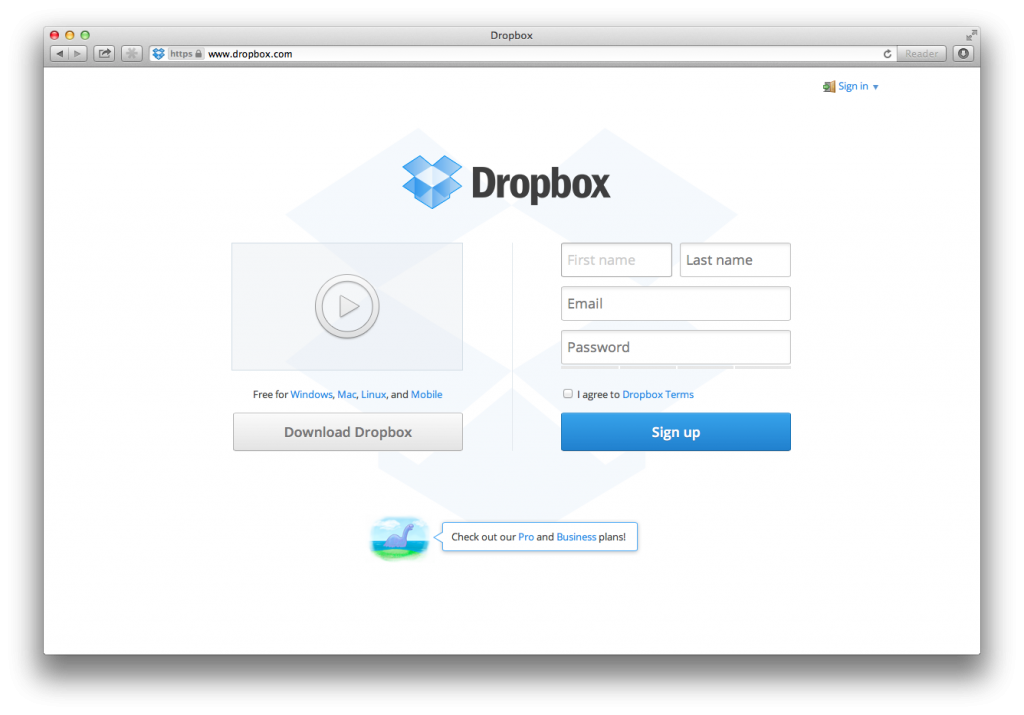
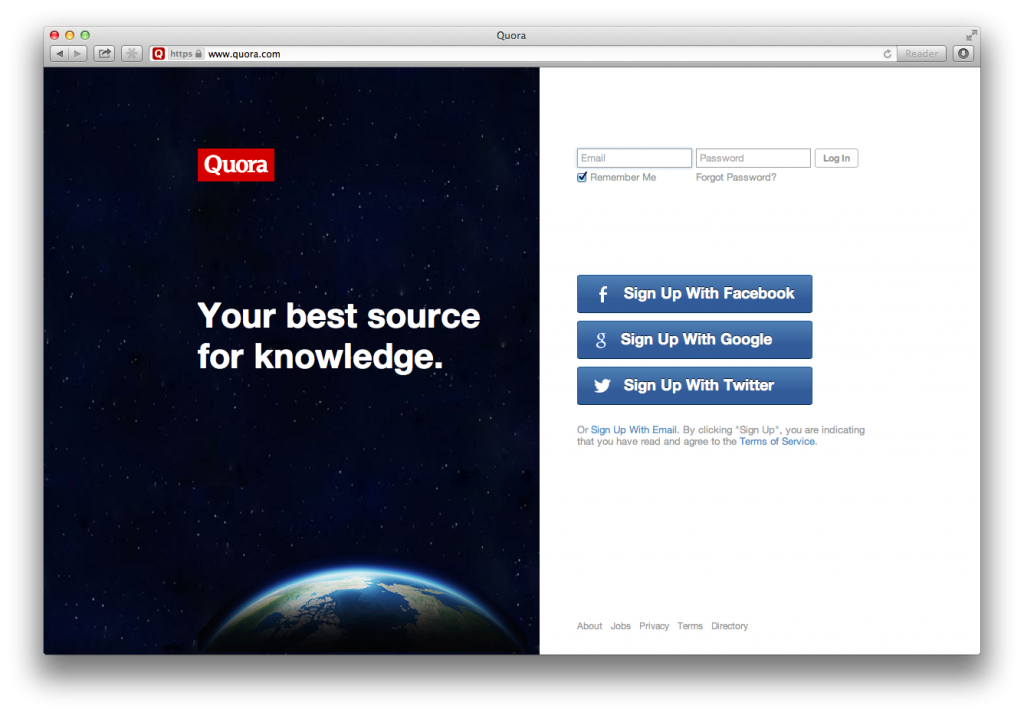


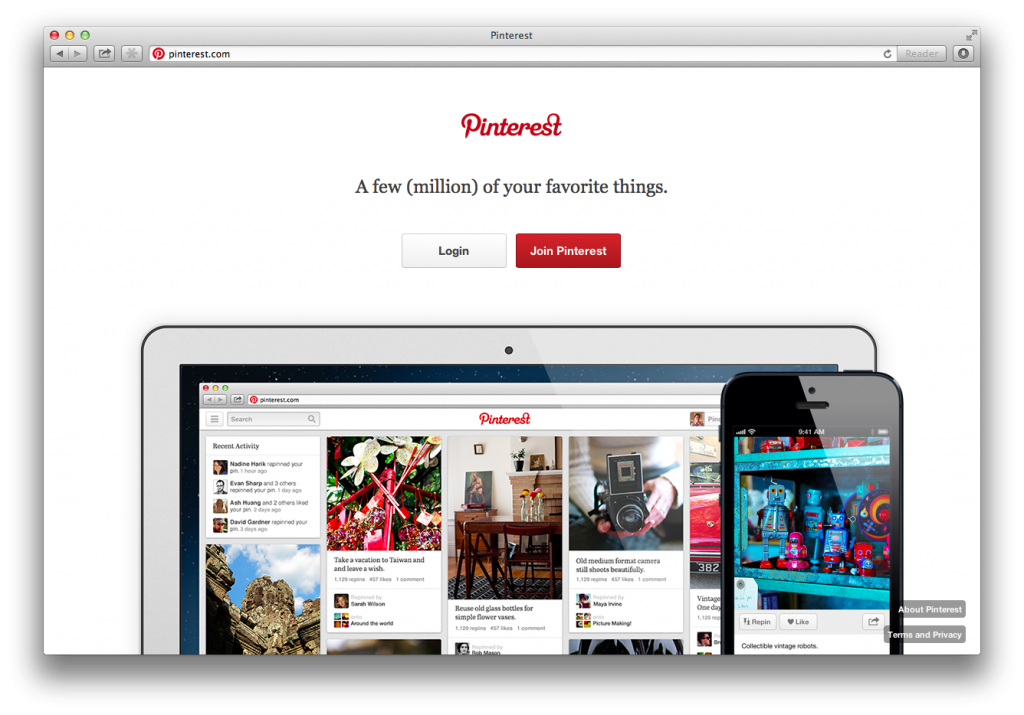
Here’s what I’ve noticed:
- No access without signup. Most startups make the mistake of giving people who visit their site free access to content, whether it’s apartment booking or daily deals. This is often a bad idea. Contrary to popular belief, the more things a visitor can interact with on your site before they’re prompted to sign up, the lower your signup rate will be.
- Navigation and hyperlinks are almost always absent. Over the years internet marketers have developed what they call the “Squeeze Page” with minimal content and a single clear call-to-action because they discovered that additional information could distract a visitor or cause them to click away to a different website. Notice that there’s nothing below the fold on any of these sites.
- Focus on a single, clear value proposition. In almost every case, the product’s value proposition is boiled down to one clear statement: “Your best source for knowledge” or “Be great at what you do”. People almost never read more than one sentence on your site (and they won’t even read that one unless it’s big enough and strategically placed), so there’s no point in trying to figure out your top 3 “bulletpoints”. This also makes it much, much easier to test as a growth hacker. Just replace one sentence with another until it works.
- Your product is not about sharing. I see this mistake all the time. Lots of startups start out thinking that people will use their product because it helps them “share” things more easily. Let me be clear here: most people do not share. And even those people who share things aren’t sharing things 90% of the time. Most of the time on the web is spend consuming, not producing. More than 50% of Twitter users almost never tweet. This is why Twitter has shifted their messaging from “the easiest way to share with your friends’ to “Find out what’s happening, right now, with the people and organizations you care about”. If you cater only to proactive people, you’ll be alienating most of your potential users.
- Big images. Big images increase conversion rates. Just do it.
- Embedded signup forms. Start your signup process on the homepage so people don’t have to click through to a new page for no reason. Generally speaking, the more clicks you have in your signup process, the more people will drop off along the way. Note that these signup forms are almost always on the right-hand side, above the fold. They also rarely ask for more than a name, email and password.
When I tell people these things they often complain: “But everyone knows Twitter and Facebook, so they don’t have to explain what their product is about. No one has ever heard of [my startup] so I actually need to explain it to people.”
You are wrong.
Maybe you and I already know what Twitter and Facebook are about, but we’re not the people they’re trying to get to sign up on their homepage. 2.4 billion people use the internet and more using it each day. Believe it or not, there are still people on earth who haven’t heard of Twitter or Facebook. Those are the people these homepages are trying to convert – not the luddites who refuse to sign up (trust me, Twitter and Facebook stopped caring about them long ago).
The same is true for your startup. Don’t be stubborn and don’t think that for some reason your startup is an exception. Making that kind of assumption because you’re scared to try something counter-intuitive is a sure way to make sure you never do anything innovative.
[UPDATE: I read a great comment on Facebook and wanted to share it below. -andrew]
Emmett Shear makes a great point in a comment on this essay, included below:
I dislike essays like http://andrewchen.co/2013/07/29/the-highest-roi-way-to-increase-signups-make-a-minimal-homepage-guest-post/ because while part of his point is valid (look at all these companies who have decided to gate things behind “signup first” and have very simple front pages!) there are tons of counter examples. Just look at the Alexa top 10.
#3 YouTube — putting a giant “sign up first” wall in front of YouTube probably would have killed them.
#6 Amazon — Amazon is all about converting people into accounts AFTER they decide to buy, and you better believe they’ve a/b tested it.
#7 Wikipedia — Primarily a read-first experience
#8 QQ – Holy crap that is a lot of textNow Google/Facebook/Baidu certainly follow the “simple homepage” design. But he’s overgeneralizing terribly and shows no indication he’s aware of it. The point of thinking about design is to be aware of tradeoffs, not to push the latest trend as “the smart way to do it”.
Said another way, increasing signups isn’t necessarily important for every company, and many successful companies don’t focus on it. So I would restate to “here’s how to increase signups” idea with “here’s how to increase signups once you’ve decided that signups are important to increase.” Great point Emmett!
9 ways a billion dollar new mobile company might be created (Guest Post)
My good friend Bubba Murarka recently started blogging over at bubba.vc. He’s now a Managing Director at DFJ and tweeting at @bubbam. Prior to DFJ, he headed up Facebook’s Android efforts, and is an expert on all things social and mobile. He wrote the blog post below on his blog, which I’ve cross-posted here. -Andrew
Bubba Murarka on Mobile:
We’ve been in “New Mobile” – a world of wireless broadband and mobile OS platforms enabling great end user experiences – for about 5 years. The improvement in the capabilities of devices has been astonishing. But in truth we are still in the first inning of New Mobile reshaping just about everything we do and everywhere we do it.
Since leaving Facebook, I’ve been asked more and more for my perspective on mobile ecosystem. Here are my current observations on why New Mobile is still in the earliest stages:
- The move from feature phones – mobile phones without robust browsers or a compelling application ecosystem – to always-connected touchscreen computers in our pockets still has a long way to go. Smartphones are barely the majority of total mobile phone sales in the U.S., let alone globally.
- The industry talks about smartphones and tablets as both being “mobile” devices instead of seeing them as two very different beasts. This is starting to change and I’m excited to see the wave of companies that are “tablet first” – but please don’t let that become a mindless mantra!
- It’s no longer about iOS vs. Android. Now the hard question is whichAndroid versions (Gingerbread vs. Jelly Bean) and flavors (e.g. Samsung, Amazon, etc.) you are targeting and why. Said another way, Android fragmentation, and dominance, has just begun.
- Completing transactions on mobile is still a big hassle (except for M-Pesa). App store and carrier billing fees are too expensive to be an option for anything other than high-margin digital goods. Whoever cracks this in a way that any 3rd party app can use is going to be very rich.
- Content creation on mobile devices is horrible. Much of the content we consume on mobile today requires the capabilities of a PC to produce, including the keyboard, mouse and purpose-built apps. Products likePaper and Vine have shown that there is considerable demand for creation via the touchscreen.
- True mobile multitasking hasn’t been invented yet. Smartphone screens are smaller and better suited to handle one app at a time with abstracted file access. But we’re used to working with multiple windows and applications our computers with a global file system. When will a new UX model emerge, especially on tablets, to enable multitasking?
- There’s no “mobile native” ad unit to allow publishers to monetize their audiences and thus focus on building richer and more engaging experiences. Instead, startups have to spend a ton of time on business model innovation, which is another really hard problem to tackle. My money is on Facebook cracking this nut (full disclosure: I am still heavy on the stock, so my money is literally on them) though I think Yahoo could be a surprise contender.
- Only two types of paid subscription services have gained traction on smartphones: Content licensing such as Rdio and Pandora One, and storage such as Evernote. What else are users willing to pay a subscription for on their smartphones?
- There have been some billion dollar exits like Instagram and Waze, but we haven’t had a stand-alone, New Mobile company go from garage to an enduring multibillion-dollar independent company in the Americas or Europe yet (it has happened in China though).
There is a lot to be unpacked and everything above is up for debate as we refine our collective thinking through discussion. The only thing I know for sure is that I’m excited to learn about, identify and nurture the best mobile-focused companies out there.
Mobile traction is getting harder, not easier. Here’s why.
The “classic” growth formula for mobile is broken
Once upon a time, the formula for getting mobile traction was something like this:
- Build something insanely great
- Get Apple/Google to feature you, alongside a big PR launch!
- Watch your app hit the charts
- Buy some cheap installs to propel it even further
- Voila, hockey stick! (and hopefully not a shark fin)
This worked for a few memorable years, and things were good- especially for new startups and indie developers. But gradually this classic formula stopped working, with nothing equivalent to replace it. Getting initial traction on mobile has gotten a lot harder, even though you’d expect a richer and bigger mobile ecosystem to have emerged to increase the opportunities to achieve mobile growth. (ps. if you’re interested in developing new approaches to mobile growth, just email me.)
It was only a matter of time. As I argue in my essay The Law of Shitty Clickthroughs, all marketing strategies eventually result in shitty results over time. In marketing, first-movers trump (at least initially) – if you do something new, then you’ll see high response rates as people respond to the novel tactic, whether it’s a new kind of creative, a new acquisition channel, etc. Eventually though, as your tactics become industry-wide “best practices,” the response rates fall as your customers get used to the techniques.
History has repeated itself again, within the channels that drive mobile traction. Let’s discuss how the ecosystem has matured, including factors like: Increased app store competition, Higher CPI rates, editorial dynamics, and the overall investment trend.
Product differentiation is harder with a much bigger app store
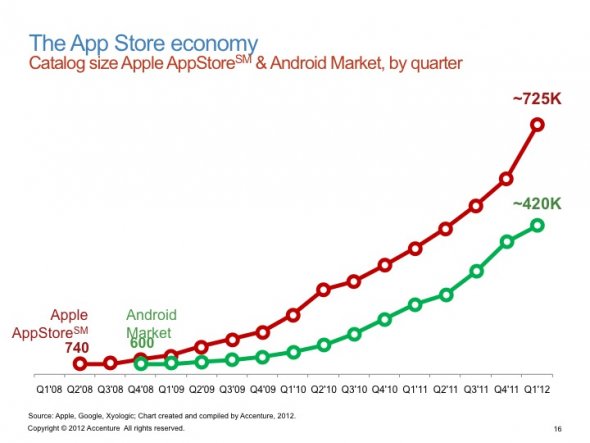
Let’s cover the most obvious thing first- the number of apps has gotten a whole lot bigger. Whereas before a new app might be competing against non-consumption, in all the major mobile categories there’s been a huge increase in the total number of apps. Those that were successful in 2009-2010 are now facing 4-8X the competition, if you look at just the aggregate numbers.
Whether you’re building an app for photos, shopping, messaging, local, movies, or news, there are now 2-3 very high-quality competitors in each category. A new mobile developer is no longer competing against the first wave of amateur-built apps. These days, it’s much harder.
Below is a recent chart that shows the incredible growth in # of apps:
Cost Per Installs have gone up over time
Initially, buying an app install was relatively cheap. You had a lot of options- everything from mobile ad networks, incentivized install providers, “free app a day” services, and even more adventurous options. More importantly, not a ton of companies were doing it, so prices were low.
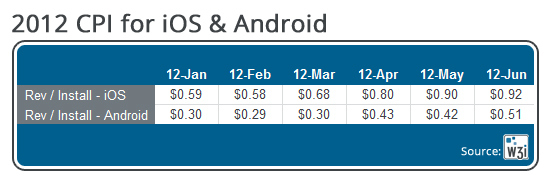
This Cost Per Install has skyrocketed though, both due to demand and a lack of supply. After only a short time, the supply of paid installs has contracted as Apple has banned some providers and warned others. Similarly, mobile games figured out the enormous monetization potential on iOS and Android – they’ve bid up the installs significantly, up to a few bucks per install.
Here’s a chart showing the increase in CPIs over the first half of 2012, though anecdotally I hear it’s much higher than this now:
Editorial teams further the platform’s own strategic goals
The editorial teams inside the Apple and Google stores can certainly help some apps, and they do. Yet they are skewed more towards the needs of the consumer, and to the goals of the platform.
For Apple, my impression is that they care more that the first 25 apps that a user installs are amazing experiences from well-known brands, rather than servicing the needs of the overall million apps that in the store. As a consumer, I surely appreciate this, but it doesn’t help new unknown developers break into the market.
For Google, any team that’s met with them in the last few quarters can tell you that they care a lot about tablet devices. While they are winning market share on phones, the numbers for iPad versus Android tablets show a different story. If you want to be featured in Google Play, they strongly encourage you build a tablet app even if the market for it is tiny. They also care a lot about Google+, but that’s another story.
Investment has dried up for experimental new consumer mobile apps
While investors still have an optimistic outlook for the overall mobile market, there doesn’t seem to be a lot of conviction to deploy their capital on risky new consumer mobile startups. My sense is that there’s a feeling the ‘great consumer mobile experiment of 2009-2012’ has been run, where a ton of seed capital went into a wide range of mobile companies, and now the motivations have changed.
Just look at how the composition of YCombinator Demo Day companies has changed- in the late-2011 event I attended, it was >50% consumer mobile. Now it’s SaaS, consumer hardware, marketplaces, etc. Mobile is often an aspect, but no longer the main focus.
The silver lining
Despite the difficulties outlined above, I’m still wildly optimistic about the future of mobile. It’s still the best platform upon which to build a new company, but we must choose to embrace and work around the new difficulties we’re facing in 2013. It’s not enough to simply repeat what worked in the past- otherwise we’ll have a new generation of mobile companies that fail like it’s 1999, as I’ve written about.
While it’s getting harder, the opportunities within mobile are still the largest since the beginning of the computer industry. We’re barely over majority smartphones within the US, as Nielsen reported last month (June 2013). While it’s impressive that some apps have reached 100M+ installs, in an overall market of billions, we’re just getting started. We have a lot to look forward to over the next 10 years.