Archive for February, 2015
Personal update: I’ve moved to Oakland! Here’s why.
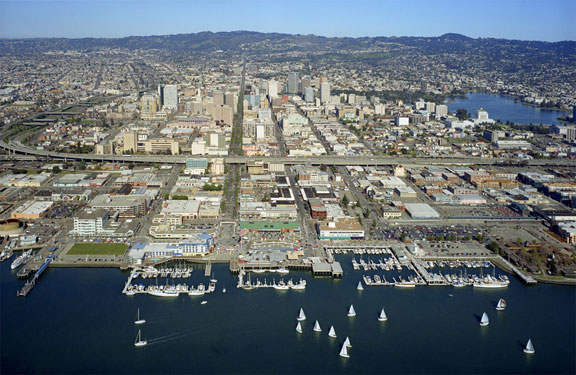
My new neighborhood, in Jack London Square, Oakland, CA.
Where’d you move?
I moved to a tiny neighborhood called Jack London Square in Oakland. Yes, it’s named for that guy that wrote about the gold rush. I’ve only been here 3 months but I really like it so far. Previously, I lived in Palo Alto for 5 years, then about 2 years in the Lower Pac Heights neighborhood of San Francisco, but had never really spent much time in the East Bay. I had sort of heard that people were moving from SF to Oakland, but didn’t really have a reason to check out the neighborhood until a few people I know moved here.
Here were some of the articles I read while doing research:
- Oakland: Brooklyn by the Bay (New York Times)
- In Oakland, a Sign of Some Very High Times (TechCrunch)
- Why are all of my friends moving to Oakland? (Bold Italic)
- A beginners guide to Oakland (Bold Italic)
PS. if you call Oakland “the next Brooklyn” to people who’ve lived here for a long time, they don’t like it :)
I live near there too! / How do I find out more about it?
If there’s interest, I’ll host a tech get-together or two.
Sign up here to get updates on an upcoming brunch/drinks/dimsum/whatever in Oakland.
There aren’t too many tech people here, so it’d be fun to get the small community that is out here together.
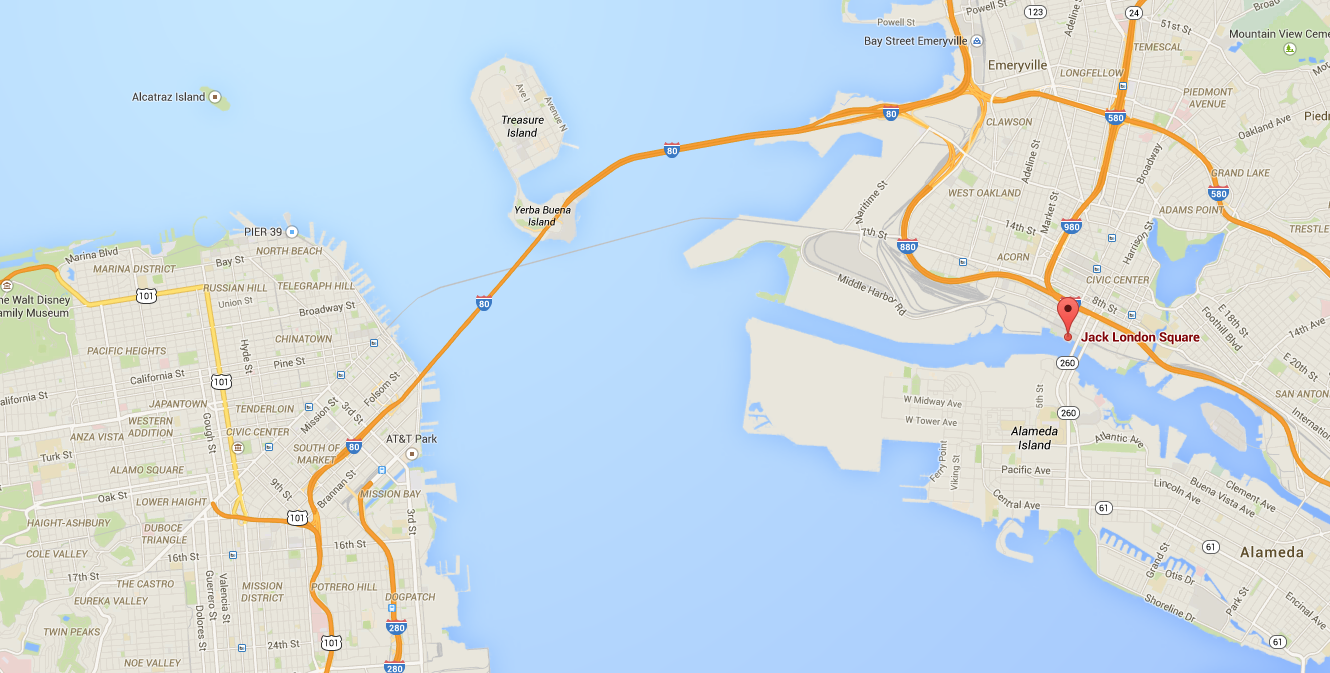
Where is it relative to San Francisco? How’s the commute?
I travel to the city pretty much every day. I usually take the BART, and sometimes the ferry (it has wifi!).
There’s a couple ways to get to the city:
- BART (10min walk + 20min BART)
- Ferry ride (25min ride + walk from Ferry building)
- Car (30min without traffic, 60min+ with traffic)
I used to live in the Mission, and going from 24th+Mission to SOMA is about comparable to my current commute. However, I occasionally do have the morbid fear that there’ll be an earthquake while I’m underwater in the train.
Where’s all the good food?
Right now, the Uptown neighborhood is opening the most new/amazing restaurants, where you can eat before you go to the Fox Theater or the Paramount for a show. Jack London Square has great food as well – there’s an eclectic mix of fancy pizza shops, vegan, and southern. A quick walk into Chinatown provides an endless supply of cheap eats, and the Oakland Chinatown is huge – about 2x the size of the city’s, without the tourist stuff.
A quick map search shows you where all the food is- pretty much in the Broadway/Telegraph corridor, but Rockridge, Temescal, and Grand Lake do well too.
Doesn’t Oakland have a ton of crime?
Crime was one of my top concerns moving to Oakland, but if the spectrum in San Francisco is aggressive/disturbed people in the Tenderloin to the nicest part of Presidio Heights, I think Oakland is about the same. You wouldn’t want to walk around Market St at 3am and you wouldn’t want to do that on Broadway in Oakland either. (Palo Alto / Menlo Park / Atherton are on a whole other planet, of course)
The biggest lesson I’ve learned from exploring the long list of East Bay neighborhoods is that Oakland is very diverse, and while the crime factor is a big one, it’s an acute problem for some neighborhoods and less of a problem for others. So, it all depends (just like SF, btw).
Houses in the Oakland Hills look like the kind of fancy houses you’d see while driving on 280 in the peninsula. Some neighborhoods like Rockridge, Grand Lake, and Adams Point are small and upscale, not unlike University Ave in Palo Alto. Uptown/Downtown feels like Market Street in San Francisco, but inexplicably cleaner. My new neighborhood, Jack London Square, feels a bit like South Beach in SOMA.
On the other hand, neighborhoods in deep East Oakland don’t feel very safe. That’s where you can find the car sideshows on YouTube.
Is it cheaper to live there?
For now, buying or renting seems to be about 50-75% the cost of San Francisco. Maybe as low as 30% if you are adventurous.
Is Oakland really warmer than San Francisco?
Yep. Sort of like the peninsula, up to 10 degrees warmer. Sometimes I miss the fog.
Here’s a typical day on the waterfront in Jack London Square.

Where do you go for coffee?
The headquarters for Blue Bottle Coffee is here. Yes, there’s usually a line.
But there’s also a bunch of other coffee places too:
- Bicycle Coffee (free on fridays!)
- Peerless Coffee
- Mr. Espresso
Interestingly enough, the density of tech in Oakland is still relatively low. Cafes aren’t full of tech bros with terminal open. Coworking spaces are more likely to be nonprofits, writers, and sales, rather than unpronounceable names of startups. I’m sure a bit of this might change over time, and there’s been rumors of one of the big cos taking over the old Sears building in downtown.

How do I dress when I visit Oakland?
Like this video.
What’s the best way to visit Oakland?
The first step is to come out here by car/BART/ferry and check it out. I’d encourage you to do it, I think you’ll be surprised by how nice it is. And as I said above, if you’re interested in attending a casual get-together in the new neighborhood, or if you already live around here, just sign up on this mailing list and I’ll post some future updates.
The most common mistake when forecasting growth for new products (and how to fix it)

Forecasting weather is hard, and so is forecasting product growth.
Startups are about growth
Paul Graham’s essay in 2012 called “Startup = Growth” makes a big point in the first paragraph:
A startup is a company designed to grow fast. Being newly founded does not in itself make a company a startup. Nor is it necessary for a startup to work on technology, or take venture funding, or have some sort of “exit.” The only essential thing is growth. Everything else we associate with startups follows from growth.
The other important reason for new products to focus on growth is simple: You’re starting from zero. Without growth, you have nothing, and the status quo is death. Combine that with the fact that investors just want to see traction, and it’s even more important to get to interesting numbers. In fact, later in the essay, pg talks about how important it is to hit “5-7% per week.”
Getting to this number while trying to show a hockey stick leads to a bad forecast. Here’s why.
The bad forecast
The most common mistake I see in product growth forecasts looks something like this:
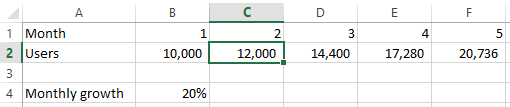
In this example, the number of active users is a lagging indicator, and if you multiply this lagging indicator of a growth curve, it’s a truism that the growth will go up and to the right. If you do that, the whole thing is just a vanity exercise for how traction magically appears out of nowhere.
And of course these growth curves look the same: They all look like smooth, unadulterated hockey sticks. The problem is, it’s never that easy or smooth. In reality, you’re upgrading from one channel to another, and in the early days, you do PR but eventually that doesn’t scale. Then you’ll switch to a different channel, which takes some time but also eventually caps out. Eventually you’ll have to pick one of the very few growth models that scale to a massive level.
The point is, incrementing each month with a fixed percentage hides the details of the machinery required to generate the growth in the first place. This disconnects the actions required to be successful with the output of those actions. It disassociates the inputs from the outputs.
In other words, this type of forecast just isn’t very useful. Worse, it lulls you into a false sense of security, since “assume success” becomes the foundation of the whole model, when entrepreneurs should assume the opposite.
Create a better forecast by focusing on inputs, not outputs.
How to fix this forecast
A more complete model would start with a different foundation.
It would:
- Focus on leading indicators that are specific to your product/business – not cookie cutter metrics like MAU, total registered, etc.
- Start with inputs not lagging vanity metrics
- It’d show a series of steps that show how these inputs result in outputs
- And, how the inputs to the model would need to scale, in order to scale the output
In other words, rather than assuming a growth rate, the focus should be deriving the growth rate.
If you plan to 2X your revenue for your SaaS product, which is done by doubling the # of leads in your sales pipeline, and those leads come from content marketing – well, then I want to know how you’ll scale your content marketing. And how much content needs to be published, and whether that means new people have to be hired.
That also means that if you want to 2X your installs/day, and plan to do it with invites, I want to understand the plan to double your invites or their conversion rates.
Or better yet, say all of this in reverse, starting with the inputs and then resulting in the outputs.
Inputs are what you actually control
Focus on the inputs because that’s what you can actually control. The outputs are just what happens when everything happens according to plan.
One helpful part of this analysis is that it helps identify key bottlenecks. If your plan to generate 2x in revenue requires you to 5X sales team headcount when it’s been hard to find even one or two good people, you know it’s not realistic. If your SEO-driven leadgen model assumes that Google is going to index your fresh content faster and with higher rank than it’s ever done, then that’s a red flag.
In the end, it’s also true what they say:
No plan survives contact with the enemy.
— smart prussian army guy
Keep that in mind while you fiddle around with Excel formulas, and you’ll be in good shape.
The race for Apple Watch’s killer app

The upcoming race
As the release of the Apple Watch draws near, we’re seeing press coverage hit a frenzied pace – covering both the product, the watch’s designers, sales forecasts, and the retail displays. That’ll be fun for us as consumers. But for those of us who are in the business of building new products, the bigger news is that we have a big new platform for play with!
The launch of the Apple Watch will create an opportunity to build the first “watch-first” killer app, and if successful, it could create a new generation of apps and startups.
Why new platforms matter – the Law of Shitty Clickthroughs
Regular readers will know that I’m endlessly fascinated by new platforms. The reason is because of The Law of Shitty Clickthroughs, which claims that the aggregate performance of any channel will always go down over time, driven by competition, spam, and customer fatigue.
When you have a big new platform, you avoid all of this. So it’s not surprising that every new platform often leads to a batch of multi-billion dollar companies being minted. With mobile, it was Uber, Whatsapp, Snapchat, etc. With the Facebook platform, we saw the rise of social gaming companies like Zynga. With the web, we had the dot com bubble. It’s very possible that wearables, led by the Apple Watch, could be that big too.
With the Apple Watch, we have fresh snow:
- Right after the launch, there’s a period of experimentation and novelty, where people are excited to try out new apps, no matter how trivial
- A barrage of excitement from the tech and mainstream press, which will publicize all the big apps adding integration
- A device built around interacting with notifications and “glances” which, along with the novelty effects, will cause engagement rates to be ridiculously high
- The app store which will promote apps that integrate with the Watch in clever ways
- Unique APIs and scenarios in health, payments, news, etc., leading to creative new apps in these categories
At the same time, there will be less competition:
- Many apps will take a “wait and see” approach to the platform
- Some teams won’t try at all Apple Watch, since it won’t be easy to jam their app’s value into a wearables format – for example, you can’t just cram any game on there
- The best practices around onboarding, growth, engagement still have to be discovered – so there’s a higher chance someone new will figure it out
The above dynamics mean that the Watch launch will lead to some exciting results. Apple has been thoughtful and extraordinarily picky about bringing out new products, so with the Watch, we know they’ll put real effort and marketing prowess behind it. Combine that with the rumored ramp up to millions of units per month, and you can imagine a critical mass of high-value users forming quickly.
What kinds of apps will succeed? It’s hard to answer this question without looking at what you can do with the platform.
The Human Interface Guidelines is worth a skim
Beyond the ubiquitous buzz stories that have been released, it’s hard to have a nuanced discussion about the Apple Watch until you really dig into the details. Here to save us are two documents:
Both documents offer some tantalizing clues for the main uses for the Watch, as well as the APIs offered by Apple for developers to take advantage of. The HIG document is particularly enlightening. Going through the screenshots, here are the apps that are shown via screenshot:
- Visual messaging
- Weather
- Stock ticker
- Step counter
- Calendar
- Photo gallery
- Maps
- Time, of course :)

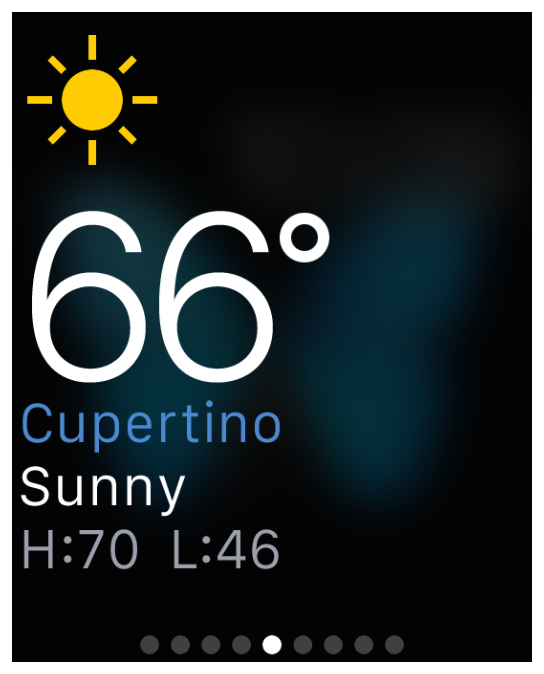
For the most part, this is exactly what you’d expect. These are all apps that have existed on the phone, and the Watch serves as an extra screen. I’m sure this will only be the start.
The more interesting question is what the new Watch APIs will uniquely allow.
Apple Watch will supercharge notifications
One of the biggest takeaways in reading through the HIG is the prominence of the notifications UI. Although you might find yourself idly swiping through the Glances UI to see what’s going on, it seems most likely that one of the most common interactions is to get a notification, check it on your watch, and then take action from there. This will be the core of many engagement loops.
For that reason, Apple has designed two flavors of notifications – a “short look” that is a summary of the new notification, and a “long look” that’s actually interactive with up to 4 action buttons. Here’s a long look notification:
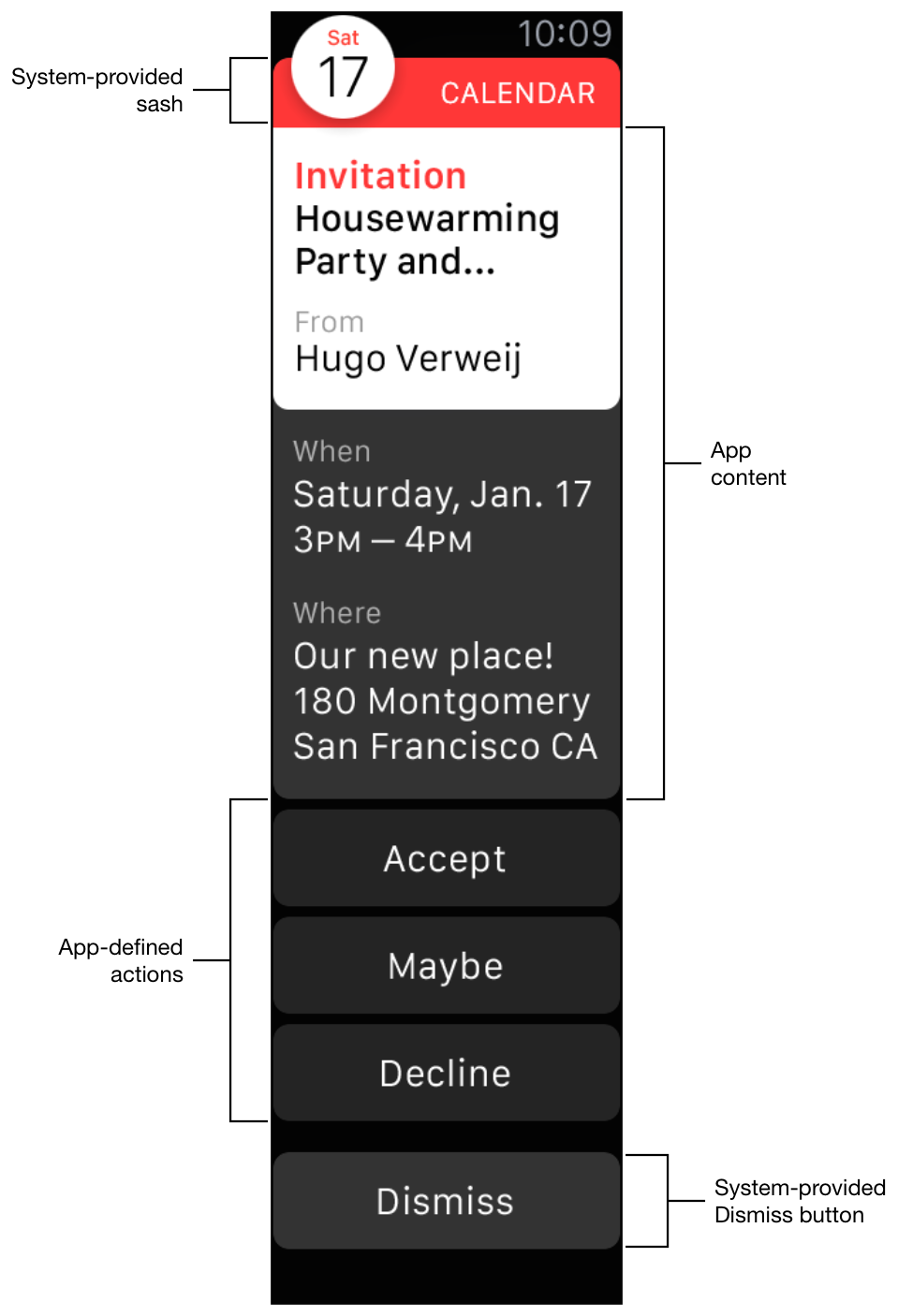
Because it’s so easy to check your watch for notifications, and you’ll have your watch out all the time, I think we’ll see Apple Watch notifications perform much better than push notifications ever have. Combine this with the novelty period around the launch, and I think we’ll see reports of much higher retention, engagement, and usage for apps that have integrated Watch, and these case studies will drive more developers to adopt.
Waiting for the Watch-first killer app
Succeeding as a Watch-first app remains a compelling thought experiment. We saw that after a few years of smartphones, the question “Why does this app uniquely work for mobile?” is an important question.
Apps that were basically ports of a pre-existing website ended up duds – crammed with features and presenting a worse experience than just using the website. Contrast that to the breakthrough mobile apps that take advantage of the built-in camera, always-on internet, location, or other APIs available. Said another way, many flavors of “Uber for X” have failed because it’s unique to calling a taxi to constantly need to consume the service in new/unknown locations, and with high enough frequency for this consumption. Not every web app should be a mobile app. In the same analogy, the majority of apps in the initial release of the Watch may take it to simply be a fancier way to show annoying push notifications, and drive usage of the pre-existing iPhone app.
The more tantalizing question is what apps will cause high engagement on the Watch by itself, with minimal iPhone app interaction? That’s what a Watch-first killer app will will look like. I’m waiting with a lot of excitement for the industry to figure this out.
Good luck!
For everyone working on Watch-integrated apps, good luck, and I salute you for working to avoid the Law of Shitty Clickthroughs. If you’re working on something cool and want to show me, don’t hesitate to reach out at @andrewchen.