Archive for August, 2014
Why Android desperately needs a billion dollar success story: The best new apps are all going iPhone-first
Why startups are all going iPhone-first
There’s been a number of articles over the last year that reiterate a simple fact: The best new apps are all going iPhone-first. Here’s three popular articles on this topic over the last few months:
- iOS First. Android Much, Much Later (Aug 2014)
- The Fallacy of Android-First (Apr 2014)
- Why Android First is a Myth (Oct 2013)
At this point, going iPhone-first is a widely held best practice. It’s our generation’s version of “Nobody ever got fired for buying IBM.” While there’s some debate on the margins on how quickly you should follow up with an Android app, certainly no one is arguing for Android-first (meaning, don’t do iPhone). There’s a number of reasons for this consensus, which the above articles thoroughly explain- here’s the superset of the reasons they give.
- Device fragmentation – both OS versions, carrier/handset add-ons, and hardware itself
- Less advanced, less stable tools and documentation
- Larger install base, but smaller addressable market (Feldman states that a 50% market share really translates to 12% if you support the most recent versions of Android, versus 30% for iPhone)
- Less valuable audiences on Android, losing ground in the US in key demos
- Cheaper iPhones may steal marketshare from Android in the future
- Higher cost of development for Android (2-3X claims Steve Cheney)
- $800k-$1.2M seed rounds leading to a “all-in on one platform” strategy
Note, I’m not saying I agree with above, just summarizing what’s been said.
In addition to this, I’d also like to add a couple more human aspects of the decision:
- Many/Most startup founders and employees are Steve Jobs fanboys, carry iPhones, and want to design for themselves
- Their friends carry iPhones, and they want to make something for their friends
- There’s more hipster designery mobile developers who build for iPhone, and that’s the supply-side of talent in SF Bay Area
- Investors (other than Bubba Murarka) usually carry iPhones, so it’s easier to pitch to them
- More tech press outlets want to cover iPhone-specific news
Whether you agree if the above is sane or not, the reality is, there’s a lot of friction to going against the norms. In order for a whole class of developers to move en masse to the Android platform is going to require a big carrot. I’m going to argue that this big carrot is going to be that the best developers, the ones who are investing $1M+ into a single app, need to feel like there’s such a huge opportunity in Android that they can’t miss out.
What Android can learn from Microsoft Windows
This consensus towards iPhone-first is happening at a critical time for Android. In many ways, the platform has been a huge success, and many who lived through the Windows vs. Mac years could make some interesting comparisons.
Here’s a stab at it- here’s some of the key reasons why Microsoft Windows won:
- Cheaper
- Ubiquitous
- More open
- Better penetration into the workplace
- Lots of applications that were exclusive to the platform
I’d argue that on almost all the point above, Android has achieved the same success as Windows. It’s cheaper, there’s more devices sold, it’s more open. But a critical component, of having more apps, isn’t there. Remember how there was always some key games that’d run on Windows that wouldn’t exist on Mac? Or how there were a bunch of business applications that would only run on Windows? That meant that the Windows platform had the virtuous cycle between developers and users to drive total domination.
But Android is not Windows. When you look at the current mobile ecosystem, iPhone has more apps. It has better apps. It gets the designery, well-funded startups to build iPhone-first.
Consumers and developers, together, will continue to choose the iPhone until that network effect is broken.
Today, Android is merely playing catchup – every time there’s a proprietary iPhone app, soon thereafter, they’ve done a good job convincing developers that they also need to release an Android app. Yet, to play to win, Android needs to convince many, many developers to create apps exclusively for their platform, just like Windows did a generation ago.
How does Google get there?
To me, the biggest thing that Google is lacking is a billion dollar tech startup story that’s exclusively about how Android is a better platform for developers. That story doesn’t exist, and as a result, people have focused more on the friction in going Android-first, rather than the opportunity.
IMHO, Android gets there by rewarding startups that are exclusively choosing its platform. I’m talking my book here, as I’m involved with a few Android-first products, but it’s also nevertheless from direct knowledge. Google should extensively feature apps that aren’t merely clones of iOS apps – it’s not enough to play catchup. Instead, Android should seek to really showcase apps that take advantage of very differentiated features and APIs. There should be a billion user success story around Android launchers and lock screens in the US, rather than acquihires/flips of Aviate, Emu, Cover, and others. These were solid companies led by good teams that wanted to go Android-first, but there was a missed opportunity in supporting them.
App store discovery for iOS is a glaring weakness. It’s editorially driven, and doesn’t give great new apps the chance to be successful, which is why four companies own 70% of the top apps – Google, Facebook, Yahoo, and Apple. They’ve created a winner-take-all environment, especially as Facebook has shown how to effectively use App Constellations to drive traffic between apps. Instead, Google could create a much more fluid ecosystem, which would reward and boost apps the way that search has driven traffic to millions of long-tail websites. Everyone does SEO because they know that yes, you can create a public company like Yelp, or a fast-growing startup like Genius, on the Google Search platform. There’s no story like this in mobile.
And yes, shifting installs from the “head” developers into the long tail might make it less attractive for some, but the biggest developers will always develop for both – they don’t have a choice. The battleground is for the hearts, minds, and product roadmaps of new, innovative apps that will drive adoption for their parent platform.
Android is an important platform, and it’s built more closely to the open nature of the internet, and so for that reason I’m rooting for it. But to make it the first choice for developers, it needs to do more than it is.
Do you work at Google?
Finally, if anyone at Google is reading this, email me: voodoo [at] gmail. Like I said, I’m happy to talk my book :)
Early Traction: How to go from zero to 150,000 email subscribers (Guest Post)
[Andrew: Starting up from zero is one of the hardest things you can do with a new product. Especially in the age of SaaS and content marketing, building up to the first 150k users is a key milestone that can prove out product/market fit, generate a revenue stream, and secure investment. This is a guest post by my good friend Noah Kagan (@noahkagan), who is previously from Mint (acquired by Intuit), Facebook, and now Chief Sumo of AppSumo. They are releasing some marketing tools focused on early traction companies, over at SumoMe.com]
Zero to 147,973 email subscribers by Noah Kagan, AppSumo
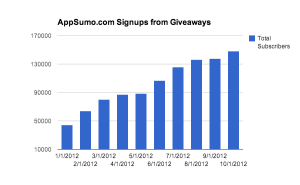
During the first 10 months of 2012 AppSumo grew 147,973 new subscribers from running Giveaways. What started out as an experiment for growing our small audience became one of the key marketing activities that helped grow our customer base.
Growing your audience in the early days is one of the hardest things in any startup. There are a few tactics to get your first customers such as buying ads to landing pages via Facebook or Google, content marketing with a blog, getting covered in press, a Kickstarter campaign that magically takes off or creating a YouTube teaser that goes viral.
The majority of these methods can be costly and / or time consuming. As well, there’s no guarantee that the customers it generates will be profitable or you’ll be able to even get customers at all.
So where is the best place to begin? If you look at all the marketing activities available when starting out, it looks like a pie. No one piece of that pie will get all of the customers you want or be as effective for you as it is for someone else. So you have to attempt multiple methods to eventually reach all of your customers.
At AppSumo.com over the past 4 years we’ve done all of the above. The one method I can consistently recommend for people starting their customer base has been giveaways.
What the heck is a giveaway?
Good question.
A giveaway is giving away some physical, digital item or service to people in exchange for a visitor signing up for your newsletter. At AppSumo we further incentivized those customers with getting additional entries by referring friends via Facebook, Twitter or sharing an incentivized link however they please.
Here’s a recent giveaway we are running for AppSumo. The tool we are using is KingSumo Giveaways that we released to the public a month ago.
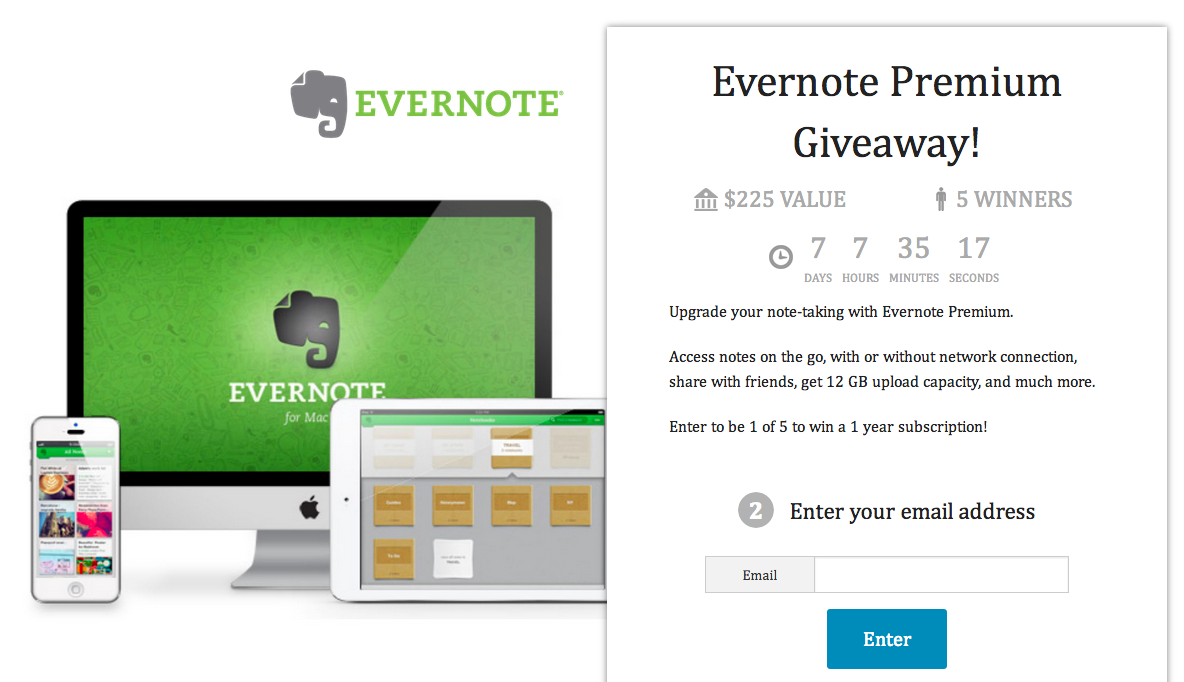
For this Giveaway we generally seed the initial users in hoping it goes viral.
First I’ll tweet or email a few people who I think will be interested.
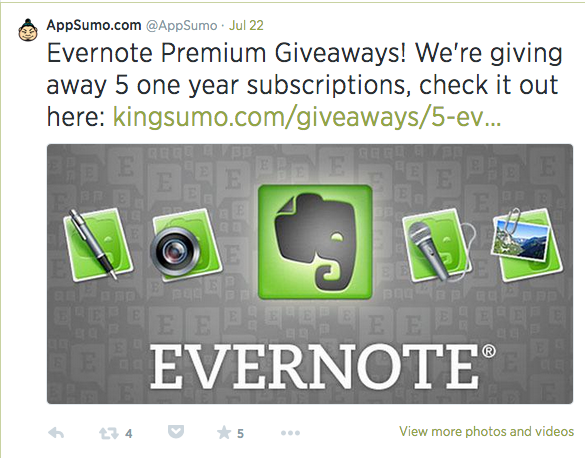
Then people will see that and enter the giveaway.
Afterwards they’re incentivized to share:
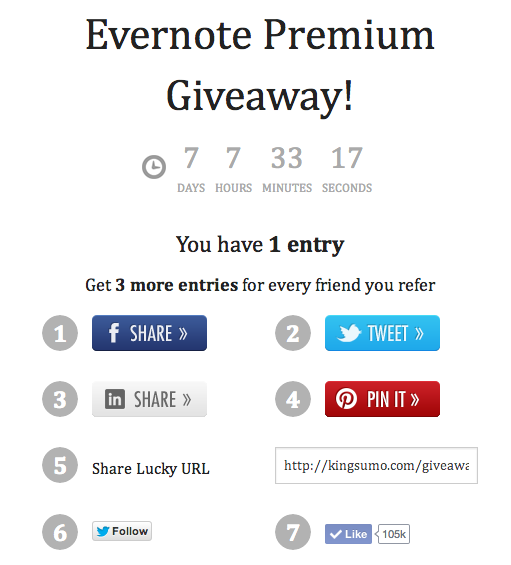
The timer encourages urgency so people are incentivized to share sooner.
Then we’ve optimized which buttons to show and where so people will share the giveaway so we can get even more people to join.

Giveaways vary in performance but let me repeat that they are one of the most cost-effective ways of getting new customers.
Let me show you some exact statistics from AppSumo doing over 25 giveaways in the past 4 years:
- 528,238 total subscribers
- $866,265.69 in revenue
- $442,802.72 in gross profit*.
*This does NOT include unsubscribes / email-removals or the costs of the giveaways.
Here are some stats based on giveaways that had at least 1,000 unique entries.
Overall profit per subscriber across all Giveaways
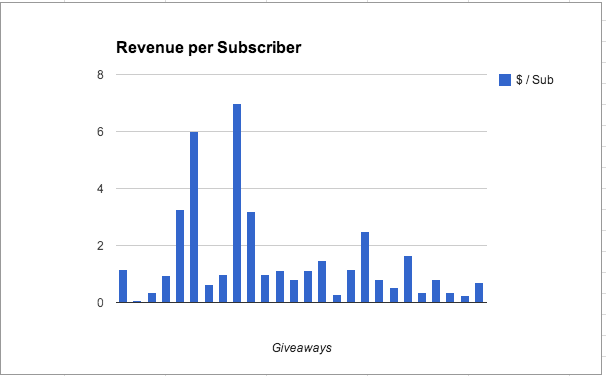
The average is $0.83 gross profit per new subscriber
Biggest flop of a giveaway based on gross profit per new subscriber:
Giveaway 2 Macbook Airs

- 48187 total new subscribers
- $11,550.08 gross profit
- $0.24 gross profit per new subscriber
- Cost of laptops: $2400
- ROI: 4.81X
Best giveaway based on gross profit per new subscriber:
Monthly1k Entrepreneur Getaway
- 3846 total new subscribers
- $26,572.90 gross profit
- $6.90 gross profit per new subscriber
- Cost of Giveaway: $2500
- ROI: 10.62X
1- Buy facebook ad traffic against the company you are sponsoring or towards your target audience. We’ve seen CPAs lower than our regular ad buying.
2- When doing a giveaway try to co-partner with a company so they’ll promote for you and you can promote their product.
3- Giveaway a smaller more related item to your audience versus a broader item like Kindle, Laptops or Netflix subscriptions. For example, iPads got us a ton more emails but profit is what pays the bills and our entrepreneur giveaway was 2.3x more profitable.
4- AB test your messaging for giveaways. The message people share for your giveaway can have a huge impact on the vitality. Try variations to see which gives you the biggest boost.
5- Most giveaways get 25-40% new subscribers for email your list so don’t worry about your overall unsubscribes and promote your giveaway to your email list.
6- Twitter followers increase as people share your Giveaway more. Nice benefit. Here’s an example from my personal account via a Giveaway from last month.
7- There’s a diminishing marginal return to doing Giveaways so don’t do them weekly. I recommend doing them quarterly.
Overall, Giveaways are a great tactic in your marketing arsenal. Use it and let us know how it works out.
If you haven’t run a giveaway you should. Just for readers of Andrew Chen’s blog for the next 48 hours we are doing 50% off the normal price. After that it goes back to regular. Use code (ANDREWCHEN) at KingSumo Giveaways.
New data shows up to 60% of users opt-out of push notifications (Guest Post)
[Andrew: There’s a real shortage of information about push notifications, CTRs, response rates, etc. Partly this is due to the immaturity of mobile as a marketing platform, but it’s also because of the opacity of the iOS platform. I recently ran into Kahuna, a Sequoia-backed startup led by Adam Marchick that’s compiled a treasure trove of data about push notifications. Today, in an article authored by Shannon and Alli of the Kahuna team, they share some of what they know about why people turn off push notifications. You can also hear me talk about this data and how to combat it in the video below.]
Why 60% of your users opt-out of push notifications, and what to do about it
In some product categories, over 60% of their users turn off push notifications. In others, a mere 20% do. That’s a huge difference when we’re talking about the primary method of retaining and engaging your mobile users. Recent data from Kahuna reveals that push opt-in rates vary widely across industries – ride sharing being the best performing, and social being the worst. Here’s a comprehensive look at the state of iOS push opt-in rates, as well as a roadmap for getting back on track if your app is trailing behind.
Here’s the data:
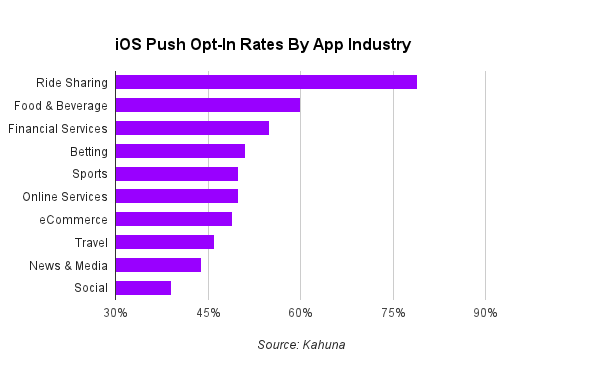
This data shows push enablement rates for iOS devices alone, because Android devices don’t ask users for push permissions. You can see that Ride Sharing’s average opt-in rate (79%) is twice the opt-in rate of Social (39%). This can translate to twice the engagement, revenue and retention, whereas low-performing apps are missing out.
People have an intuitive bias about push. They only want to receive push notifications that are relevant, time-sensitive, and valuable. Our data shows that consumers have innate assumptions about what an app will offer based on the app’s industry. As a result, an app’s ability to bridge the trust gap greatly impacts push enablement rates.
Attractive Industries
Clearly, some apps have an easier time getting push opt-ins than others. The industries with the highest average opt-in rates, specifically Ride Sharing, Food & Beverage (60%) and Financial Services (55%), are those with inherently time sensitive value propositions; users intuitively understand that push notifications will play an important role in the functionality of the app. For example, hearing about the arrival of your ride via push is very important, as is knowing the exact moment your take-out is ready for pickup. These industries benefit from the positive biases around push notifications, because people can see the value of push without much guidance.

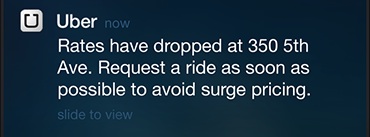
Uber’s push notifications convey information that is integral to the functionality of the app and is supposed to be acted upon immediately. Users are able to understand this functionality without much explanation, which contributes to the much higher push enablement rates for Ride Sharing apps.
But What If You’re An Underdog?
If you are in an industry that suffers from low push opt-in rates, can you overcome this inherent user bias? There is a preconceived notion that these kinds of apps only send self-promotional push notifications, and users have a hard time seeing their value upfront. The good news: research shows that you can influence user opt-in rates with comprehensive onboarding strategies. Here are two different techniques to improve the user experience when you ask for push notifications to dramatically increase opt-in rates.
1) Make a Great First Impression
Start off the user’s app experience with a clear and informative splash page, an extra screen that pops up the first time a user opens your app. Use this prime real estate to showcase your app’s top features, and to demonstrate the value of opting into push notifications. When new users fully understand the value of your app and how push messages will add to their experience, they are much more likely to opt-in to push notifications. For example, the Crossfader DJ app launches an interactive tutorial upon first opening the app, explaining the core functionality and the role of push. This educational approach helps Crossfader achieve a 55% push enablement rate, significantly higher than the 44% industry average for News & Media apps.
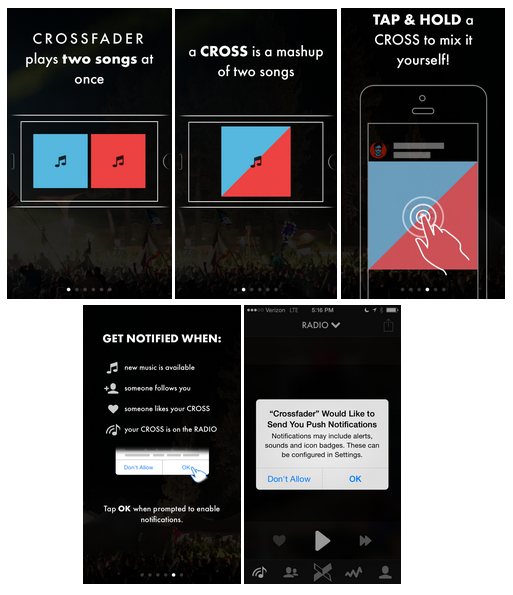
When Crossfader educates new users about what the app does in a visual and structured way, users feel more compelled to have a dialogue with apps via push. After the core functionality is explained and users know how to use the app, Crossfader outlines exactly how push will add value to the app, and then prompts them to accept push permissions. This strategic approach to asking for push leads to a significantly higher opt-in rate than the industry average.
2) Pop the Question
You have one shot to ask for push permissions; ensure it isn’t wasted by first asking in a pre-ask splash page or in-app message, rather than the official iOS page. By diverting the initial question and gauging the user’s interest, you can save your one opportunity for when the time is right. If the user clicks “YES” in the pre-ask page, prompt them to the official permission page; if the user clicks “NO,” wait until they are more familiar with your app and ask them again later. Cluster utilizes this tactic to achieve a 60% push enablement rate in the social category, with 100% of users opting into push after tapping “Notify Me” in their pre-ask page. By following these best practices, you should be able to improve the user experience and dramatically increase push enablement rates from the industry average.
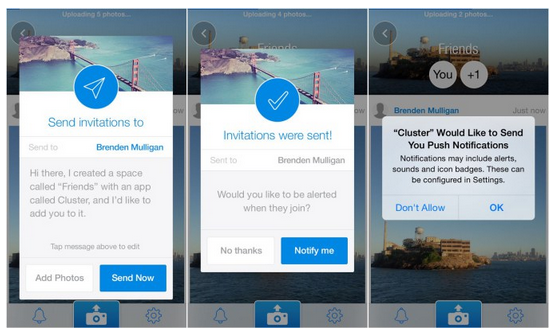
TechCrunch shows that Cluster has 60% push enablement rate, and during user testing, they saw 100% success rate in iOS push notification permission after tapping “Notify Me.”
If you take a tactful approach to push notifications, you can turn push into a communication channel that users embrace. Make sure you ask for push permissions very carefully to increase your app’s push enablement rate so you can take advantage of push’s full potential.
3) Maintain the Relationship
Once your users begin receiving push notifications, it is critical that you respect this incredibly personal communication channel. By only sending hyper-targeted, personalized push messages that actually add value, you can ensure that your users don’t later opt-out of push, or worse yet, uninstall your app.
There’s no reason your app can’t overcome bias about push notifications. Whether you’re in a high-performing industry like Ride Sharing or Food & Beverage or a low-performing one like News & Media or Social, there is always room for improvement. With a thoughtful, educational and transparent onboarding strategy, you can optimize the user experience and significantly increase your app’s push opt-in rate. Focus on creating and nurturing these important mobile relationships with push notifications to come out on top in the exciting future of mobile. Stay tuned for more data from Kahuna on how users are really responding to push.
Why aren’t App Constellations working? (Guest Post)
[Recently, I read this roundup of perspectives on “App Constellations” on the new social/professional news app Quibb. This is an emerging product strategy in mobile embraced by Facebook, Linkedin, Foursquare, Twitter, and others, and found it fascinating. Thanks to the authors below for sharing their opinions on this new approach. -Andrew]
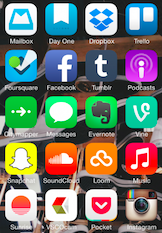
Fred Wilson recently coined the term ‘App Constellations‘ to describe what he was seeing in the mobile app ecosystem with respect to distribution. Over the past few months, mobile companies have continued with this strategy, the idea being that standalone apps are better for mobile, versus the all encompassing platforms that dominate desktop experiences – and it’s a better position to own and control several of these key apps on any person’s device.
It has been interesting to watch as Dropbox, Facebook, and Foursquare experiment with this approach – but it doesn’t seem to be working, at least not yet. CB Insights shared some discouraging data last month, and things have only gotten worse over the past few weeks for the most recent apps to be put out by these big players:
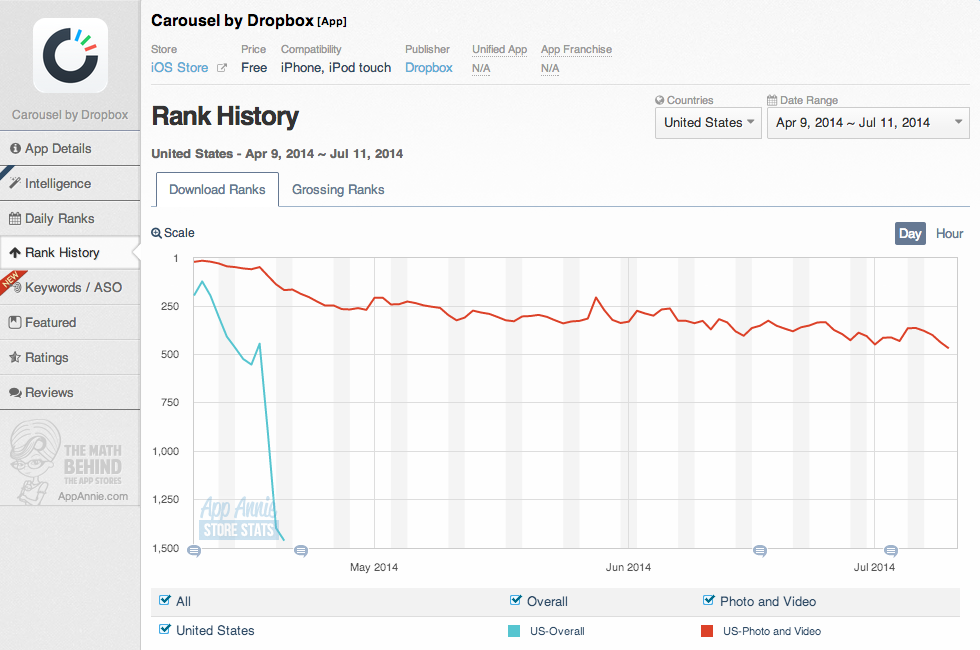
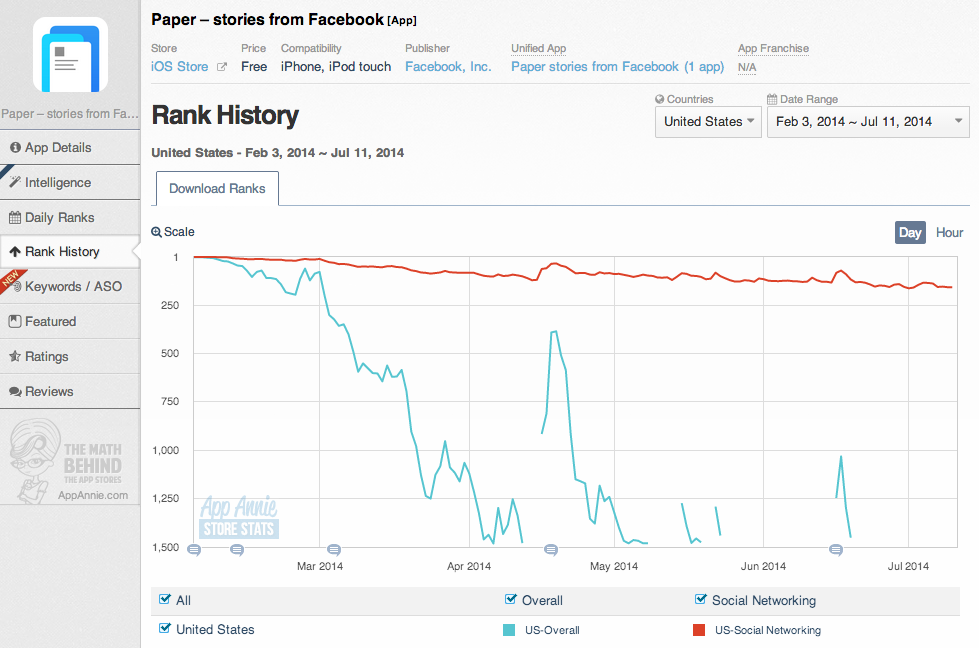
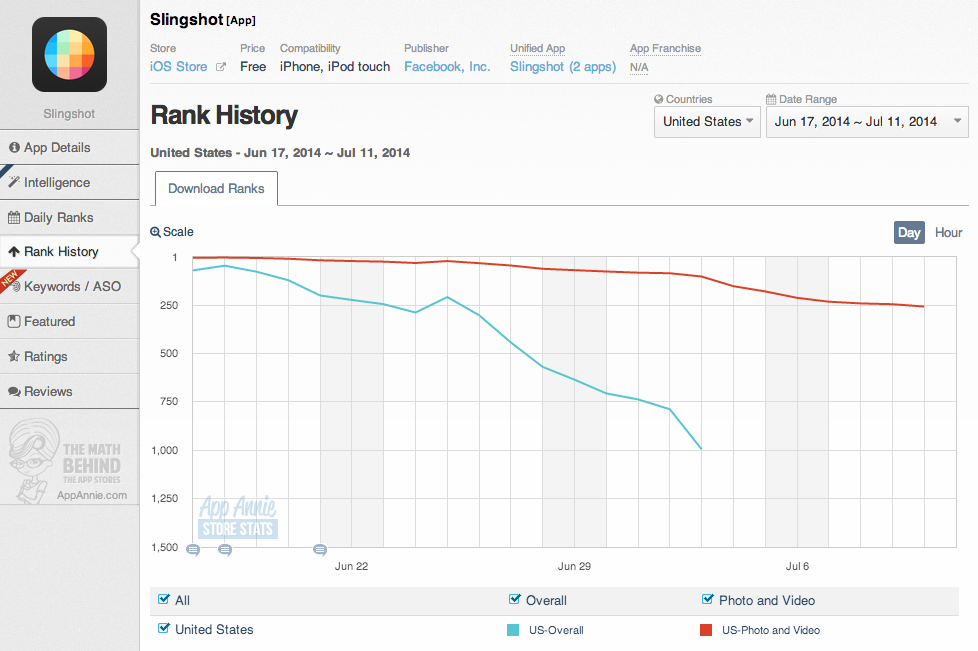
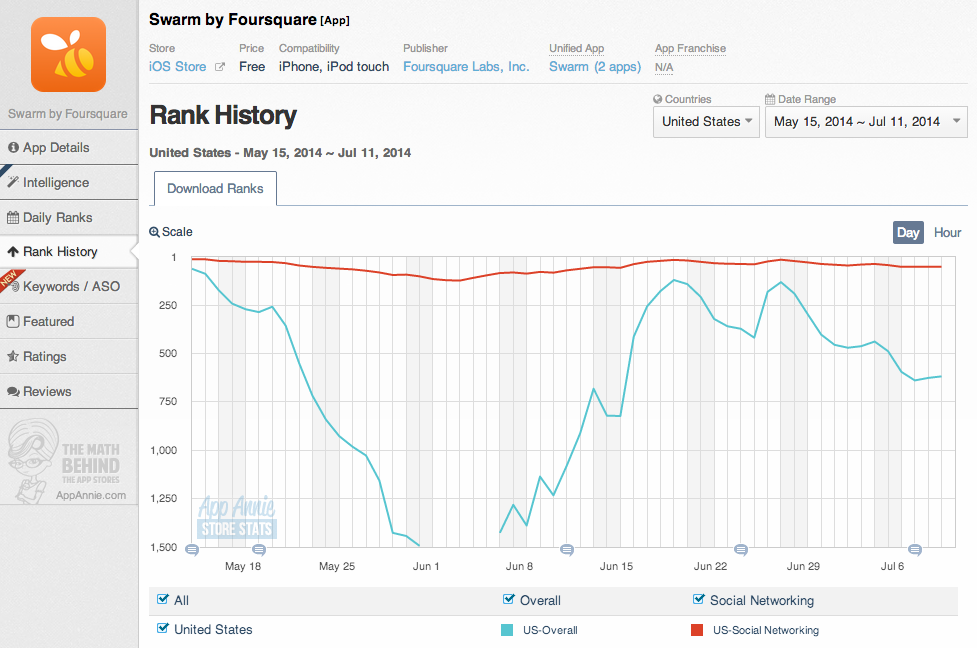
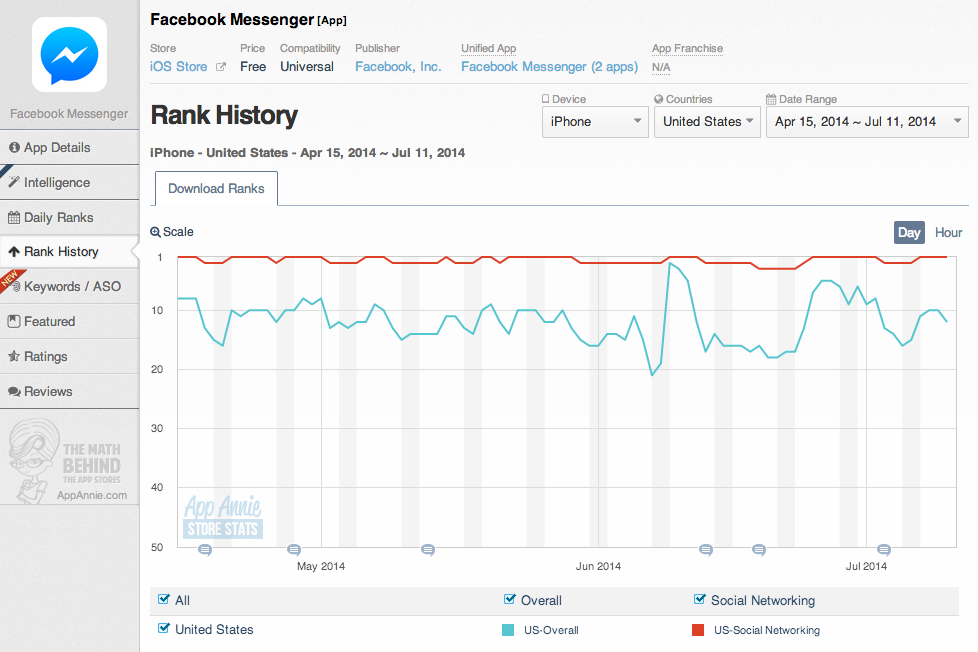
It’s important to note that none of the companies using this strategy have promoted their unbundled apps aggressively – beyond Facebook Messenger, which is seemingly the only app where this App Constellation approach is paying off:
Toufeeq Hussain (Senior Product Manager at Storm8)
The App Constellation strategy works when you have a core resource which can be shared across multiple apps. Slingshot and Poke are attempting to create a new resource (reply-to-view-images for Slingshot and disappearing images for Poke) and hence isn’t really leveraging whats core to Facebook (social graph and shared photos). In the case of Slingshot, even the social graph had to recreated from scratch. So even though these apps get huge media attention when they launch, they slowly slide down the charts as there is nothing holding them up.
One company that has done a great job of using core resources and creating a “basket of apps” is Evernote. It currently has Evernote Hello, Evernote Food, Skitch and Penultimate. Each of these are focused around helping users create more notes and thereby getting more usage of the core Evernote product. Of course, not all of Evernote’s apps are in the top-50 lists but they are targeted mainly at new users who are looking for more specific solutions to note taking. Carousel is on the same lines but my feeling is that Dropbox needs more apps that read data stored in Dropbox than contributing to it. If the goal is to contribute to the Dropbox then it needs to be something more than just syncing photo/videos as the default Dropbox app already performs that.
The Asian messenger apps use the contact list as the core resource across any apps integrated into LINE or WeChat. Invitations are sent through the core messaging app but specific functions are performed in the corresponding apps. Games, photo sharing, stickers all have specific apps but use the core LINE or Wechat identity and social graph to seamlessly work across multiple apps.
In conclusion, though its very valuable for a Facebook or Dropbox to shoot for “stars” and build constellations, what we have seen from companies like Evernote and the asian messenger apps (LINE, WeChat) is that a “basket of apps” approach that leverages a common core resource between other apps might actually be a more scalable strategy. Its very hard engineering “stars” – a lot of things need to fall in place to be a top-50 free app, a better strategy for Facebook might be to play to its strengths than alienating new apps from core FB resources.
Bubba Murarka (Managing Director at Draper Fisher Jurvetson)
App constellations are being deployed because the problem of distribution on mobile is “solved” in the sense that large incumbent app owner, and mobile marketers with sufficient resources, can predictably drive installs of their other apps via well known set of steps that includes cross promotion, cross linking, merchandising on mobile web & of course paid distribution. One of the best examples of this is how Facebook has managed to drive massive number of installs of the standalone Messenger app via the main Facebook integration. I would go so far as to say that if an unbundled app from a large incumbent does not to have a massive install base it is intentional to enable the app to mature before investing in driving distribution. FWIW, I am not saying distribution for younger companies without existing massive install bases, well known brand names or meaningful financial resources is “solved” yet…because, well it is not.
As for the value of this strategy it is easy to say it doesn’t work but that is not nuanced enough analysis of why companies pursue this approach. The multi app strategy allows more experimentation, different release cycles and tailored experiences to drive deeper engagement. This allows faster iterations for nascent product lines which is critical for finding product market fit (traditionally the key advantage startups have over large incumbents). Using Facebook Messenger, as an example again, FB only focused on driving installs 3 years after they had initially released the standalone app. I’d hypothesize that once Dropbox wants to drive installations of their app constellation they will have no problems – “Install Carousel and get 500 free MBs of storage” or “To sync your photos to Dropbox you need to install Carousel”. In summary, I’d suggest the best way to assess the value of this strategy is not to look at installs as the only measure of success.
Casey Winters (Growth Marketing Manager at Pinterest)
App unbundling or constellations are a nuanced strategy that I think needs a few, rare conditions to be effective. One is that your main app needs to be a top app already, with little room to improve. Then, it is advantageous to create a new app to see if you can take another top spot on the App Store/Google Play, and another icon on a user’s phone (see my blog post for more details on that strategy).
When you have this scenario, it’s little risk to create a new app, but it means that a very successful company needs to launch a new app and have it be an immediate success. You don’t have the advantage of iterating and starting small and working your way up to popularity like most apps do. It’s very tough to launch new apps this way and be successful because a ton of people try the app the moment it’s launched before you have any market feedback. Typically, people try it, discard it, and you don’t get another shot. So what ends up happening is that popular apps buy newly popular apps instead.
The only way I have seen the constellation strategy work is if the new app was already a core feature of the main app and is then unbundled. Facebook Messenger is an example of this. Since the feature is already popular inside Facebook, and the new app is now where that functionality lives (and that functionality hasn’t meaningfully changed), the new app is successful. Where foursquare erred is the the check-in was declining in popularity in their app, and when they unbundled it they changed the functionality meaningfully to upset those core users.
Alex Schiff (CEO and Co-Founder of Fetchnotes)
Unbundling into “app constellations” is understandably a compelling strategy. More real estate, more targeted products, and more mind share — hooray!
The thing is, outside the tech community most people just don’t download that many apps. Statista put out a report late last year that on average, US smartphone holders have installed 26 apps. To put that in perspective, that’s just over a page of apps on an iPhone 5 screen. Not only are most people not reading about or searching for apps, but when they do hear about one from a company they know, the default behavior is not, “Wowee! I already have Facebook – I should start using their new app!”
Putting the apathy of mainstream consumers aside, there’s a much deeper problem with the whole unbundling strategy. It only works if it’s a fundamentally distinct behavior being segmented into a stand-alone application. I think Facebook Messenger is a great example of unbundling that worked — messaging is very different from browsing stories and stalking people. Separating the two made both my messaging and social voyeurism (let’s be real, that’s what Facebook is for) experience better. Moreover, Facebook wanted to be your go-to messaging utility. That couldn’t happen, I believe, unless it was its own application.
Today, over 200M people use Messenger.
Now compare that with the launch of Paper. Paper, for all intents and purposes, has the same core features as Facebook proper – you browse stories, accept friend requests, view notifications, etc. More recently, they even added back in some of the features they left out, like birthdays and events. The major difference is UI (it’s beautiful) and a philosophical focus on stories over people.
In other words, it’s just a different approach to Facebook. Most users I’ve talked to use Paper instead of Facebook, not alongside it. Since Paper offers pretty much the same functionality as Facebook proper, most people just aren’t that motivated to try it out. As of June 11, Paper has only 119,000 MAUs. Frankly, I wouldn’t be surprised if Paper was just a test for a new approach they’ll be bringing to the core Facebook app. Unless Facebook strips Paper down to be stories and stories alone, I don’t see it surviving long-term as a stand-alone app.
There are certainly more granular product reasons Slingshot, Paper, Carousel, etc. haven’t taken off. However, across any app constellation effort, the products need to compliment — not cannibalize — each other.
Messenger does exactly that. Paper doesn’t.
Adam Sigel (Product Manager at Aereo)
App constellations, unbundling, whatever you want to call it, will ultimately yield a better experience for mobile users and better business practice for the companies making apps, but we’re going to have to work through some pain in the short-term. The trouble for now is that app constellations are ahead of the rest of the mobile experience.
It starts with app discovery. The App Store (for iOS especially) is largely leaderboard driven, and it’s hard to crack into the top ranks, especially for non-gaming apps. One “north star” app in a constellation makes it much easier to build satellites around, and we’re seeing that with Facebook, Dropbox, Google, LinkedIn, and Amazon. As Fred Wilson wrote, this creates a “rich get richer” scenario and creates enormous challenges for newcomers.
Having different apps optimized for different use cases is great, but managing all those apps is a pain. As I mentioned in a blog post about invisible apps, the mobile OSes need a way to have apps that exist outside the homescreen. “Winning the homescreen” just doesn’t make sense for lots of apps (finance and travel, to name a few). iOS is the worst offender here compared to Android and Windows Phone, but this could be addressed a number of ways including design changes, gesture controls, or anticipatory computing.
Even though more apps are building in deep linking capabilities—a very good thing for the mobile experience overall—app switching still stinks. It’s visually jarring to a lot of users, and app management is still a power user skill. To go with the typical early majority example, my parents don’t double-tap the home button to switch apps, nor do they put very much thought into which apps go on which screen or in which folders.
These are temporary imbalances, and recent announcements from Google and Apple suggest directional improvement. As app discovery improves, mobile OSes continue to evolve, and the market matures, we’ll get new, more sophisticated and seamless mobile experiences.
More:
There’s even more discussion in the comments, on Quibb.